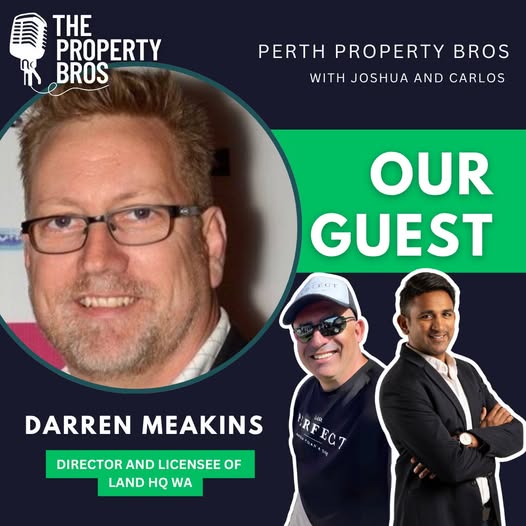
Episode Transcript
[00:00:01] Speaker A: The best music from the 60s to today, IPL radio.
[00:00:07] Speaker B: All right. All right. Welcome. So I'm Joshua Anthony. As you can tell, we are the property pros, and I'm with Carlos Garcia.
[00:00:15] Speaker A: Hello, everybody. Here we go.
[00:00:17] Speaker B: So it's something new that we're trying out, isn't it, Carlos?
[00:00:20] Speaker A: Yeah, we think that we need a property show here in Rockingham. We're both very active and we're both always talking about property when we meet. And we're calling each other every day. So we may as well do it on the air and share our experience with the people of Rockingham and online, of course, 100%.
[00:00:38] Speaker B: I think every day we. Even myself, even today when we had a call, we were always dealing with different clients and different experiences, different problems. And we're always troubleshooting and trying to get it sorted. So I guess our experience will really help a lot of people around, isn't it?
[00:00:54] Speaker A: Yeah. And this probably comes a lot more with your role, I think, because people are needing to buy something, but they've also got. They've got to get their ducks in a row.
So they might have something they're thinking of selling or they have to sell, or in some cases they might have to liquidate other assets or whatever. But you're having to connect them to line these things up and get them ready for them to sell.
[00:01:19] Speaker B: Exactly. So I guess what Carlos is trying to say, so obviously I'm Josh and I'm a buyer's agent, and that's what I pretty much do. So like Carlos, I am a real estate agent as well. So a lot of people make that mistake not knowing who we are, isn't it? Yeah, exactly. So this concept of bias agent is not very well known or is slowly picking up pace. And it really built up last year.
[00:01:43] Speaker A: Exactly right, Josh. So why is that the case, do you think? I know that over in New South Wales, buyer's agents have been around a very long time.
I've dealt with them, I've seen them. I remember the first one I came across was probably about 2006 in terms of. It was an agency called Ibuy.
Ibuyreal Estate.
But they've been quite active over East. And I had a meeting the other day with a lady that works in. In America. She works in real estate in Los Angeles and she's back and forth. She has a property management company. My understanding is the market works very differently in the States. People tend to engage buyer's agents quite often. There's a bit of a lottery system on how you Acquire your clients is things that we've never seen before. But here we are in wa, it's picking up traction. You're starting to see buyer's agents pop up more and more in our B and I groups. Now BNI for all the listeners is a group called Business Networking International. Now we basically are a group of businesses that are very well vetted. We get together and we help each other grow our businesses. But yeah, buyer's agents popping up in the chapters all over Perth. Why is that, Mr. Buyer's agent? Josh?
[00:03:00] Speaker B: Well, I think someone asked me the question, you know, we watch a lot of these shows on Netflix now, selling Sunset and stuff like that, you know.
[00:03:10] Speaker A: So they're selling Sunset.
[00:03:11] Speaker B: Selling Sunset.
Oh, pretty much, yeah. Yeah. Okay, so if you're looking, you know, up on Beverly Hills and stuff, what are you, you're looking at all these mansions, right. With a few million dollars. So a bit of a stats, I think I've shared with you before.
Back in the US there's one real estate agent for every buyer's agent.
[00:03:30] Speaker A: There you go. It's a one to one ratio, 100%.
[00:03:34] Speaker B: So it means that for everything that you're buying or selling, there is an agent involved.
[00:03:38] Speaker A: Okay.
[00:03:39] Speaker B: You know, but it's not the case here. Right. So over here our ratio is about seven to one.
[00:03:45] Speaker A: Seven real estate agents to one to everyone, buyer, agent. Okay, interesting.
[00:03:50] Speaker B: Yeah. So you can tell that there's a very big gap there, isn't it? Now, now you asked the question, why is there so much over ease and not over here?
[00:03:58] Speaker A: Yes.
[00:03:59] Speaker B: All right. And now there are a lot more popping up over here. There's also, that's, you can see it from the trend. That's what's happened on the market recently as well. So as you can tell is prices are high. Look at Sydney, you know, prices are very, very high. It's very hard to afford anything in the half a million dollar mark unless you go two hours, three hours away from Sydney city.
[00:04:18] Speaker A: You need two incomes in the household.
[00:04:19] Speaker B: To sustain a mortgage. My brother's in North Sydney. He's living in a one by one apartment. It's pretty, it's pretty old. And that's in the high, high millions.
[00:04:30] Speaker A: Oh my God.
[00:04:30] Speaker B: High one million.
[00:04:31] Speaker A: That's enormous.
[00:04:32] Speaker B: It's enormous. So here in Perth, before we went crazy last year, you could still afford something under half a mil, you know, so when we, when, you know, when, when it started becoming a bit crazy last year, always they knew that, you know, the last affordable places you can actually buy for under half a mil for an investment is probably per Brisbane. Yes.
[00:04:58] Speaker A: So we were discovered. There was an element of being discovered here.
[00:05:02] Speaker B: Exactly.
[00:05:02] Speaker A: Selling blue skies. Because how many blue skies do we have in. In any given year?
[00:05:07] Speaker B: Yes, exactly.
[00:05:08] Speaker A: Finally they found out about us.
[00:05:10] Speaker B: Finally.
So as you can tell, they are not going to fly over here. They're not going to do that. Due diligence sitting in Sydney or Queensland.
Yeah. It makes it really hard.
[00:05:23] Speaker A: We've got a hot market, affordable market. There's elements here that make it affordable and lucrative. Yeah, of course. But they're too far away.
[00:05:31] Speaker B: They're too far away. I think lots have been poured in. I think Covid really opened the door. It really opened the door for wa. It's like, wow, look at wa. You know, because the spotlight has been put on us for so long, so everyone is like, oh, my God, look at this state here. Or this country that we didn't know of.
[00:05:49] Speaker A: You have to admit, I mean, Covid was pretty, pretty savage over east. I've managed to get stuck over eastern New South Wales when Covid was happening in the far south coast.
[00:05:58] Speaker B: Oh, wow.
[00:05:58] Speaker A: Yeah. I couldn't get back and it was, it was a police state. Even where I was in a little country town. I know that it was worse in the cities and in Melbourne as well. In Victoria, it was really bad. Whereas in here, in, in Perth, in wa, it was actually relatively relaxed. There was some lockdown, an element of lockdown. But this was the Eden. This was where everybody was roaming free and all the birds were tweeting and the skies were blue.
[00:06:24] Speaker B: We were business as usual here, Carlos.
But I have to admit, that was the only time that I actually took the trouble to book a motorhome, drive up to Kalbari to actually explore my own state, which we never actually do. You know, you usually always flying over east, it's like, all right, let's go and check out over east.
[00:06:43] Speaker A: That's right. Yeah.
[00:06:43] Speaker B: But that's the time when we actually explored lot. Kalbari actually really exploded then as well in terms of property and stuff.
[00:06:50] Speaker A: So what a state. We've been discovered. Thanks to Covid.
[00:06:54] Speaker B: Thanks to Covid, yes.
[00:06:55] Speaker A: And now we have.
It's fueling the, the buyer's agent demand.
[00:07:00] Speaker B: Exactly. Yeah.
[00:07:02] Speaker A: It's still the case. So are you still busy day to day? I mean, I hear from you every day. I, I, you're sending me referrals.
[00:07:08] Speaker B: Yeah.
[00:07:09] Speaker A: This is your clients saying I need to sell first. But outside of our network, how busy are you?
[00:07:14] Speaker B: Look, it is busy it's not as busy as last year, obviously, you know, as you can tell, our average price has kind of gone up. We're kind of higher than Melbourne or, you know, obviously we're not as high as Sydney.
So the OE investors have kind of pulled right back is what I've seen. There's still pockets that are really doing really well. But overall it's now more of a owner occupied market, which is a good, which is good, you know. So we had, we hear a lot last year about, oh, we are, we can't even get into the market. We're always constantly being outbid by over east by, well, now is your chance. Now this, you know, they pull right back. So that's a good thing.
[00:07:56] Speaker A: You're absolutely right. I'm finding the same thing when I'm so. I'm a selling agent, obviously I sell them. Josh buys them for people, I sell them for people. People I'm finding. The owner occupiers are coming through. My home opens 9 out of 10 when I'm doing my stats, we take the register at the front door, we do our follow ups. Who are they, where are they from, what are they after, how long have they been on the market? All the questions that are asked and it's owner occupiers, either first time buyers or people that are looking to. They're taking advantage of their prices having gone up and they're trying to jump into the market. Their next dream property. They're only having to get a mortgage for the shortfall of what they made on their property and what they needed to buy this one for buying high. But again, it's still owner occupier, which for me it's been a tricky one trying to deal with properties with tenants in them because I don't have the investors chasing properties with tenants looking for the high yields like we did in the last couple of years. Now there's been a hindrance more than anything where people are saying, can we ask them to leave? You know, they're great tenants, they look after the place, but we really need to live somewhere. It doesn't matter how amazing they are, we actually need to live somewhere. We won't get our first homeowners grant, we won't get our stamp duty sort of cleared if, you know, we don't move into it.
[00:09:19] Speaker B: Yeah, I think that stamp duty has been a big player in our, you know, it's been a major down. It hasn't really changed a lot since it first introduced, isn't it? So I think speaking To a lot of our mortgage broker colleagues, we find that there might be a big change on the horizon, so something to look out for.
[00:09:35] Speaker A: What are you hearing?
[00:09:37] Speaker B: Well, we did say, I think you're buying about 600k when it starts capping out, isn't it? So now hopefully that it comes up to meet the current market standards.
[00:09:47] Speaker A: Increasing the threshold.
[00:09:49] Speaker B: Increasing the threshold so that it, you know, so that people will be more able to afford.
I think there was a recent study, was it Rewa that did the study that showed that what is your biggest hindrance for entering the market?
[00:10:02] Speaker A: I'd have to be stamp duty.
[00:10:04] Speaker B: Stamp duty was the big one.
[00:10:06] Speaker A: I mean, you're slogging all out, just trying to get your deposit together and all your other bits and pieces together, as well as your moving costs and everything. That's a huge amount, up to, you know, 20%, depending on which way you're going to structure your mortgage. And then you think, I've got to get that extra together as well.
[00:10:21] Speaker B: Yes. Just to put in for a stamp duty. So it is big cost. So end of the day, I guess what we're saying is buying a house is a big cost in itself. All the costs associated with it is expensive as well. Of course, it is the. One of the biggest decision you're ever going to make, you know, and it's very sad to see a lot of people just because, like what happened last year where, oh, we kind of. We just need to get something. If not, we will lose out and you're making big mistakes by doing that. So fear of missing out was a big one.
Buyer's remorse was another big one.
After paying so much and then coming back to say, oh, I think I overpaid, but, you know, people are worried.
[00:11:07] Speaker A: About that at the moment, I'm finding, you know, I'm getting appraisal requests coming up above average, especially above average in comparison to the last couple of years. But people are starting to worry about whether they're going to lose money, especially when I'm looking at selling units. Yes, I have a great property for sale at the moment in Mandurah on the water. It's overlooking the water there, the boats and there's restaurants beneath. It's a complex called the Palladio, quite an amazing complex. And I've actually had a few serious buyers come through, but worried. Worried that they're going to get stuck. I mean, I'm pretty honest with them. I'm very open and I tell them, well, these places have strata fees. Yeah, right. This is going to Be a problem if you ever need to sell in a buyer's market, you know, and there's a lot of these available. There's going to be some. You're not going to be very competitive.
And what. You've also got the competition in the building, which is a lot of other. Other units that you've got to compete against, especially if there's more for sale.
But. But yeah, property. People worried about whether the property will. Will get stuck and, and not come back, not bounce back. And I said to them, you're not going to make your money. You're not going to make a million dollars on this. I don't think you're going to go backwards too far.
[00:12:24] Speaker B: Yeah, too far. Yeah. Yeah.
[00:12:26] Speaker A: But you could potentially. You need to be planning for the long term and you need to have goals on this property that aren't enormous for investment. Because, you know, I purchased a Property back in 22, and the gentleman I purchased it off had purchased it for considerably more back in 2013, 2014. We had the last big boom, and he sold it for less in 22 than what he bought it for. Andy renovated and he paid strata and rates and insurances, all the bits and pieces, management fees all the way along for almost 10 years.
[00:13:00] Speaker B: Yeah, I guess what, like, what you're trying to say is if you're living in it and if you're investing in it, it's two different equations.
[00:13:07] Speaker A: Oh, yes.
[00:13:07] Speaker B: So if you're investing in it, that's when you. That's when all your strata, your, you know, how much you're paying for it and all really plays into account. But if you're living in it, you know, then yes, it plays a factor. But end of day, you are. This is your home. You know, you will pay how much you want to for this. This is what it's worth to you.
[00:13:28] Speaker A: That's right.
[00:13:29] Speaker B: You know, exactly. Yeah.
[00:13:30] Speaker A: So they need to have a different appreciation for it.
[00:13:32] Speaker B: Different appreciation. Correct. So, like, I had. I had a mortgage broker reached out to me once for a property up north, and he did say, josh, can you help my client?
There's a property on the market for 700. Okay. He really wants this property.
[00:13:47] Speaker A: Okay.
[00:13:48] Speaker B: What can you do as a buyer's agent to bring this property, Bring the, the value.
[00:13:55] Speaker A: That's what you do. Your job is to buy it as cheap as you can.
[00:13:58] Speaker B: Well, again, that's. That's again, another risk of separation. Right? Like, yes, to buy. Buy cheap. Yes. It's a bonus. Right. So anyway, I said, right, give me, give me Some context. All right, give me some context. Whatever. What am I dealing with? And he said, there's already two offers on the table above asking price. Okay, so.
[00:14:16] Speaker A: Okay, so there's a. That's where the market is speaking.
[00:14:20] Speaker B: That's where the market is speaking.
[00:14:21] Speaker A: But your primary objective is, number one, acquire the property that meets the. Within the parameters of the. Of your client's expectations.
[00:14:28] Speaker B: Yes.
[00:14:29] Speaker A: So it's not necessarily bringing the price down. When to get the property.
[00:14:32] Speaker B: My objective is to know what the value of the property is. You know, if we can purchase it at the value of the property, that's a win.
[00:14:42] Speaker A: Okay, all right. You don't want to overpay.
[00:14:44] Speaker B: We don't want to overpay. If we can bring it down, that's a bonus, right? That's the value of it, you know, so where my job is to find what is that sweet spot that makes this a good investment and a good property.
[00:14:59] Speaker A: So you're looking at substantiating, you're looking at comparable sales properties on the market.
[00:15:06] Speaker B: You know, buyer demand.
[00:15:07] Speaker A: Break it down in terms of our land development, the build cost, all these factors.
[00:15:13] Speaker B: Exactly. So that, that's to determine what the value of that property is. And that makes sense to put in the offer.
Yeah. So. So funny enough, I went back to this. All right, cool. So you've got two offers above. I'm not, I'm not a magician to make that office disappear.
Now, funny enough, after a few, I noticed that I couldn't help the client. But then a few weeks later, I just called to find out what happened. I found out that the client actually offered 200,000 above asking price.
[00:15:47] Speaker A: Really?
[00:15:47] Speaker B: Really? 200,000 above asking price. So that was a new record for that suburb.
[00:15:53] Speaker A: Sounds like it.
[00:15:54] Speaker B: Oh, yeah.
[00:15:54] Speaker A: He must have really wanted it.
[00:15:55] Speaker B: He really wanted it. And I was like, what happened? And it's like, oh, he thought he's never going to get another property that was the only one on the market in.
So that plays. Played a very, very big part.
[00:16:09] Speaker A: This is a block of land, is it?
[00:16:10] Speaker B: No, this is a house.
[00:16:12] Speaker A: This is a house.
[00:16:12] Speaker B: This is a house. Yeah. So it was. It looked nice and all that, but was it worth 200,000 more? Probably not. I found that in my time, even last year when I was buying properties for clients, especially investment, right. If I were to ever lose out on a property, it was always to an owner occupied.
[00:16:29] Speaker A: Okay. Because they're charged, they're emotionally invested.
[00:16:33] Speaker B: Emotionally invested.
[00:16:34] Speaker A: They're buying for their home.
[00:16:35] Speaker B: Correct.
[00:16:36] Speaker A: Yeah, I can understand that. But look, I Don't think that people are going to lose out too much really, like in the long term, really. They're not, they're not going to lose out now because it's, it's a new price structure in Perth. Yeah, things have changed. It's not an undiscovered little corner of the universe anymore. People know how amazing it is. The blue skies, the beaches, the prices. I mean there's so many investors that have made so much money in the last couple of years.
[00:17:02] Speaker B: I think if we look at it from a different perspective.
[00:17:04] Speaker A: Right.
[00:17:05] Speaker B: Like Perth's property price has stalled for a long time.
Right. You mentioned the 2009s and stuff. It's really stalled for quite a bit.
[00:17:14] Speaker A: It just needed something to give it a push.
[00:17:16] Speaker B: So we never actually had our growth. So we could probably argue that what happened last year was probably us catching up to where we need it to be.
[00:17:25] Speaker A: Probably. Yeah. Yeah, you're probably right. So if you were actually to divide that growth, that shock growth that everybody can't believe over the last 10 to 12 years, 13 years, then it probably would have been a consistent, you know, increase every year. You wouldn't have even noticed it exactly. And would be exactly where we are. But I don't think they're going to go backwards. I mean people are out there that I find wondering whether they hold back, whether the market's going to go back to where it was pre 22, pre 20.
It's just, it's not going to be that way anymore. We are where we are and we may slow down, we may potentially even stall. We don't know what's going on in the wider world that could affect our marketing. Perth. But eventually we're going to go up again.
[00:18:09] Speaker B: Yeah. I think it always comes down to the fundamentals, right. Like what's actually happening here. Here in wa, we used to say, you know, we had very heavily mining dominated.
All right. But now we've kind of also, you know, diversified a little bit more as well.
[00:18:26] Speaker A: So multicultural Perth.
[00:18:28] Speaker B: Yeah. There you go.
[00:18:30] Speaker A: How much traffic do you notice on the freeways now?
[00:18:34] Speaker B: It's very hard to get here just for the radio show today.
[00:18:37] Speaker A: Oh yeah.
[00:18:39] Speaker B: All right now. Good. Now we'll go to a bit of a break first, play a bit of music and then we'll come back to Carlos and Josh. Yeah.
[00:18:49] Speaker A: The best music from the 60s to today, IPL radio.
[00:18:54] Speaker B: All right, welcome back. You are here with Carlos and Josh on the property Bros. Hey, what's up?
[00:18:59] Speaker A: Carlos here.
[00:19:00] Speaker B: Carlos. All right, Carlos. We just had a bit of A break. And let's talk to us. Tell us a little bit about you.
[00:19:08] Speaker A: Oh, time for Carlos.
[00:19:10] Speaker B: Time for Carlos. Yes. Tell us a little bit about why real estate. Why did you get into it?
[00:19:17] Speaker A: Sure. Well, I actually incidentally sort of fell into it. I incidentally found out that it's something I could really make a good career out of, something that I could be really good at and something that I enjoy because I had a cousin that, that started off in real estate when he was 16.
I was about 14 and a half, so I was just. He was just that little bit older than me.
[00:19:40] Speaker B: Yeah.
[00:19:41] Speaker A: And you know, it was his first job and he talked about it. It was just such an, it sounded like an amazing, glamorous. Well, compared to, you know, the life of a child.
[00:19:50] Speaker B: Yeah.
[00:19:51] Speaker A: Or an early teen.
[00:19:52] Speaker B: Yeah.
[00:19:53] Speaker A: I mean, obviously property management is a very difficult job and that's a whole topic.
[00:19:59] Speaker B: But you started in the property management?
[00:20:01] Speaker A: Yes, I did, yeah. He was working in property management and then I thought, oh well, I'll give that a go.
[00:20:06] Speaker B: Yeah.
[00:20:06] Speaker A: And I started off doing work experience at a real estate office when I was 15 and that's when it kicked off the work experience kick turned into a part time job that turned into a casual and then eventually turned into full time because I was still studying, of course, doing hsc. Then I went to uni and studied a Bachelor of commerce. But I still stayed working in real estate at different real estate offices.
I think it was good. I wasn't ready to go into sales back then. But I think with any good sales agent, you've got your roots in property management, which means you learn to deal with people, you learn to problem solve and it really sets you up for a really good career in real estate once you've done it from, from the bottom.
[00:20:54] Speaker B: So for those listening, property management is not an easy job.
[00:20:58] Speaker A: How much fun is property management?
[00:21:02] Speaker B: You're always dealing with people. You're not really. You're kind of like the middle person, isn't it? You're dealing not, not only with the landlord, you're also dealing with the tenant. You're dealing with all the trades that goes in. You're, you're effectively just managing people every day, day in, day out. The.
[00:21:18] Speaker A: That's it. You are, you're it. You're the bottleneck basically between the landlords, the tenants, the creditors, every third party. Now if you've got 100 properties, say under management, it's potentially 100 tenants, there's 100 clients, 100 landlords, there's 200 clients, yes. Then you're gonna have another 50 creditors that you're gonna be using, like trade, like plumbers, electrician, solar guy, pool guy, you name it. Then you've got the general public, then you've got the inquiring tenants, the inquiring landlord. So. So you are the bottleneck between a lot of people. Everybody knows you and you've got to know everybody.
So. Yeah, look, it can be a very difficult job. So I understand what I'm trying to say to the property managers out there. I understand. I did it for 22 years before I sold my rent roll and became exclusively a sales agent, before it was a mixed agency.
And we were only talking about this the other day with another, another real estate agent that the average, the average time, Time. Time frame, time span, lifespan of a property manager in the industry across Australia is about nine months.
[00:22:25] Speaker B: Oh, really? Nine months?
It's not long at all.
[00:22:29] Speaker A: Some will last six, some will last a year and a half, but your average is about nine months. But the pressure gets to them, the pressure I've just described. So that pressure is going to be there with the systems in place, your procedures. It doesn't matter what support you have around you, that, that pressure is going to be there. And that pressure will affect people in different ways.
[00:22:45] Speaker B: Yeah.
[00:22:46] Speaker A: And you're dealing with people, right? People have needs. People, they're all human beings here, but they also have needs that you, that you can't.
That you. Well, you couldn't imagine some of them. Some people can be very needy.
[00:23:00] Speaker B: But 22 years, Carlos, 22 years before you decide to go your separate way.
[00:23:06] Speaker A: Yeah, 22 years in proper. In property management. With property management in my life. I guess I was, I was only. I was selling properties, of course, but they were my own properties. I didn't have to go out and look for them. Yeah, I was building the, the rent book, the rent roll, and I'd sell my own properties that I had under management. So it was good. It was good. That worked very well. Then I've sold my, my rental business and I've just retained the sales component now. So now we do a lot of networking. That's where you and I met in different networking groups. And it's about going out there, meeting, meeting people, meeting the people and, and, yeah, seeing, seeing how we can help. That's what we're taught. I think that's what we're both, you and I embody. We are the type of agents that are looking to help people.
[00:23:52] Speaker B: Yes, yes.
[00:23:54] Speaker A: What can we give? You know, we're not looking to gain off the bat. We're not looking to take advantage of people. We're looking to help people. Yeah, you know, you're. You're looking to help. You're connecting people to their dreams. Hey, that's a good slogan. Trademark copyright.
[00:24:09] Speaker B: Connecting you to your dreams.
[00:24:11] Speaker A: I'm a Dream Connector. Josh Anthony, Buyer's agent. I'm the Dream Connector.
[00:24:15] Speaker B: Dream Connector, yeah.
[00:24:17] Speaker A: Yes, that's right.
[00:24:18] Speaker B: And so where did you start? Were you always in wa.
[00:24:23] Speaker A: No, I started over in Sydney.
[00:24:26] Speaker B: In Sydney.
[00:24:26] Speaker A: In Sydney. So I've had quite a varied experience in real estate across the board. So I've worked Sydney Metro, which is a hard gig. That is a hard gig. Then I went to regional. So I worked into regional New South Wales and across various towns through the New England, through the northern part of New South Wales, beachside country towns up. Up near the Gold Coast. So again, quite a. Quite a big contrast. But it's good for that experience base. You know, in, in the city you can get quite hard.
In the country you can get quite soft.
[00:25:02] Speaker B: Yes, yes.
[00:25:04] Speaker A: But you're dealing with different people. You're dealing with hard Sydney people, sometimes city people. Sorry. And then you can deal with your, Your, Your. Your side of the earth. Farmer.
[00:25:12] Speaker B: Yeah.
[00:25:13] Speaker A: You know, and that. Then I gained a lot of. A lot of experience in rural property, in acreages.
[00:25:19] Speaker B: Yeah, it's very different, isn't it, to your usual residential. In the urban areas?
[00:25:23] Speaker A: Exactly right. And I even gained experience. I was. I was working as a buyer's agent for a blueberry farm on the north coast of New South Wales. And my job was to acquire water access licenses.
Blueberries need a lot of water to grow, and obviously you can only pump a certain amount of water from the, from the rivers, from the aquifers. But the, the premium water licenses are access to the flowing rivers. In that case was the Clarence River. Clarence river. That would. That was.
It was coming from the northern part of New South Wales and emptied out at.
@ McLean, I believe, McLean Yamba. So anyway, they needed water. So they said, carlos, we need water. This is our price point. This is what we'll buy it for. And I went out there and started looking for it. So I basically identified. We knew there was. This is. From the beginning, we knew there was X amount of megalitres of water available. We knew there was X amount of water licenses upstream up in the catchment, but we didn't know where they were. Obviously we couldn't speak to the water mob to say, hey, where are they? Yeah, yeah, Give us the addresses and the numbers and make my job easy. So I actually started a call, like a telemarketing project. And I started with, say the prefix number. Double six, double two, say whatever. 0, 0, 00. Then the next one. 0001, 0, 002.
[00:26:52] Speaker B: Wow.
[00:26:54] Speaker A: So I put a few telemarketers on, and we started working through all the prefixes and the numbers, starting from quadruple zero all the way to 9999, which is interesting. We ended up identifying which blocks of numbers were completely unusable, not inactive. Some of them were emergency service numbers. Then we got to the residential areas, so we knew. We ended up learning a lot of how these numbers were working, how they were allocated to communities. But we found. We found the water license just by calling.
[00:27:22] Speaker B: So.
[00:27:22] Speaker A: Hi, I'm, you know, I'm Carlos. I'm looking for an irrigation license. Do you. You have one? Do you know anybody with one? We're looking to buy them. It's for the Blueberry Farm. And, yeah, there was a lot of dud Coles and people, you know, people didn't help. But we did find the licenses, and we ended up acquiring, I think it was 800 megalitres.
[00:27:44] Speaker B: Wow.
[00:27:45] Speaker A: Of water for this farm.
[00:27:47] Speaker B: Wow. That's a good outcome.
[00:27:48] Speaker A: It's. It's a huge. That's 800 million million liters of water. So they built dams. They built big dams, too, because with the water license comes the. The privilege to be able to build dams and hold the water, not just draw the water.
[00:28:04] Speaker B: Interesting.
[00:28:05] Speaker A: So, yeah, that was a. That was a buyer's agent gig. And look, I do not envy your job, Josh. I really don't. Because this. This research component, although I can do it, and I can do it well, I think I. I'd leave it to someone. To a patient man like you, A patient man like you to go out there and find those properties for people.
I. Yeah. My forte is selling.
[00:28:26] Speaker B: Yeah. And you're very good at it.
[00:28:28] Speaker A: Well, I try. I try my hardest. Yeah, absolutely.
[00:28:31] Speaker B: So now let's say your career spanned what, say, 30 years now?
[00:28:36] Speaker A: 26 this year.
[00:28:38] Speaker B: 26. Wow. So if you were to go back all. And do all over again, would real estate still be something you were looking to?
[00:28:46] Speaker A: Well, you know, I asked. I asked myself this question a lot, especially when I worked in property management. I think. Yeah. I think, look, if. If fortunes had played out differently, I think I could. I would have ended up in real estate eventually. Somehow, some way. It would have been another. I would have found my Way in whether you believe in destiny or fate or however it works up there in the, in the wider scheme of things. I think I would have found my way back to real estate because yeah, I am a good problem solver. I learned those skills in, in property management. You have a knack for your either do or you don't. You've got a knack for it. I do have a knack for it. That knack was refined through skill building and property management. And that gave me the confidence to learn how to deal with people, then how to engage people, how to empathize with people and then ultimately self people. Because I learned how to read people as property managers when I worked in that game. We learned to judge people very quickly. Yes, we have to. People walk in the door, we've got a home open for half an hour, 40 people at the door, 60 people at the door. You need to sum up the person that's in front of you that says, oh g'day, hello, my name is John.
You learn to pick up these subtle cues about what they said, how they said it, how they're dressed, how they smell, how much do they engage you, they're looking in your eyes, are they talking too much or talking too little? All these skills you pick up now I rattled that off rather quickly but this is over 20 years. You refine the skill of meeting someone and getting a sense of who you're dealing with. So as a selling agent now I get a sense very quickly. It's that spidey sense very quickly, the.
[00:30:17] Speaker B: Tingling sensation that's the end when people.
[00:30:19] Speaker A: Walk in the door and whether they're serious buyers, whether I'm doing an appraisal and they're serious sellers. If there's another agent involved doing a competing market appraisal.
Yeah, it's what we do as agents, as property managers, as agents, you know it yourself. As a buyer's agent we talk in general as a profession we are experts in reading people and dealing with people.
[00:30:46] Speaker B: So Carlos actually helped one of my friend sell his property recently and did an amazing job for that one.
[00:30:54] Speaker A: He is a lovely man.
[00:30:55] Speaker B: Yeah. So Carlos, tell us, so now you're based here in Perth where, what are the areas that you're actually selling? Because usually a lot of real estate agent focus on special specific areas.
[00:31:04] Speaker A: Yeah.
[00:31:05] Speaker B: What, what, what are you getting into?
[00:31:06] Speaker A: That's right. Well, no, well I'm, I'm quite active. Active around Perth because I'm quite active in the community and I'm quite active in networking groups. You meet people and you meet people upon people and you know, different, different groups around Perth, there's going to be different connections. And everybody lives somewhere, whether they're renting or, or they own it. And everybody they know rent somewhere or own somewhere. You know, for the most part, you know, most people, you know are housed there is the unfortunate people that are unhoused at the moment. But for the most part, people rent or own somewhere. And this is where my, my connections to the sellers market comes about. Because these people think, oh, I met Carlos at the event. Oh, Carlos from Rotary, Carlos from Sea Rescue, Carlos from Ipure Radio.
And that's the whole point of this networking gig, isn't it, Josh? We're teaching people to look out for us, for the clients we want to connect to.
[00:32:05] Speaker B: And so for those who don't know, Carlos is part of a lot of networking groups. Carlos, let's talk about that a little bit.
Obviously you're wearing the Rotary T shirt on. You have your Rotary T shirt on in our studio here. Tell us about the other gigs that you're doing as well.
[00:32:22] Speaker A: Well, you know, I was asked this question yesterday, what sort of community work you do? And I just have to scratch my head a little bit because I, I kind of tend to deal with every day as it comes. So I do. Yes, I am a Rotarian and that, that is, that is a broad term.
[00:32:39] Speaker B: A very proud Rotarian.
[00:32:40] Speaker A: Oh, absolutely. But, you know, as a Rotarian, I'm a member of the club, but I also hold the, the youth directorship role in our Rotary Club, which means I am on the board, the Rotary Club of Rockingham. I do have a say about how money is spent and collected.
I am the person that makes the decisions on how money is spent with our committee. We come together, we decide, and I represent them in the board. So I'm not just a member, I'm a director in our club. And we do a lot of things with, we do markets, we raise money at different type of events. We've got an event coming up shortly. We're just talking to Tristan about it. An event that's, that's dealing with. Yeah, here it is here. An event that's, that's dealing with human trafficking run by our club. So I'll be there and we'll, we'll be run. Although I'm, you know, I've got, I'll have a ticket to attend. I'll be there helping to run the event.
So look, Rotary is very broad.
[00:33:35] Speaker B: Yeah.
[00:33:36] Speaker A: Because we do so much and I'm grateful I have the Ability to be able to put my hand up and say, hey, I can help. I can come. I can go to the district conference in Margaret river end of the month. Hey, I'll be there three days. Awesome.
Rotary is one aspect on Wednesdays. I also work at Sea Rescue in Rockingham. I'm a radio operator there. So I'm the one that's listening for the boats, logging them on, logging them off, listening for those distress calls. We've run out of fuel, we're sitting, sinking, man overboard. Divers have to come back up. So I am directly in charge with coordinating with the water police, with all of the response services, getting the helicopters in the air, getting the boats in the water, getting the teams deployed, getting them out there and getting these lives saved.
[00:34:20] Speaker B: How often does that happen in a week?
[00:34:23] Speaker A: What do you mean? Well, the system operates 24 hours a day. Yeah, you know, there's three shifts in any given day and it works 24 hours. There's night operators. But are you saying how often do we get a rescue?
[00:34:35] Speaker B: Yeah, how often?
[00:34:35] Speaker A: It is common, you know, some shifts I could get one, one per shift. You know, that's in this. That's depending on the season. Obviously in winter we have very low numbers. It's very windy, there's not going to be many people out there in the water. However, there is people out in those periods. And then, you know, snapper fishermen, that's the, that's the interesting one.
[00:34:56] Speaker B: Yeah, that's the. Because that's the season for you.
[00:34:58] Speaker A: I'll tell you, they're a different breed snapper fisherman. So if it's going to be a rescue, it's going to be for a snapper fisherman.
So that's sea rescue. That's another aspect. And I've worked out a way to marry that into my work. Obviously I do these things because I'm a selling agent. I do my best at my job and I have the ability to connect with the community in these different ways.
So. So I also work with canine rescue down in Mandurah.
Absolutely. So I help them. So I learned this through rotary. You give what you can, how you can. It's not about come in and do a job, that role, that's completely wrong for you. Now, I started out by helping with the dogs, taking them for walks. I thought I could lose a few kilos, go for a walk.
But yeah, it was like a five hour slog and it ended up being a lot of, a lot of, a lot of work. And I didn't feel like my skills were really being Taken advantage of. To the. To the best of their abilities. So then I actually found my niche with. With canine rescue by helping them raise money. So I'm using my selling skills as a selling agent to raise the money.
[00:36:09] Speaker B: There you go.
[00:36:10] Speaker A: On the trivia nights or going around and not just saying, hey, you want to buy a raft ticket? I want to buy a raffle ticket. Want to buy raffle tickets.
[00:36:16] Speaker B: That's because you're an auctioneer, isn't it? There you go.
[00:36:19] Speaker A: I'm going around saying, you have to buy a raffle ticket. I'm not kidding. This prize is amazing. Can I put you down for 10?
[00:36:25] Speaker B: Yeah.
[00:36:26] Speaker A: Okay, 20. I'm literally tipping these people upside down and shaking them.
[00:36:30] Speaker B: Yeah.
[00:36:30] Speaker A: And raising money for canine rescue. That's. That's where I found my niche with them. I also helped them with the bunnings barbecues. That was really funny. These guys, again, you know, all. All different types of volunteers coming through saying, you know, selling the sausages, cooking the meat. And again, the ones on the counter saying, you know, that'll be $2. That'll be $2. I come into the roll and say, right, that's $2. Now, would you like to donate for the doggies? And blah, blah, blah.
[00:36:56] Speaker B: Like a can of drink?
[00:36:57] Speaker A: Literally, these guys were laughing because for every single person that was coming through, I was almost getting 20 bucks off them.
[00:37:03] Speaker B: No.
[00:37:04] Speaker A: Paying $3.50 or $5 for the can of drink and the sausage and another $15 donation. Because we asked them.
[00:37:11] Speaker B: Yeah.
[00:37:11] Speaker A: Nobody was asking them.
[00:37:12] Speaker B: Yeah.
[00:37:13] Speaker A: They're more than happy to give.
[00:37:14] Speaker B: Yes.
[00:37:14] Speaker A: They support the doggies. People are pet owners, but nobody was asking them. Hey, do you want to donate?
[00:37:19] Speaker B: Yeah.
[00:37:20] Speaker A: So again, I'm using my selling skills.
[00:37:22] Speaker B: Yeah.
[00:37:23] Speaker A: Auctioneer skills, as you say, to upsell.
[00:37:25] Speaker B: Yes.
[00:37:27] Speaker A: So. So this is how I've had a bit of fun with it, Josh. I've just tried to. I serve my community. I believe that. I take from the. I take an income. Draw an income from the community. Community. I feel I need to equalize that, so I'm more than happy to give it back.
[00:37:40] Speaker B: But it's interesting, isn't it, how, like, something that you do for work and you do it so well, and you can apply it to many places as well.
[00:37:49] Speaker A: I think this is the thing. A lot of people don't ever make the connection that you can apply your passion.
[00:37:53] Speaker B: Yeah.
[00:37:54] Speaker A: And this is coming back to your earlier question. Would I end up in real estate? I think so. I think I potentially would have somehow, because it was, you know, my My. My gift to sell, my gift to connect people.
I think it comes from within. This is a personal thing.
[00:38:11] Speaker B: Yeah.
[00:38:12] Speaker A: And it's just expressed through. Through a skill set. A skill set that I acquired over property management.
[00:38:18] Speaker B: Nice.
[00:38:19] Speaker A: And now I'm helping people sell their properties for as much as I can possibly get for them. Just like I tip people upside down. Even the rotary fundraisers when I get the tickets out. Yeah, there was a room of. There was a room of 100 people the other day. I was selling $1 tickets. I managed to sell almost 400 tickets. Almost 400 tickets. That means almost every person paid about $4. Now they wanted to pay 50 cents on a dollar and people didn't even want to buy.
[00:38:47] Speaker B: Yeah.
[00:38:47] Speaker A: So you got to persuade them to part with their few dollars.
[00:38:53] Speaker B: Amazing. Yeah. What. What others are you involved in any other.
[00:38:57] Speaker A: Oh, yeah. This is what I mean. Do you want the list?
[00:39:00] Speaker B: All right. Maybe we'll go to a bit of a break.
[00:39:02] Speaker A: All right. Because I've got a lot of others to talk to you about.
[00:39:06] Speaker B: All right. We're going for a bit of break.
[00:39:08] Speaker A: More music, better mental health.
[00:39:13] Speaker B: Only on IPL Radio.
[00:39:18] Speaker A: Hey, Josh. Here we are back after the break.
[00:39:20] Speaker B: Yes, yes, we are back. So it was a bit of a good introduction into Carlos Garcia.
[00:39:26] Speaker A: Thank you. Yeah, well, talking about. Talking about giving and give us gain, that's one of our philosophies there within our BNI network. Something that we learned to sort of work with. Yeah, but, yeah, look, it's just. It happens to be where I am in my life at the moment, where I, you know, I primarily sell real estate all over Perth because I'm connected to so many networks. I get invited to assess and sell properties in different parts of Perth. But along the way, I'm also helping the community and connecting where I can, and I think that's important.
[00:39:58] Speaker B: It's a big inspiration, obviously, to a lot of us, especially to me.
Yeah, it is. You're one of those that I've pretty much look up to when I first started. So. Yeah, there you go.
[00:40:08] Speaker A: Well, I've always tried to help you along the way. Yes, I could see that. There's a very good buyer's agent in front of me. And you're finding your way. Yes, in amongst all the. All the groups in Perth and some. Look, Perth is generally pretty friendly city, but if you find the opportunity to help someone, you know, and again, it doesn't cost you anything.
[00:40:27] Speaker B: Yes.
[00:40:28] Speaker A: You know, why not?
[00:40:29] Speaker B: Yeah, why not?
[00:40:30] Speaker A: Absolutely. And you've been flourishing yourself. You're Chasing my stats.
[00:40:36] Speaker B: I will one day.
[00:40:37] Speaker A: Yeah, I still. You see, you're starting to make the. The top 20 in WA.
[00:40:41] Speaker B: Yeah, there you go. Yes, yes, yes. So there was a bit of a surprise. Surprise to me, actually.
[00:40:46] Speaker A: Really?
[00:40:46] Speaker B: Yeah, it was. It was good. It was. It just shows that, because like you said, it's. It's about showing up, you know, being visible, being credible, you know, doing what you need to do. I think as long as you show up, you know, people see you for who you are. Yeah, right. And like you said, the biggest one that I found, or which was a big mind shift for me, was the giver skin.
[00:41:09] Speaker A: Aha. And what, pray tell, Josh, is your understanding of the giver's game philosophy?
[00:41:15] Speaker B: Well, you know, when I first started off in business, it was this. You know, when you're never in business, you don't know how business is, how people conduct business. All you see is the.
It's a cutthroat industry. You know, like, people are out there to get you. They're just there to take your money and stuff like that. Right. Now, when I started networking and getting to know. Know more people, especially when I think the first networking event was when I met you. That was down in your life. Yes. So that was when I first met you. And I remember when we had a chat and the first thing you told me was, all right, Josh, how. How can I help you? Who can I connect you with? And you took out your phone and you had all these contacts in front of you.
[00:41:57] Speaker A: Exactly.
[00:41:58] Speaker B: And that really took me back. Like, I was like, wow. Like, I've. Like, I wasn't prepared for that. Be very fr. I'll be very. I wasn't prepared for that. I was just like, all right, I'm there. I'm there to get business. What can you do for me instead of what I could do for you?
[00:42:13] Speaker A: Exactly. Right. Now that.
[00:42:14] Speaker B: Immediately that, like I said, it took me. Took me aback, you know, Like, I was like, oh, wow, this is different. And it really put it into perspective after that about how I could give, but again, give first, give first, give first.
[00:42:28] Speaker A: Without expectation.
[00:42:28] Speaker B: Correct. But again, I was still raw. I still didn't know how to go about it. Right. And I think you really guided me. And then you introduced me into bni, and then it kind of really took off from there.
[00:42:39] Speaker A: That's right. Let's look.
[00:42:40] Speaker B: If you.
[00:42:41] Speaker A: If you adopt those philosophies in your own business, you with your profession as a buyer's agent, me as a selling agent, you get a lot further. You Connect with people a lot better.
[00:42:51] Speaker B: Yeah.
[00:42:51] Speaker A: You know, if you're doing things for them because you want to, because you care about them. For the love of it.
[00:42:57] Speaker B: Yeah.
[00:42:57] Speaker A: Not. It's not transactional, man. That's the biggest difference here. I mean, when I come across transactional people, it throws me off. It's just like, I will only do this for you if you give me that.
[00:43:08] Speaker B: Yeah.
[00:43:08] Speaker A: Or I'll do this for you. But one day, remember, you know, you owe me a favor. I really don't roll that way, man.
[00:43:14] Speaker B: Yeah.
[00:43:14] Speaker A: And you get a sense of that attitude from people, like the second you meet them.
[00:43:18] Speaker B: Yeah.
[00:43:18] Speaker A: If they're out for just themselves, they will very quickly want to do a transactional thing with you or put of carrot in front of you.
Now, how do you think these people will deal with their own clients? If you referred business to these people, how would they be dealing with the client you're referring? Are they going to be working in the best interest of the client or are they going to be working in their own best interests? So look, we won't know, but I say it's pretty likely that if a person doesn't share that giver's gain philosophy, that willingness to help first without an expectation of anything. Really.
[00:43:51] Speaker B: Yeah.
[00:43:52] Speaker A: You know, I think you've got your heart in the right place if you do.
[00:43:55] Speaker B: I think like when I first started, the idea was I wanted to give back as well. Like, you know, I. The whole idea was I wanted to help buyers. Buyers were out of place, like they didn't know what they were doing. And I wanted to be there to help them and give back, give my expertise back to them. Right. And then I sat down and realized, if I'm not doing the same, how am I. Like, how am I going to do this for my buyers as well? Exactly.
[00:44:21] Speaker A: Led by example.
[00:44:22] Speaker B: Yeah, lead by example. And then also they always knew people who come into business, like obviously, you know, people who join bni, there's always new ones in there as well. And they were also in the same boat as I was. And then you actually sit. Now I am sitting down and actually explaining the whole what is givers Game. What is it?
That's quite interesting. Like that whole mind shift. Yeah.
[00:44:42] Speaker A: You're doing it right right now. You know, for the listeners. I mean, I think some, some will be aware of BNI and what it is and how it works and. And this givers gain, you know, maybe is a. Maybe you could put it in terms of good karma if you wanted to explain it in a different way.
[00:44:59] Speaker B: Yes, yes, you're right. You're right.
[00:45:01] Speaker A: So in a Christian sense, do unto others as you would want to be done unto you.
[00:45:05] Speaker B: That's exactly right.
[00:45:07] Speaker A: You know, it is a similar thing.
[00:45:09] Speaker B: It is a similar thing.
[00:45:10] Speaker A: Now tell me about you, Josh.
Yeah, we talked about me and in my passions and me working in real estate.
[00:45:19] Speaker B: Yeah.
[00:45:20] Speaker A: And, you know, we know you're a buyer's agent, but let's go back to little baby Josh when he was in the womb.
No, no, no, not that far. Fast forward a little bit. Where are you. Where are you starting? Where are you starting? As a buyer's agent. Because my understanding is used to work in the medical field. Field.
[00:45:35] Speaker B: I do.
[00:45:35] Speaker A: This is a very, very intelligent, very educated man in front of me right now with a lot of medical experience before the. The buyer's agency.
[00:45:43] Speaker B: Yes. So, yeah, like you said, I. I don't have 30 years experience in the real estate. All right. So I started off a little bit different. So I, you know, coming out of uni, I, you know, didn't know what I wanted to do. And as we went on, this thing of radiation therapy came about. Oh, yeah, I'll be very fine. No one knew what the radiation therapy was. Neither did I.
[00:46:06] Speaker A: Radiation therapy. So that would be dealing with cancer patients.
[00:46:10] Speaker B: Dealing with cancer patients, yes. So till today, a lot of people still think that that's a radiologist, the one who does CT scan, who does MRIs and stuff like that. They are the ones that. That's what a radiation therapist is.
[00:46:27] Speaker A: What's the difference between a radiation therapist and a radiation scientist?
[00:46:31] Speaker B: Oh, radiation scientists.
[00:46:34] Speaker A: I had a friend that she was a radiation scientist and I believe she was working with the X ray machines.
[00:46:39] Speaker B: Could be. There's lots of research into. Obviously there's research into radiation as well. You know, you've got all this new emerging one like terra nostic. Terra nostic is how do you use your cells?
What they have done is they've attached radiation to the protein and it travels to exactly where you want it to be. And that's where the radiation actually delivers to that part of the body.
[00:47:02] Speaker A: What?
[00:47:03] Speaker B: That's how much it has advanced in our radiation.
[00:47:06] Speaker A: That's a game changer.
[00:47:07] Speaker B: It is a game changer.
[00:47:08] Speaker A: So if we've got pancreatic cancer we're dealing with, we can. We can send the radiation to that point and nowhere else.
[00:47:14] Speaker B: Exactly. To where it was, to where it is and deliver the radiation exactly where it needs to go.
[00:47:20] Speaker A: My goodness. So pinpoint accuracy.
[00:47:22] Speaker B: Pinpoint accuracy.
[00:47:23] Speaker A: This isn't going like chemo that actually goes through the whole system.
[00:47:26] Speaker B: Exactly.
[00:47:26] Speaker A: Destroys everything.
[00:47:27] Speaker B: So this is, that's, that's why obviously then you need radiation scientists. Right. This is where all the research and all that comes in. And this is a new. Well, I wouldn't say it's new. It is a big field now. It's called theranostics and that's what they're looking into.
So we went from a very, you know, a big field where you just. You bang, smack, bang, a full dose of radiation on your full body to now going down to that, where it exactly is.
[00:47:56] Speaker A: Wow, sounds like something at a Star Trek.
[00:47:59] Speaker B: It is.
If you actually look at those machines, it's pretty full on.
Yeah. The ones that we are using now are linear accelerators. So you've got this big machine that actually moves around you actually in the middle. And then you go up to more advanced machines. One like protons, and those are three stories high. What, so you're not actually seeing the machine. They actually covered it behind you, but the machine is actually three stories high.
[00:48:23] Speaker A: How are these machines opening a gateway to another dimension for the size of magnetic energy?
[00:48:30] Speaker B: Yeah, yeah. So it's like a bit like a headron glider kind of thing.
[00:48:33] Speaker A: I know, I've seen them spinning without the COVID on.
[00:48:36] Speaker B: And it's enormous.
[00:48:37] Speaker A: They generate an enormous magnetic field.
[00:48:39] Speaker B: It is.
[00:48:40] Speaker A: Then you were working, operating those machines.
[00:48:42] Speaker B: We were. So we work with cancer patients, obviously. I've treated all types of cancer now, ranging from 1 mil all the way to your whole body type radiation.
So I've seen pretty much a lot. So I've done that. I've traveled even up to Singapore to get some experience.
Traveled up to Indonesia to see how things were done there. It's so different. And you say third world country and what, what like the machines that we decommission here are sent to like Indonesia, Vietnam and stuff.
[00:49:12] Speaker A: That's right. You know, we do that in Rotary, incidentally, because our club collects old medical equipment from hospitals and we load. We've got a medical shed and we load them up into shipping containers and send them to say team or less. We send it out to macarthura and they receive this stuff like, you know. Yeah, because like it's Christmas much.
[00:49:33] Speaker B: It's a lot of money. Oh yeah, it's a lot of money. So when we kind of progress here and we bring in the new machines, they take our old ones.
[00:49:43] Speaker A: Well, these things are expensive. They have a function. They're completely fine. There's nothing wrong with them.
[00:49:48] Speaker B: Yeah.
[00:49:48] Speaker A: And they can make use of them.
[00:49:50] Speaker B: 100. And yeah, obviously they're dealing with a lot more people than with us over here.
Like, if you're actually making a very big. Like a direct comparison.
[00:50:00] Speaker A: Right.
[00:50:01] Speaker B: If you're looking at Perth as a whole or WA as a whole, there's only 3 million people here. Do you know how big Singapore is?
[00:50:08] Speaker A: How big?
[00:50:08] Speaker B: Singapore is a tiny country.
[00:50:10] Speaker A: How big is it in comparison to Greater Perth?
[00:50:12] Speaker B: Say, in terms of population.
[00:50:16] Speaker A: No, in terms of physical size. If you were to overlay over Perth, what sort of area we're talking about south of the river. North and south of the river.
[00:50:26] Speaker B: Well, it's not about how big the country is. I say if. But if Singapore is that tiny, there's about 6 million people in Singapore itself.
[00:50:34] Speaker A: Okay.
[00:50:35] Speaker B: But we are looking at WA as a whole, which is a very big country, but we are very well spread out and there's only 3 million people. If you're looking at Jawa Indonesia, there's about two. Was it 200 million people?
[00:50:48] Speaker A: 200 million?
[00:50:49] Speaker B: Yeah, something like that.
[00:50:50] Speaker A: Something.
[00:50:51] Speaker B: So it's a lot of people. Malaysia is about 29 million, if I'm not mistaken. And that's the population of Australia as a whole.
[00:51:01] Speaker A: That's right. You know, isn't that crazy?
[00:51:03] Speaker B: Yeah. So you're dealing with a lot more numbers over there.
[00:51:06] Speaker A: Yes, you are.
[00:51:06] Speaker B: Yeah. So, yeah, coming back. Coming back to the story.
[00:51:11] Speaker A: You digress.
[00:51:12] Speaker B: Yeah, I digress a lot.
So. Yes. So I went into the radiation therapy. I've always set this thing with, you know, I was good in science and. Yeah, so I went into the medical field. My parents always wanted a doctor in the family, so. But it. I wasn't a doctor, I'll be very frank. So radiation therapy is completely different.
But since then I found a passion in property while I was doing that. Okay, okay. So I've first invested. My first invested in 2016 and that kind of kick started the whole investment journey.
[00:51:48] Speaker A: Okay, so this is your own personal experience.
[00:51:50] Speaker B: My own personal experience.
And since then, you know, we started going for courses, started, you know, trying to learn how to invest. Well, okay. You know, because buying a property is just one thing, but there's so many other things to it, isn't it? You've got subdivisions, you've got development, you've got apartments, you've got. You can invest in other states, you can invest in other countries, you can invest through it, through trust, you can do it through smsf. So there's many ways of doing it, but it's very hard to know how to do It.
Yeah. So that's kind of how I went about diving into investment property. And then since then, while I was working, I've always looked at investment. I've invested in one. I built my current house. And. And yeah, I found a big passion for property, to be honest.
[00:52:40] Speaker A: Well, that's amazing. So you're quite good at it, but you're good at the research role and you've got the patience for the research.
[00:52:45] Speaker B: Yes.
[00:52:46] Speaker A: Is that right? So your job as a radiation therapist, did that involve a lot of research and procedures and whatever.
[00:52:53] Speaker B: It involves you being very precise end of the day. End of the day, you're dealing with people's lives. You can't make mistakes because mistakes can be very costly in the medical field.
[00:53:04] Speaker A: This is one of the things I find the most fascinating about you. You know, you're a medical professional now. You're talking about precision dealing with people's lives. You know, this is how careful you have to be with performing your job. And now we're transposing the passion behind these skills into a new skill, into being a buyer's agent.
[00:53:23] Speaker B: Being a buyer's agent.
[00:53:24] Speaker A: Wow. With surgical precision, you're able to come in and pinpoint the needs of your clients. Clients. And find them the property they need that they want. That's incredible. I don't think. I don't think there's any buyer's agents out there that have medical background. Wow.
[00:53:40] Speaker B: Yeah. So. So it's something that I always. Like I said something that I always wanted to get into. I always wanted to do something with real estate, but never wanted to be a real estate agent. Never wanted to be a property manager.
[00:53:53] Speaker A: It's a tricky game, mate, but, you know, it's. There's a lot to learn in the old picture and giggle, tell you that much.
[00:53:58] Speaker B: Look all well and good, but that was not something that really attracted me to doing property. So buyer's agent was something that just popped up one day as I was doing research, you know, like, what can I do in the property industry? But I didn't want to be a sales agent because if you take a stone and throw, you'll probably hit another real estate agent. Very, very frank.
Yeah.
[00:54:22] Speaker A: So what's your day look like? So can you take me through? And out of interest for the listeners as well, what does it look like if I come to you and say, josh, I want to buy a house in Rockingham? It needs to be three bedrooms. It's a double lockup garage, brick and tile, say, at least on a 600 square meter block. And it needs to have a pink roof. I don't want it if it doesn't have a pink roof.
What's your process? What happens?
[00:54:51] Speaker B: I guess the first thing I do is always, you know, we look what's on the market, right? We quickly do a quick search, go on the market, see what it's like, what's out there, what does the market have to offer? And then after that could be, obviously, if there's something on the market that it says, huh, there's a pink roof right there.
That'll be the first thing that will be right on the phone, giving a call to the agent to see, hey, what's happening with this proof, okay?
[00:55:16] Speaker A: But it says it's not on the market.
[00:55:18] Speaker B: If it's not on the market, then we go on to contact all the real estate agents in the area. Obviously, you've got lots of real estate agents who focuses on the area. So like, like yourself, you are out and about. But there are some that are quite area focused as well.
[00:55:34] Speaker A: I do get calls from buyers, agents, you're right. They're calling me and they're saying, hey, Carlos, what do you got coming up? What do you. What do you have? What do you have that nobody knows about yet?
[00:55:44] Speaker B: Exactly.
[00:55:45] Speaker A: Do you do that? You do that. You call agents and ask them that?
[00:55:47] Speaker B: I do, I do. Because that's how we kind of get off market as well, right?
[00:55:51] Speaker A: So the agents got to like you to work with you, I imagine, because this, you're asking them for their, their clients, they're asking them for, for special information.
[00:55:59] Speaker B: It's very funny, actually, because last year when I first approached agents for off markets and properties, right? In fact, when I first entered the house for inspection, the agent was like, are you a bias agent? I was like, yes. He called me out in front of like 40, 50 people that was lining up, right? And I was in the line. He's like, you're a bias agent. I said, yeah. Are you representing people from over east? If you are, we don't want you here. And you're like, whoa.
Now, with that being said, I'm not saying that all real estate agents like that. This is just for a few.
[00:56:32] Speaker A: They're all different. I hear feedback, Yeah, I hear feedback from everybody.
[00:56:36] Speaker B: Now this same agent is now messaging me saying, josh, I've got an off market here. Do you have a buyer for me? I've never heard from him before. So what does that tell you? There's a bit of a shift in the market now saying that, yes, you used to have 40, 50 people lining up now. They don't. All right. Now a lot of people tend to put their properties on the market. Obviously, you know, we know they're on the market and stuff, but for whatever reason, some people don't want their properties on the market.
Right. It could be reasons like I don't want 100 people walking through my property, I don't want to present my property well for it to go onto the market, or I just want to see what's out there, you know. So there are many reasons why a property would not go onto the market. Or you've got property that are being prepared to get into the market.
[00:57:24] Speaker A: Yes.
[00:57:25] Speaker B: And even obviously if an agent can find, find a buyer's agent or a buyer beforehand, that saves them on marketing costs. It saves them time on market and stuff like that.
[00:57:35] Speaker A: Things to consider, isn't it?
[00:57:36] Speaker B: Things to consider, yeah.
[00:57:37] Speaker A: So there's lots of ways I'm generally happy to work with the buyer's agent if the seller's happy. If we, like you, you mentioned earlier, working out what the price of the property is, if it's lining up with what our seller is thinking first of all, and then the status saying property is worth X amount of money, then I'm personally happy to start playing ball with the buyer's agents.
Some of them will want to come in. You know, if the stats are saying 600, I will only pay 520. Which means, you know, we're trying to undermine the whole. Yeah, the seller, the property, its value, my job and everything.
So what I'm trying to say is there's buyer's agents and there's buyers agents out there. Just like there's real estate agents, sellers, selling agents and there's selling agents, there's property managers and there's property managers, there's strata managers. We're just, they're all people. Yes, we're dealing with people here. They're going to be affected by different ways, they're going to be trained in different ways.
So you know, they have different values.
[00:58:38] Speaker B: 100%. So that's one of the ways or another way of going about it. All right. Now the other method of going about it is to physically actually go to every property and knock on the door and say, hey, I've got a buyer for your property. Do you want to sell? So you go on door knocking, knocking.
[00:58:57] Speaker A: One by one to say, oh, I've got a buyer.
[00:58:59] Speaker B: Yes, I've got a buyer.
[00:58:59] Speaker A: But you do have a buyer.
[00:59:01] Speaker B: I do have a buyer.
[00:59:01] Speaker A: How do you do that? How do you get past that sort of preconception that, oh, he's got a buyer, like every other agent has a buyer? This is a common thing. I hear people complaining about real estate agents, that they say, I have a buyer. Now, I rarely find that to be true. I mean, we all have buyers and generate a buyer very quickly. Yes, but how do you get past that? Objection, Josh.
[00:59:23] Speaker B: But this is the difference. I am a buyer's agent, and I do have a buyer.
I actually have a buyer. This is the criteria, and your house meets that criteria.
[00:59:33] Speaker A: Do you want to sell?
[00:59:34] Speaker B: Do you want to sell? Because if you are willing to sell, there is the buyer. Here's the finance. Everything is ready to go.
[00:59:41] Speaker A: Okay, so you're working for the buyer. For the buyer, and you come across Joe Blow. That's thinking, oh, this guy's just knock on my door. What. What's. What's the catch?
So you have to pay anything. I'll make that selling. The seller.
[00:59:56] Speaker B: Yeah.
[00:59:56] Speaker A: You found him, You've discovered him, and there's an interest.
[00:59:59] Speaker B: Yes. So obviously, I'm as a buyer's agent, I get paid by the buyer.
[01:00:04] Speaker A: Okay.
[01:00:05] Speaker B: So the selling. The seller, if they were to engage an agent, they pay a selling agent, which is yourself. But if it's directly from the seller themselves, they don't have to pay anything.
[01:00:15] Speaker A: So we're dealing with the private side.
[01:00:17] Speaker B: Of dealing with the private sale. And probably the only thing that I would have to pay cost for is for a settlement agent.
[01:00:22] Speaker A: Yeah. Okay.
[01:00:23] Speaker B: For the transaction.
[01:00:24] Speaker A: Good deal for them.
[01:00:25] Speaker B: It is a very good deal. So that's about what 2% usually of roughly, should.
[01:00:30] Speaker A: It depends on the area, depends on the age. And I know that there's commissions out there between 1.1% on the fire sale, sort of end of the spectrum, all the way up to 4.4%.
[01:00:42] Speaker B: There you go. So that's the amount that they're saving. So you're getting the full amount of the purchase price.
[01:00:47] Speaker A: Yeah. So we're talking 10, 20, 30, $40,000, because that's what we get paid as selling agents. So.
[01:00:55] Speaker B: So imagine that you're not putting your property on the market. You don't have to spruce up your house. You don't need to pay marketing costs. You already have a buyer, qualified buyer, who is willing to pay for this property.
[01:01:08] Speaker A: That's a lot of ticks across the board. And this is where you come in to save people money.
[01:01:13] Speaker B: Yes.
[01:01:13] Speaker A: Not only are you saving your buyer money, or you're hitting the market into what their expectations are. You're saving the seller money.
[01:01:21] Speaker B: Yeah, yeah.
[01:01:22] Speaker A: They're not having to go in and pay for an enormous campaign.
[01:01:26] Speaker B: Correct.
[01:01:26] Speaker A: Which, to be fair, sometimes, you know, the way I see things operating, the campaigns are set up for the. For the agency.
I'm not talking about the business, the agents. I'm talking about the real estate agency, the agent, the selling agent. You know, it's to boost their profile. And they're getting you to pay for it.
[01:01:42] Speaker B: Yes. And you know, you're getting all that. People walk through the door, you're getting all your leads come in. They would possibly be a seller one day off your back. Yeah, yeah. So one thing, industry works. It is.
[01:01:54] Speaker A: But you're saving this from. From occurring. You're saving the. The seller, all of this.
[01:01:59] Speaker B: Now, why I like this direct approach, all right, like either dealing with an agent or dealing directly with the seller is because I'm dealing directly with the agent and directly with the seller.
[01:02:10] Speaker A: Yeah.
[01:02:10] Speaker B: I'm not competing with the wider market, you know, so if I'm going to an inspection on a Saturday morning, you know, looking at a house, say, in Rockingham, and you get 20, 30 others lining up the door, you're effectively competing with 30 others for that property. Whereas if I go directly to the agent, pre market or directly to the seller, it's just between me and him. That's all I'm. That's who I'm negotiating with. I don't have any other offers. As long as he's happy with the terms, we've got a deal.
[01:02:44] Speaker A: We've got a deal.
[01:02:45] Speaker B: If not, we walk away or we find a way to mutually see how we can benefit each other. Because again, my job is to find what's the value for that property.
While I will never pay you a premium for the property, because that's where you go and engage a selling agent. That's your job. That's where you come in to say, you have to do this. Spruce it up. We get a few people, we run a campaign so that we can try and boost and get as much out of the market for this. That's not my job. My job is to either find what's the best market value for that property and how much I can save. If I can bring it down, all the better for my.
[01:03:23] Speaker A: It's a secondary target. So that's really interesting. I'm really glad we're doing this and sharing and everybody's learning here. So I'm a selling agent. That's where I fucking. But I'm refining how I understand how you work. What I understand about your profession. See, my. My understanding, my preconception was that getting the cheapest possible price was your primary target. But it actually isn't, is it?
[01:03:46] Speaker B: It isn't.
[01:03:46] Speaker A: It's actually your secondary target if it's a possibility.
[01:03:49] Speaker B: Yes.
[01:03:50] Speaker A: Your target is to actually get the outcome.
[01:03:53] Speaker B: Yes.
[01:03:53] Speaker A: You know, get your. Your client the property. Because they could be a FIFA.
[01:03:58] Speaker B: Yes.
[01:03:58] Speaker A: They could be over east, they could be international. They're not physically here. But you're that advocate, aren't you? You're like a solicitor. You're like a lawyer. You're stepping in. In court and you're fighting their case. You know the law back to front. You know, in that. In that metaphor.
[01:04:11] Speaker B: Yeah. I'll give you another example which I think can probably summarize this as well. I had a client from New Zealand. Yeah. Now, we had an off market property. As we were having that discussion, I had an off market property property in Mandurah. Okay. It ticked all the boxes. They fell in love with it. I went and inspected the property, had a direct conversation with the seller, and we agreed on a price and I went back to draw up the contract.
Now, as we were about to put in the offer, he gives me a call to say, josh, there's a buyers agent from Melbourne that just contacted me and offered me the same price.
You know, like, now I'm a bit of a pickle. I know. I said yes to you. They actually offered me 10,000 more.
[01:04:55] Speaker A: Oh, okay. We've got a bit of a bidding war here.
[01:04:58] Speaker B: Yeah. So this is what we. We don't want. That's why we don't like going to the market, because then we are starting a bidding war. Right.
[01:05:04] Speaker A: Yeah.
[01:05:05] Speaker B: Now, now, what was the advantage of having me here in WA as compared to that buyer's agent there in Melbourne?
[01:05:13] Speaker A: Well, yeah, I know where you headed with the. Because I just dealt with one in Morley for a property I sold. He was in Sydney. Now, I couldn't meet him. I couldn't go through with it. You know, it was always on the phone. I couldn't describe things. And he always had to get a third party, like a partner agency, a partner agent to attend the property and do things for him, relay the information back from him to him. It gave him a whole other dimension of complications.
[01:05:37] Speaker B: Correct.
[01:05:37] Speaker A: Whereas the one here, I can sit on the radio station, have a chat to. I.
[01:05:41] Speaker B: There you go.
[01:05:42] Speaker A: See, I can meet him for coffee down the road from the property. After we've. We've inspected it, we can negotiate terms yeah, it's very different.
[01:05:49] Speaker B: It's exactly right.
[01:05:50] Speaker A: We're together.
[01:05:51] Speaker B: So what I did, I called him up and I said, all right, I want to meet you tomorrow. I want to meet you and your partner. So he, it was a divorce case. So he's in Mandurah and the partner is up north somewhere.
[01:06:04] Speaker A: Okay, here we go.
[01:06:05] Speaker B: So I got them on the phone, I said, all right, I'm coming to your house tomorrow morning and I'm bringing the contract with me.
[01:06:11] Speaker A: Nice.
[01:06:12] Speaker B: All right. So I drove down, sat down, had the wife, the ex wife on the phone, we had a chat and say, what is your motivation? It's like, oh, well, obviously it's money. Right. They want you to want more. So I said, all right, cool.
I'm going to match this offer, but you need to sign this contract straight away because once I walk out of here, that's done.
[01:06:35] Speaker A: Okay.
[01:06:36] Speaker B: You can choose to go with the other agent. That's fine.
[01:06:38] Speaker A: Fine.
[01:06:38] Speaker B: But if the finance, you don't know whether the finance will fall through and all that. I'm physically here. Here's my client. This is the, this is a cash offer.
[01:06:47] Speaker A: Whoa.
[01:06:48] Speaker B: And I've got, I've got all things to prove it.
[01:06:51] Speaker A: Yes.
[01:06:51] Speaker B: Right. But if I walk out of here today, I'm finding another property for the client.
[01:06:55] Speaker A: That's right. Because you've got the, the purchasing power, don't you? I've got a client with money.
[01:06:59] Speaker B: Exactly.
[01:07:00] Speaker A: So you're giving them the opportunity to, to sell to your client or you're going to buy something anyway. You're going to get paid anyway.
[01:07:07] Speaker B: Yeah.
[01:07:07] Speaker A: Because you're representing the other side.
[01:07:09] Speaker B: Correct.
So guess what did I do? Guess, what did they do?
[01:07:13] Speaker A: I hope they made the smart move.
[01:07:15] Speaker B: They made the smart move. They signed. Well, he signed it. And I had to make that hour long drive up not to see the ex wife to get the other signature. If not, it's not a valid contract track. There you go. So, yeah, so that was a, that was an interesting one. So that, that was one of the benefit of having a local bias agent be able to represent you.
[01:07:35] Speaker A: Oh, I see enormous value in it, Josh. I, I really do. Especially because Perth is so isolated.
[01:07:41] Speaker B: Yes.
[01:07:42] Speaker A: What with the second most isolated capital city in the world, I believe we're.
[01:07:46] Speaker B: The single most isolated. Yes.
[01:07:50] Speaker A: Yeah, we have a market here. We have an amazing market in different areas, incredible beaches. What a great place to live. Perth. I mean, I'm never leaving Perth, I'm telling you that much. But the money isn't necessarily going to already Be in Perth, it's going to be overseas, it's going to be in Metro and there's a lot of investors and so many came over post Covid and they purchased properties that did the Renault. They've done the flips. I'm watching the flips happen. Properties that I sold two years ago are being sold now. They're being flipped by these investors. But they're not here, are they?
[01:08:27] Speaker B: No.
[01:08:28] Speaker A: They need that person that they can trust, you know, that is going to almost like a limited power of attorney sort of situation, make a decision for them, if they need it, to say, I found a good property, this one's going to buy you, make you money. You buy this one, you're going to make money on this. This is why it's so important for you to determine its value.
[01:08:46] Speaker B: Yes, exactly.
[01:08:48] Speaker A: Because then you can do a cost benefit analysis and work out what we can do with it.
[01:08:52] Speaker B: What's the potential for this property? All right, take me through that. Yeah, so I've got a 800 square meters, you know, it's an RC, it's an R30. How many blocks can I put in? I can put in two or three blocks on there or something like that. Find out what I could actually do to that project property that would benefit them in the long run. So they're not just sitting there, sitting on a property collecting rent. That's what we're doing in this current market. Right. We're buying a property, we're putting in a tenant and that's it. We're just waiting and hoping for the, the property price to go up. But at this current point in time, what else can we do to add value to the property to make this a better investment? You know, could we add a granny flat at the back to boost our rental yields?
[01:09:38] Speaker A: Well, they need to know. I mean, you're the expert. Yeah, I mean, in the case of the solicitor fighting, the lawyer fighting in court, they're the ones that need to know the law back to front to work out how they can win the case.
[01:09:49] Speaker B: Yes.
[01:09:49] Speaker A: And bring in what case law to get it through the right way. You're doing the same thing here. You're trying to, you're saying to people, not only is this property worth X, you know, we're going to retain the value of your money in this property, in this purchase. We're going to aim for a percentage gain every year through rental yields. We can increase it with a granny flat or chuck a jewel K in there, or we're going to demolish it and Build a unit, sorry, a duplex.
[01:10:15] Speaker B: Or a triplex or, or subdivided.
You're.
[01:10:19] Speaker A: That. It's. That, that's your job. Yeah, we're, we're looking, we're doing surgery on these properties. We're doing discovery surgery. We're opening them up and saying, right, we can do this abcd.
[01:10:31] Speaker B: But that's where all the other professions come in and that's where the power of BNI and all that comes about. Right. Like we need a survey in order to be able to see what potential that land is able to give.
We need all these other traits to be able to help us to say if they want to Renault and flip. So that's where BNI has really helped me in being able to program, provide this extra service to my clients.
[01:10:56] Speaker A: So we mentioned BNI a couple of times as co hosts leading up to this show and in, in the last couple of segments. So maybe we're going to go to a quick song and we'll dive into bni, what it is, what it means and why it's such a good system. Coming to you from Rockingham IPL Radio.
And we're back.
[01:11:19] Speaker B: All right.
[01:11:20] Speaker A: How are you, Josh? How are you going with your first, first show segment?
[01:11:24] Speaker B: It was good. It was a bit of a. We did what, about two hours now?
[01:11:28] Speaker A: I know it's gone by very quickly, though.
[01:11:30] Speaker B: Yeah, it is. It has just needed a bit of a stretch just now and we get back, straight back into it.
[01:11:35] Speaker A: Yeah. And we do have big plans to make this show quite, quite exciting. We, you know, Josh and I work, work very closely together. We're part of the same networking group which we're about to talk about, but we also, we have a lot of professional connections around Perth, especially in the property scene.
There's so many aspects to how we deal with property, from the settlement agent to the cleaner to the builder to the surveyor. You name it, we're in touch with them. So we have a lot of plans to bring these guys in here, talk via phone if they can't get here, because obviously we can't expect people from the north to come all the way, way down south. So we want to take the show to them so that we can bring it to the listeners.
[01:12:15] Speaker B: Correct.
[01:12:16] Speaker A: So we can offer a very valuable property show.
[01:12:19] Speaker B: Correct. I think, like what you said is exactly, we're all about wanting to educate people, let them know what exactly is involved in the process, who needs to be involved in the process and why is it important that they be involved in the process. As we had a long Conversation earlier about why is it important to have a selling agent, you know, to get the best value out of the property? Why is it good to have a buyer's agent to get the, you know, to save the buyer as much as they can as well? Now, why do we need a settlement agent? Why do we need a mortgage broker? Why do we need all these different other profession to actually make you a successful investor or an owner occupier.
[01:12:58] Speaker A: Exactly. Right. And we've. We touched on bnr. We've touched on BNI a few times.
So what is it, Josh? Where's BNI for you in your current landscape? What does it mean to you and why.
[01:13:12] Speaker B: So we touched a lot on the giver's gain today, wasn't it? So BNI for me is, you know, when I first started, there's lots of networking event that I went.
Never actually learned how to do it well until I actually got into bni. Kind of actually taught me how to network properly, meet different professionals like yourself and all these other professionals behind, you know, we're talking about tradies, we're talking about, you know, mortgage brokers and all these different, different professions. So it's, it's better that we.
Yeah, sorry.
All right. Yeah. So we've got all these different, different professionals, and we are hoping to be able to bring this to our clients. And.
[01:13:56] Speaker A: Well, okay, so every Friday we meet in the Anjabap, actually. So we're in the Cockburn area. We meet in a group, in a chapter. BNI chapter.
[01:14:09] Speaker B: Yes.
[01:14:09] Speaker A: Now what that basically means that we are networking together as businesses. We are. We are collaborating, we are accessing all of these other businesses, but there's only one individual, one professional in the room representing a specific profession. So I, Carlos, am the only real estate agent. Josh is the only buyer's agent. Joe Blow is the only plumber or. Etc, Etc. And then we exclusively and collectively help each other find business and refer each other. We're building a marketing team in these people.
[01:14:39] Speaker B: Correct.
[01:14:40] Speaker A: We're getting to know each other every single week. We're showing them that we're reliable. We're turning up every week and teaching them what we do, how we do it, why we do it, and why we should be connected to their clients. This is basically how a B and I meeting runs every week.
[01:14:54] Speaker B: Yes, correct. So effectively, you're not kind of selling to the room, isn't it?
You're pretty much what you said. You're training everyone what you do in your business and how to market you as a real Estate agent. As a buyer's agent, what do you do differently to other real estate agents and how to present you to your clients?
[01:15:12] Speaker A: Very interesting. So Josh and I are quite passionate about B and I.
I joined BNI a couple of years ago, then I found Josh working in a networking group and I said, come on, Josh, come to the light. I'll connect you to some real professionals.
[01:15:31] Speaker B: Yes, you did.
[01:15:32] Speaker A: And ever since you did join B and I, I've noticed that you're, you know, you've been refined in a lot of aspects. You've really stepped up professionally, you've been challenged. And even during the break here, we're listening to these songs here in the background with Josh and I, we were just brainstorming how we can be better business people, how we can use the power of bni, our referral partners, to build something new.
[01:15:55] Speaker B: Correct. So what you explained about Carlos just now was the group that we are in, but BNI is in 76 different countries, isn't it?
[01:16:05] Speaker A: Oh, yes. Over 330 million members. Members.
[01:16:09] Speaker B: Correct. So what does that mean? So it means you're technically connected to all these people everywhere in the world.
[01:16:15] Speaker A: Isn't that amazing?
[01:16:16] Speaker B: It is amazing. So even if you needed to say, I needed to go to Malaysia for whatever reason and I needed some professional there for some, for something I could just pick up, go into the directory, look up the BNI that's around that area, who's involved, and just rock up to a meeting and be connected that way.
[01:16:33] Speaker A: That's exactly.
[01:16:34] Speaker B: In fact, I could even get connected from here before even heading over there.
[01:16:37] Speaker A: Yeah, exactly. Right. We can get right now to pull our phone out and connect through an app called.
[01:16:41] Speaker B: Exactly.
[01:16:42] Speaker A: But the point of BNI is that we're vetted. Yes, we're dealing with vetted professionals. So we were vetted to go into the group in the chapter and to hold, have the privilege of holding that exclusive seat.
We know too that if we're dealing with BNI professionals members in other parts of Perth, Western Australia, across Australia, across the world, we know that they've been strategically, stringently checked by bni. We're looking at all their background, their businesses, their personal references, their financial conduct, there can't be a criminal record. There has to be proof of insurances and profession. All these things line up, line up to create a professional vetted profession that, you know has already been done for you.
[01:17:26] Speaker B: Correct.
[01:17:27] Speaker A: So if you're going to be dealing with a B and I member in Malaysia, which there are many, many talking about the stats in Malaysia.
[01:17:34] Speaker B: Yes.
[01:17:35] Speaker A: That person's been checked.
[01:17:36] Speaker B: Yes.
[01:17:37] Speaker A: Picked from the crowd.
[01:17:39] Speaker B: Yes.
[01:17:39] Speaker A: Picked from a crowd. So even you were picked from multiple buyers. Agents had the opportunity to join our chapter.
[01:17:46] Speaker B: Yes.
[01:17:46] Speaker A: And you. You were determined to be the best.
[01:17:50] Speaker B: Yeah.
[01:17:50] Speaker A: A little bit of help there from Uncle Carlos.
[01:17:52] Speaker B: Yes. You did to say Josh is grateful for. Yes.
[01:17:57] Speaker A: But you were picked. You were picked by. You were checked. And there was. There was other people. I don't know if you remember at the time, there were other buyers. Agents in the room.
[01:18:05] Speaker B: Yes. Yes.
[01:18:06] Speaker A: So, you know, wanting to. Wanting to take that seat. And you got it. And this is how BNI starts at the beginning. It's a. It's a group of vetted professionals. And then we work out how to help each other. How can Josh be the most successful buyer's agent? Me as a selling agent, all of our other referral partners, settlement agent, plumber, property manager.
[01:18:24] Speaker B: Yes. And that's one of the big pillars of bni, isn't it? It's the one to ones. Right. So the one to ones that we have in BNI is pretty much catching up, which is in the name is a one to one. So you're pretty much sitting down with. So me and you, Carlos, we do that quite regularly, every week. So we sit down with each other. How do we get to know each other's businesses intimately? What can we do better to improve. Improve ourselves? What can we do to generate more business or, you know, just a chat.
[01:18:53] Speaker A: But before you get to that stage, you actually really have to understand what the person does.
[01:18:57] Speaker B: Oh, 100%.
[01:18:58] Speaker A: What are the mechanics of what you do? You know, how is it that I can represent you if I come across somebody that's talking about meeting a buyer's agent? How do I even know to connect you? This is what you teach me. And I teach you about how. What to listen for when people are looking to sell their house.
[01:19:17] Speaker B: Correct.
[01:19:17] Speaker A: One of those cues that they're giving in all your groups sometimes, and obviously they come to you and say, look, I need to sell. But there's conversations in our, you know, in our personal groups.
[01:19:27] Speaker B: Yes.
[01:19:28] Speaker A: In our community groups and all the social groups wherein people might drop a hint to say, I'm looking to buy something, but I don't know where to start. They might need a buyer's agent. I'm looking to buy something, but I don't have time because I'm a fifo. I probably definitely need a buyer's agent. Or, we want to buy something, but we need to sell a property first. These conversations and The BNI system teaches us one, to come together, to listen for these cues and then three, most importantly, try to make that introduction to Josh to that product property manager, to that plumber, to that electrician that is in our core group to say. To not only say, sorry, not only say, I know a buyer's agent. I know a buyer's agent. There's only one buyer's agent you need to know about. His name is Josh Anthony.
[01:20:20] Speaker B: Because of this. This, this, this, this.
[01:20:21] Speaker A: Yeah, but I've already gotten to know Josh. Yes, through the B and I system. Again, is Business Network International, BNI system. We get to know each other intimately. We get to know our businesses very well. So I know very well what Josh does. So I can speak about Josh with conviction and all of our other referral partners.
[01:20:39] Speaker B: So, yes, correct. We're going to come to that. So, yes, that's between me and you. But we've got the other professionals as well. Isn't it? Like, we have a very good one, especially like a chiropractor.
[01:20:48] Speaker A: We have a good chiropractor. He is.
[01:20:50] Speaker B: Yes.
[01:20:51] Speaker A: Eight locations around Perth.
[01:20:53] Speaker B: Yes, yes. And what's that business name again?
[01:20:56] Speaker A: That's Perth Cairo.
[01:20:58] Speaker B: Perth, Cairo, exactly.
[01:20:59] Speaker A: Of course, that's. That's both from Perth, Cairo, eight locations. Amazing businessman, Great Cairo. My personal Cairo, of course.
[01:21:06] Speaker B: There you go.
[01:21:07] Speaker A: And I'm recommending him everywhere. People. When I hear this coming back to the point, when I hear people say, oh, I've got a sore back, or I've got a frozen disc, seized or damaged protruding disc or whatever it is, or I'm there jumping in, saying, oh, you have to say, Bo, but how.
[01:21:22] Speaker B: Good is Dr. Bo? Like, for example, when I thought chiropractic, it's all about your back. But how good is he that every week he comes up there, he talks about posture, he talks about sleep, he talks about, you know, there's so many things that he talks about and it really opens up an eye on what is it he does as a chiropractor is not only about your back, it's. It's the overall. Today I went and met another chiropractor and he was talking about what is the best way to sit down? All right. And we always think it's sitting up straight, making sure your back is straight and everything. But then he said, no, the best way to sit down is what you feel comfortable, but you have to be constantly moving. Yes, that's very important. So again, you don't know all this until you actually go to all these kind of Meetings like, like, for example, like Dr. Bo yourself. We meet every week. Every week we are educating each other about what we do and we're always giving knowledge to each other. So we understand each other, interact ultimately and that's how we go and promote each other's business.
[01:22:21] Speaker A: That's exactly right. So every week we give the same spiel to each other. We share a success story about what we've done. Properties, I've sold properties I'm listing properties you're buying.
And yeah, so there's that wide net, isn't it? We're casting a wide net initially. Touching base.
[01:22:37] Speaker B: Yeah.
[01:22:37] Speaker A: And then we're getting together, having these, these group meeting called power teams.
[01:22:41] Speaker B: Yes.
[01:22:42] Speaker A: To cast a sort of. Which is sort of tightening it up a little bit.
[01:22:45] Speaker B: Correct.
[01:22:46] Speaker A: We're dealing with just the property guys. In our case, we've got about six or seven in our team. And then we're tightening that net right up to get to those one to ones. Who is the buyer's agent in front of me? Who is the buyer's agent? I am recommending to everybody in my world that's personally, professionally, you know, socially, to the north, to the south, everywhere I go, I don't talk about anybody else but Josh because I know him. Not only do I know him professionally and have I dealt with him, I've also. He's actually my mate. He's actually not a bad bloke. But I wouldn't have known that if I wasn't having the one to one if we went in the power team, if he hadn't come to bni. And the whole point of this B and I thing is to get to that point of knowing everybody very closely.
Everybody in the team basically, very closely. And you can speak with conviction about them. So that you can be out there marketing them.
[01:23:39] Speaker B: Correct.
[01:23:39] Speaker A: And they're out there marketing you. And we're all making money because we're helping each other.
[01:23:44] Speaker B: Correct.
[01:23:44] Speaker A: You know, we've already been vetted. We've proved each other to each other. We've proved ourselves to each other and then we can go out and actually help each other find work.
[01:23:53] Speaker B: It's a very good way of being accountable to each other as well, isn't it? So, for example, you. You, when I first joined, you brought up something very important which I still resonates with me today. When you're very. When you are showing up every week and you are pitching up there, it doesn't matter how many bias agent comes into that room, you are the bias agent for that chapter.
[01:24:15] Speaker A: Yeah.
[01:24:16] Speaker B: Right. If everyone is starting to, you know, if they're going to start referring to others, you have to start questioning yourself, what are you doing wrong? And what should you be doing to improve yourself?
[01:24:25] Speaker A: How can you be more referable? Yeah, it's a question I ask myself every.
[01:24:29] Speaker B: Exactly. So you are the one who's in the room, you are the one who's credible, you are the one, the authority in that room for that subject matter.
[01:24:36] Speaker A: Correct.
[01:24:37] Speaker B: And people should be coming to you, so you should not be threatened by anyone else that come into the room because that's your seat.
[01:24:43] Speaker A: We're an inclusive group, aren't we?
[01:24:45] Speaker B: Yeah, we are. Correct.
[01:24:48] Speaker A: Inclusivity is very important because it doesn't matter if there's two or three, four buyers. Agents say you have networks. Guess what? They might have business for the property manager. They might have business for the plumber. So these networking groups are all around Perth. They're all around the world.
BNI just happens to be a very good one. They're very old and they've got very good systems. But I guess that the networking process is generally the same. Wherever we are operating in Perth, there's going to be different groups, less structured or more social.
We're dealing with people and trying to help someone.
[01:25:21] Speaker B: Correct. I think that's what networking group is all about, isn't it? It's all about the connection. I think going into business, it is a very lonely road. It's very hard to keep yourself accountable. It's very hard to push yourself every day. But I think that's why we tend to kind of go towards a business group, because you tend to want to find people in the same boat. We kind of learn off each other and be able to start being accountable to yourself and to others as well.
[01:25:49] Speaker A: How important is accountability? I mean, I find that for myself, even in my.
Because I. I work primarily alone. I'm always doing. Doing everything by myself because I'm. I'm the licensee and the principal. So really the buck stops with me.
[01:26:04] Speaker B: Correct.
[01:26:05] Speaker A: I'm the only one that can do that job in my business.
So who am I accountable to? You know, I can easily give myself the day off or, you know, or crack out the whip and tell myself to work harder till midnight, you know, as we generally do. But who's keeping our business accountable? You know, and this is exactly as I. We went on break, we're talking about, talking about how to keep each other more accountable, how to get our group together, our property power team together. Incidentally, the part of the team all the team will be coming on the show during, during the weeks and sharing their experience with BNI or sharing their experience as professionals and, you know, really teaching us and the audience what they're good at, why they're good at it. You know, that's what is so good about our networks, Josh. You know, we can access these people, they'd be more than happy to come on here for the visibility side of things, but we can collectively add a lot of value to the listeners.
[01:27:03] Speaker B: Correct. I think I wanted to add something, something else to it as well. I think like we mentioned just now about having other buyers agent as well. There's nothing to be threatened about because end of the day there's lots of work for everyone.
[01:27:16] Speaker A: Are you threatened, Josh?
[01:27:17] Speaker B: I'm not.
That's what, that's what I've been trying to say. You know, it's got a lot. I'm good friends with a lot of the buyers, agents as well. You know, they may have clients that I need, they may have properties that my clients are looking for or, you know, like, you know, it's good to know a lot more real estate agents as well. Even for yourself. You collaborate.
[01:27:34] Speaker A: Yeah, I think so. I'm completely collaborative. I share that philosophy. And I must say though, you know, buyer's agents do play well in the sandpit together.
[01:27:44] Speaker B: Yes, they do. Yeah.
[01:27:45] Speaker A: Don't they?
[01:27:45] Speaker B: They do, yeah.
[01:27:46] Speaker A: It's a phenomenon because when you put real estate selling agents together, they can be very competitive and they can sort of close up. And even property managers, I find between agencies that can be very, very competitive. But why those inside? It's a bit of a phenomenon, isn't it?
[01:28:05] Speaker B: It is. I think also maybe because it's still new, I think we're still filling out the market a lot of this. They're still learning as well. So we're learning off the. Those that have been around for the last four, five years.
[01:28:15] Speaker A: But it's also acknowledging too that, you know, if you're looking for a property, you're not going to have access to every single property in Perth.
[01:28:22] Speaker B: Exactly.
[01:28:22] Speaker A: Whereas Juglo, the buyer's agent that you know and collaborate. Collaborate with, may already have that client.
[01:28:27] Speaker B: Correct.
[01:28:28] Speaker A: So why not come together with a philosophy of helping each other and get the deal done. Yeah, you know, let's get it done. Let's all make money.
[01:28:36] Speaker B: Correct.
[01:28:36] Speaker A: Let's get the outcome for the client instead of jealously guarding the client.
[01:28:41] Speaker B: Exactly right. Because I get a lot of off market properties as well, Carlos, every day, you know, from different agents and Stuff, but I'm not always going to have a client for those properties, so it's. Might as well give it on or pass it on to the other buyer's agent who might have a client that would be able to buy it, you know, so. And like, like you said, I. Or we come back to the same thing. Give us gain. Right. The more we give, the more we get. I was surprised actually, the other day, two weeks ago, a buyer's agent reached out to me to say, Josh, I, I'm concentrated mostly up north. Since you're down south, would you like to take over this client for me?
[01:29:18] Speaker A: How amazing.
[01:29:19] Speaker B: That's, that's really amazing, you know, I.
[01:29:21] Speaker A: Mean, you guys can come to an agreement between you. Yeah, but the client's been looked after.
[01:29:26] Speaker B: Yeah.
[01:29:26] Speaker A: 100, you know, and that, that business doesn't risk losing the client because it's too far. They bring you in and you're a vetted profession and that's the important thing.
[01:29:34] Speaker B: And that keeps that bias agent profession credible as well, you know, you're not just, I'll just do whatever for this person. That's not what we want as well, for the client, you know, so. No, that was amazing as well. So, yes, you're right. They, they are a bit of a collaborative batch.
[01:29:52] Speaker A: Very cool. Now look, I've got a list of topics here. Like generally topics that you'll hear over the dinner table, over the, over a few drinks when you, when you go and see your friends. How many people, when you, when, when you mention you're a real estate agent. Some. Oh, start bringing up the topics. How's the market going? I'm thinking of, you know, I was thinking of selling, but I missed the boat or whatever. They start with the, the real estate topics. So I've got a list of topics here. We're gonna have a quick song, quick couple of songs maybe, and then we'll put them through the randomizer and work out what we're going to talk about. So here we go.
The best music from the 60s to today, IPL radio.
And we're back with Perth. Probably talk with the property brothers. Yes, Josh, Anthony, Carlos Garcia. Now, we were just talking before about the number one question you get asked at a party, social gathering, networking group, whatever it is people say to us as agents.
[01:30:53] Speaker B: First thing I always get, so when's the, When's the market going to crash?
[01:30:59] Speaker A: I usually get a topic, a question like, oh, yeah, I bet you guys have been busy at the moment.
[01:31:03] Speaker B: Yeah, yeah.
[01:31:04] Speaker A: What's going on? People want to Talk real estate.
[01:31:06] Speaker B: That's always, I think that's always a hot topic in any. Everyone always needs a property. They need a roof over their head. So it's always going to be a hot topic.
[01:31:15] Speaker A: There is. That's right. Everybody, like I said, everybody's renting, everybody owns.
[01:31:18] Speaker B: Yeah.
[01:31:19] Speaker A: So the number one, the number one question you got in our randomizer in the end was, so when's the market going to crash?
[01:31:26] Speaker B: When's the market going to crash?
[01:31:28] Speaker A: So can you please pull out your cryptography crystal ball? I've got mine in my back pocket. I usually do.
[01:31:33] Speaker B: That's mine at home.
[01:31:35] Speaker A: But you honestly, what's your opinion of that? When is the market gonna crash?
It's like, is it ever gonna crash?
[01:31:43] Speaker B: We don't know. Right? Like, we don't know. That's why we, we were joking a little bit about the crystal ball. But that's, that's the whole point. We don't know. You know, we don't know what's going to happen. All we can do is look at what's the data telling us, what's actually happening out there in the market, and then that's how we kind of predict in what direction is the market going to go. If, for whatever reason, the market do crash, then it crashes. You know, you can't, you have no control over that. There's nothing you can do about it. There's. I've been. Yet I've listened to a lot of podcasters, I've listened to lots of gurus for properties, and no one has been able to properly predict when the market's going to rise or when the market's going to crash.
[01:32:27] Speaker A: No, that's exactly right. And, you know, I get asked this question all the time, especially by sellers, because they, I mean, they're not doing anything wrong. They just want to make the right decision for themselves, you know, for their families. When. When is the best time for them to sell? So when. And the question is quite common. I get it as well. Whether it's social or professional, people are asking about what the market's going to do. Should I sell now or should I sell later? And I always say to people as agents and, you know, I'd be interested in your feedback on this. I think we can, we can be pretty accurate with our predictions about what's going to happen in the following three months.
I mean, I think anything over three months, the margin of error starts to grow considerably because we're looking at, we're dealing with data from the market that's probably about two months old. When looking at 70 settlements coming through and they're starting to update property prices. And we're looking at properties that are for sale but haven't sold yet. So there's a price on them. We don't know if that's going to be the actual selling price. So there's these two aspects that are a little bit delayed.
[01:33:28] Speaker B: Yes.
[01:33:29] Speaker A: So, but we can look at trends, we can look at graphs, we can look at current for sale, current sold recently. So what I recently, I mean, updated data that you know, is from negotiations that have happened two or three months ago, updated today, and then we can start to get an idea about what the market's doing, where are they selling, how much are they selling for, who's buying them.
We're starting to get a picture of what's going on.
[01:33:56] Speaker B: Yeah, I agree. And also I think the way I kind of advise it, especially when you say when's the right time to buy? So you get when it's right time to sell. I get when's the right time to buy. So my question is there's never a right time. There's never a right time.
[01:34:12] Speaker A: I love this question. I love this discussion.
[01:34:14] Speaker B: Yeah, there is never a right time because again, we don't know what's happening with the market. You know, every time, every generation that goes through, we say the next generation is not going to be afford able to afford the property. And look what happens to the property market. It just keeps going up and for whatever reason, people are still will find a way of buying the property.
[01:34:34] Speaker A: Yeah, exactly. Right. You know, and you know, I, the, the best response I have to this question when it comes up is that the best time to plant a tree was 25 years ago. Yes, the best time. And the second best time to plant a tree today. Today.
[01:34:49] Speaker B: Today, exactly. No, I agree. And it's, you know, it's whenever you feel you're ready, you think, all right, you know, I think I need, I want to look at the property market. This is what I'm going to get into. That's the right time. It's not about when the market will crash, when the comet pass the earth and stuff, you know, then when all the stars align together, that's the right time. No, it's whenever you feel you're ready. You've got all your. Once you think you're ready, you start getting all your ducks lined up and then we enter the market and see what's a bit available out there.
[01:35:22] Speaker A: And the stars do line up for some people sometimes don't they? They end up getting a hell of a deal.
[01:35:28] Speaker B: They do.
[01:35:29] Speaker A: You know, we don't know when the market. Well, we have a really good idea about whether the market's peaking or it's bottom bottoming out. But we still don't know, you know, if it's the basket is going to be doing back flips in six months. We just don't know.
[01:35:40] Speaker B: But that's. I think you bring up a good point like you know, what happened last year, especially in Perth. Perth grew by 25 car US.
[01:35:48] Speaker A: Yes.
[01:35:48] Speaker B: You know, so Perth did really well. Is it going to perform like that this year? Probably not.
[01:35:54] Speaker A: Well, it has a hell of a run. I think we were touching on it earlier. I think it was a correction, wasn't it?
[01:35:59] Speaker B: Correct, it was a correction. But with that being said now a lot now a lot of the discussion is, oh, we're going to have a big correction and it's going to go back down. But if you look at what's happening data wise, is it really going to go down?
[01:36:12] Speaker A: Can't. There's been too much money has been lent a lot of people.
[01:36:15] Speaker B: But what's happening out there is what we need to know. There's a massive under supply of property. All right? There's a massive under supply and there's a massive demand for property. And you and I see that every single day.
[01:36:28] Speaker A: I think too. I mean nationally we've had over 2 million people coming to this country.
[01:36:33] Speaker B: Correct.
[01:36:34] Speaker A: But only 160,000 houses built.
[01:36:37] Speaker B: Correct.
[01:36:37] Speaker A: In Perth we have, you know, we were, we were around 2 million metro pre Covid. We're edging towards 2.5 quite easily in Perth metro and we're short about 500,000 houses.
[01:36:52] Speaker B: Yeah.
[01:36:52] Speaker A: So easily. Where are they coming from?
[01:36:55] Speaker B: So there was a bit of, you know, we are meant to put up about 220,000 houses. All right. But we were, we fell short. So we only managed to do 209,000.
So meaning we are 11,000 short.
Okay, so now if we extrapolate that. So every year we're losing out 11,000.
[01:37:16] Speaker A: Correct.
[01:37:17] Speaker B: That's big. So I did this stat sometime last year in June. Okay. And back then about 100,000 people moved into WA back then. But again, not a lot of houses back then. What was projected was if we had to build a house every day for the next five years, you probably need to build a house every 2.5 minutes for the next five years just to meet the demand, the current demand, not the what's to come after that in the five Years. So that's a lot of houses, you know, so that's why, you know, we blame investors a lot for, you know, buying up and doing stuff. But they are the ones who are actually, actually buying up, subdividing, building more houses and trying to help the government as well to put more houses into the market.
[01:38:05] Speaker A: And look, if they make a quid, I mean, who dares wins, right?
[01:38:08] Speaker B: Yeah, exactly.
[01:38:10] Speaker A: Said, you know, who there's wins.
[01:38:11] Speaker B: Yeah. So again, what is the market pointing at? Is lots of data to show. Well, we are very massively under supplied. There's a big demand.
How. I don't see how the market going to crash. You know, there's nothing to show. So again, we're just going. It will slow down.
[01:38:29] Speaker A: I'm already expecting a slowdown. Like we're talking nine out of 10 people coming through home opens or inquiries are owner occupiers. What's that saying? Where are the investors? I think they're going to Brisbane. I think on the property clock. Brisbane's coming up.
[01:38:42] Speaker B: Yep.
[01:38:42] Speaker A: If there's a lot of opportunities there, Melbourne will follow thereafter because she's at the bottom of the clock. Property clock goes round and round to the top, to the bottom, at the top, on the peak, coming down at the bottom or coming up.
[01:38:57] Speaker B: It's like you said, it's, you know, when everyone's running from the market, that's when a very savvy investor would get in. Yes, isn't it?
Yeah.
[01:39:05] Speaker A: So if you've got the horsepower to see the market through 100, if you've got it, you've got it. To see it for the next five or 10 years, it depends on what your motivations are. Yes. It will come back. It will come back with a vengeance. What will be the next trigger? You never. It could be international, could be national.
Nobody expected. I mean, unless you're a conspiracy theory, just. Nobody expected Covid would shut the world down.
[01:39:27] Speaker B: Exactly.
[01:39:27] Speaker A: And shine a light on Perth that's never been shone over here before and create a massive property spike.
Interesting one for the. For the history books.
[01:39:36] Speaker B: Yeah. 100.
[01:39:38] Speaker A: But I think that, yeah, if we're getting some more stock coming on the market, I mean, day to day, month to month, it's the interest rates that affect whether. Affect people's borrowing capacity, which then affects what they're going to buy, how much they're going to buy for.
That's going to be a factor, an.
[01:39:54] Speaker B: Ongoing factor, but you touched on a really good one. Interest rates. So interest rate has gone up for a long time. Hasn't it?
[01:40:00] Speaker A: Sure.
[01:40:01] Speaker B: Now, we just had an interest rate drop recently. Now it's predicted to drop another two or three times now, according to rewa. REWA just released a reason stat as well. We were expecting the market to go back a little bit, but in fact now it's starting to look like it's going in the other direction. So it's kind of put everyone into like, oh, my God. So there's a bit more activity on the market again, so that we don't know if that's going to hit to another boom. So that's only out of one interest rate cut. So what's going to happen with the next two or three? So the way I see it, like, everyone's sitting on very big equity at the moment, you know, so like you said, everyone wants to either upgrade, downgrade, sell, buy a bigger one. Now we've got good equity plus interest rate dropping. That's going to give more borrowing capacity and people are just wanting to go on again to go on to buy that dream house of theirs.
[01:40:53] Speaker A: Yes, that's exactly right.
[01:40:54] Speaker B: So again, that's again going again. That's going to spur more activity. So again, I. Where is the market going to crash?
[01:41:02] Speaker A: I don't see it either.
[01:41:03] Speaker B: I don't see it.
[01:41:04] Speaker A: If there's a slowdown, there'll be adjustments here and there, but I mean, people in Perth are cautious. I mean, the market didn't do anything for about eight years and they just sat there. You know, valuers were going into agents saying, are we really valuing properties this low just to confirm their figures? Their sworn value is. They've got it coming within about 5% of its value. Not sure this is the feedback that agents have given me.
[01:41:29] Speaker B: Yeah.
[01:41:29] Speaker A: Now, in, in covert times, values have gone into agents and saying, you know, we're really valuing at this high.
[01:41:35] Speaker B: Yeah.
[01:41:36] Speaker A: Can we substantiate this? You know?
[01:41:38] Speaker B: Yeah, I agree.
[01:41:39] Speaker A: It's interesting times in person.
[01:41:41] Speaker B: It is, it is. So I think, as you touched on, we don't know what will happen. All right, so it's. We don't have a crystal ball to say we can only act on, on what we know now where the market's kind of heading and just do our best. And end of the day, I think property is a bit of a forgiving asset.
Yes. You may buy it a little bit high, but, you know, you're not buying a property today to sell tomorrow. You're buying it for a long haul.
[01:42:08] Speaker A: That's okay. Well, you know, we've got a mutual Client buying premium at the moment in Rockingham.
[01:42:12] Speaker B: Yes.
[01:42:12] Speaker A: But it's for the long haul. That client has a very clear idea and plan for that property. She doesn't mind buying for the long term, because for the long term, the property is going to be fine.
[01:42:23] Speaker B: Correct.
[01:42:23] Speaker A: You know, everything is going to be on average 700, 800, 900 down the track. She's got the horsepower to see it through 100.
[01:42:30] Speaker B: And I think it's also very important to note if you want to invest in a property as well, you know, make sure that it's not, it's not money that you're really counting on. You know, the kind of. Sarah, I find that a lot of people, people just, you know, all right, I need to buy an investment property to set myself up. But you're digging into your, your emergency funds and stuff like that. You know, it should be always extra funds that you have to, you know, in order to. Because you need to sustain that property as well. Then if, then you can fluctuate. So interest rate can go up, it can go down. It does not bother you at all.
[01:43:03] Speaker A: You can do backflips.
[01:43:04] Speaker B: You can. Yeah, exactly.
[01:43:06] Speaker A: How interesting is, isn't that, you know, we've just gone through a seller's market. People have made money that they couldn't ever imagine on these places. I mean, surpassed. Well, surpassed. My, my idea. I mean, I knew, like we talk about, you know, on ongoing trends pointing up.
[01:43:22] Speaker B: Yeah.
[01:43:23] Speaker A: Long term property trends and gains. I rely on the data as well. But it surpassed my expectations of what local properties could achieve in such a short time. You know, so it's just, it's very interesting where things are going. A lot of people have gained considerably in the seller's market. But what about the buyer's market? The impending buyer's market, Whether it happens in a year or happens in five years, how much fun is it dealing in a buyer's market? I mean, I'll tell you, from my perspective, when I've got 5 properties, 10 properties, 20 properties all exactly the same in the exact same area, they don't differ at all. Say they're all three bedrooms, two bathrooms, two kitchen, garage, built the same brick and tile, and they're all at the same price, how do you get your outcome for you, for your seller?
[01:44:06] Speaker B: Yeah.
[01:44:06] Speaker A: You know, in your case, you've got a lot of choice.
[01:44:08] Speaker B: Yes.
[01:44:09] Speaker A: As a buyer's agent.
[01:44:11] Speaker B: So that's, that's where the buyer's market and the seller's market come into play, isn't it?
[01:44:16] Speaker A: Oh, yes.
[01:44:16] Speaker B: Yeah.
[01:44:17] Speaker A: We have to be prepared for it. We have to, if we really do, we have to get creative.
[01:44:21] Speaker B: Correct. I think a lot. The common pain point that you feel or you see a lot at the moment is there is no stop.
All right. You always hear the common thing is I open realestate.com I put in my suburb, it says sold straight away. As soon as it comes up it says so or it's under offer, there's no property. What do I do?
[01:44:41] Speaker A: That's right.
[01:44:42] Speaker B: You know. So again I think we are in this current period where there's this little bit of confusion. Is the market going to drop? Is the market going to go up? So people are trying to hold their property to see because you have to sell in order to buy, but there's nothing out there to buy. So how do you. Should I sell? So it's a bit of a catch 22 as well, isn't it?
[01:45:03] Speaker A: And then in a, in a buyer's market.
[01:45:06] Speaker B: Yeah. So then in the buyers market, we've.
[01:45:07] Speaker A: Got too much stock.
[01:45:09] Speaker B: When you've got too much stock. Well that's where we shine. That's where we. Remember I told you, we find the right price then we start going below. Below. So I'll go on to you. I'll go on to you. Carlos, how much are you selling your property for? 500,000. Then I'll go to next agent Joe Blow here, say how much are you selling yours? Carlos here selling it for 500,000. What's.
[01:45:31] Speaker A: I'll give you 400.
[01:45:32] Speaker B: I'll give you one. It'll be a bit of an auction.
[01:45:34] Speaker A: And people sell. People do sell. They get, they get. You never know what goes on in their lives. They might get a bit tight or.
[01:45:41] Speaker B: Correct.
[01:45:41] Speaker A: You just don't know what's going, going on. So they'll sell. You know, that's where people get bargained.
[01:45:45] Speaker B: Correct.
[01:45:45] Speaker A: From the agent's perspective, when we're selling we have to get creative. We've got 20 of the same property at the same price. We've got to offer some gardening packages, maybe a five thousand dollar cashback or a trip to Bali or something to make the property stand out. We might add something, we might give it solar panels. Yes, give it 20 solar panels and a 6.5 kilowatt inverter. Just because the other 20 properties don't have that. Make it, make it more, more saleable. Make it stand out.
[01:46:14] Speaker B: Yeah. I think a buyer's market is a really amazing one. That's where we get really good offers. That's where we can really push the boundaries how much we can actually I.
[01:46:24] Speaker A: Think you're gonna have fun in the next buyers market. I'm personally not looking forward to it.
[01:46:29] Speaker B: Abhidaki and all. Uncle Carlos dog. Hey Carlos, you either sell me something, I'm going down the road, man.
[01:46:35] Speaker A: Well yeah, it will be like that.
On the other hand, you know, in this current market we've had all these properties to sell and I've been able to dictate the price and you know, take it or leave it, buyers agent or take it or leave it by you know, doing my the best job I can do for the seller. But this is, you know, being in real estate so long you've seen these ups, we've seen these downs in multiple states and it's not rocket science. It just means that the tide turns and we have to be prepared for any eventuality.
[01:47:01] Speaker B: I think it's, you know, someone has to win, someone has to lose, put it that way or I wouldn't say someone has to lose. Everyone has to win. Sure. Right, like you want to sell at a premium price, you want to buy at a bargain. That's middle of the middle.
Because if, even if I do pay such a premium, say 230, 300,000 above, that's going to take me a long time to recuperate back.
[01:47:24] Speaker A: Oh yes.
[01:47:25] Speaker B: You know, so someone has to make I guess if we can win on both sides. Amazing.
[01:47:30] Speaker A: Exactly. If we can win on both sides. So pre parting thoughts from Josh Anthony, our buyer's agent. So we're going to go to a quick song and then come back. I think Jen Pollard will be coming on shortly. We might ask her a few questions and give the show. I've been looking for the door. I haven't seen her yet but she should be here very soon. You're on the Perth property talk show with Carlos and Josh.
The best music from the 60s to today. IPL radio.
[01:47:59] Speaker B: All right, so we're back on again. That's a little bit with the controls there but yeah, how to fade that.
[01:48:06] Speaker A: Out so it actually sounds really professional.
[01:48:08] Speaker B: I got a volume down.
I was just pressing buttons everywhere.
[01:48:14] Speaker A: Didn't you just order a pizza when you press that button?
Yeah.
[01:48:23] Speaker B: Yep.
[01:48:23] Speaker A: Can you hear Jen? Yeah, in the microphone. She's going to need that over there because I think they've changed them over. Yeah, yeah, there we go. Because we've got Jen Pollard in now, she's going to be your next radio show host for the next three hours.
[01:48:37] Speaker C: Yeah. How you going?
[01:48:39] Speaker A: Yeah, we can hear you beautifully.
[01:48:40] Speaker C: How was Your show, really good.
[01:48:42] Speaker A: I think we had a bit of a banter, a bit of a chat about property.
[01:48:45] Speaker C: Yep.
[01:48:45] Speaker A: And just getting a sense of how we're going to talk property for the next, you know, next few shows. We actually have a lot of ideas of, on getting other people involved.
[01:48:52] Speaker C: So what was the idea about the show today? What about property did you talk about?
[01:48:56] Speaker A: Well, the idea today was to, to work out our rhythm, y you know, and work out what we can do in the time, how long we can talk for without getting tired, how do we recover our energy, how do we run, how do we push the four buttons up and four buttons down and, and those sort of things. So we've had a couple of co host gigs but just having a bit of a play with it.
[01:49:15] Speaker C: Oh, when you're, when you're driving it's a completely different responsibility, isn't it?
[01:49:19] Speaker A: Yeah, completely different.
[01:49:20] Speaker B: Yeah.
[01:49:20] Speaker A: And now we probably can, we can bring some of our professionals in and talk property with them. So.
[01:49:25] Speaker C: Okay.
[01:49:26] Speaker A: It was a bit of a banter test.
[01:49:27] Speaker C: Okay, cool, cool. How, how did you both go?
[01:49:31] Speaker B: That was good. I liked it. I thought it was good. Like you said, you're trying to find our rhythm as well. Yeah.
So.
[01:49:37] Speaker C: So It'll be primarily YouTube OBS and.
[01:49:40] Speaker B: I think we're trying to bring in guests as well. So it's more of a, you know, we want to make sure that we're able to make a lot more people visible as well in this space, especially in the real estate space.
[01:49:50] Speaker A: A lot of our guests wouldn't ever come to Rockingham though.
[01:49:53] Speaker C: That's the thing.
[01:49:54] Speaker A: So we'll come to them. Yeah.
[01:49:55] Speaker C: Okay.
[01:49:56] Speaker A: That's what we've got. We've already arranged a mobile mic with Trace.
[01:49:59] Speaker C: Yeah.
[01:50:00] Speaker A: We've got a recording system on the phones. Quality is good. So when we're meeting our professionals, we're driving around Perth going from place to place, networking group to networking group.
[01:50:09] Speaker C: Yeah.
[01:50:09] Speaker A: We can have these interviews, pre recorded interviews.
[01:50:11] Speaker C: Oh cool.
[01:50:12] Speaker A: And bring him into the show.
[01:50:13] Speaker C: Oh, that's awesome.
[01:50:13] Speaker A: We're also going to get people to call in.
[01:50:16] Speaker C: I like that.
[01:50:17] Speaker B: Yes.
[01:50:18] Speaker A: Because we have this many people but you know, the busy, the good busy professionals where we have access to are busy.
[01:50:25] Speaker C: Yeah.
[01:50:25] Speaker A: They cannot leave the office and drive all the way to Rockingham. Him from where they are.
[01:50:28] Speaker C: Yeah, yeah.
[01:50:29] Speaker A: Give us, you know, an hour and drive all the way back. So we're going to make it as easy for them to get on, on, on board.
[01:50:35] Speaker B: Yeah. So Jen, a little bit of pop quiz for you. So we've been having a bit of a chat between us. So Carlos here is a selling agent, and I'm a bias agent.
[01:50:43] Speaker C: Okay. All right.
[01:50:44] Speaker B: Do you know what a bias agent is?
[01:50:46] Speaker C: Yeah, the one that is buying and representing the buyers.
[01:50:50] Speaker B: Amazing. Look at that. 10 out of 10.
[01:50:53] Speaker C: I worked in real estate, so, yeah, there you go.
[01:50:56] Speaker B: There you go.
[01:50:57] Speaker A: We're having to educ people a lot on. On what this is, and I find myself, when I'm referring. Josh, that's the conversation we have.
How can they help you? Why should you choose a buyer's agent?
[01:51:07] Speaker C: Right, yeah.
[01:51:08] Speaker A: Why are they worth the money or just. It just opens up cans of worms all over the place?
[01:51:12] Speaker B: So tell us about your real estate gig.
[01:51:14] Speaker C: Oh, when I left school, I did a business course and that, and then I went in and got my traineeship at Torrens Real Estate in Balladura, which is now not there, but. Yeah. And I was the receptionist, and then I became the residential sales secretary. And it was. Yeah, it was good fun.
[01:51:31] Speaker B: Amazing. Did you enjoy it?
[01:51:33] Speaker C: Absolutely, yeah.
[01:51:34] Speaker B: So you're not doing real estate at the moment, isn't it?
[01:51:36] Speaker C: No, I do everything else.
[01:51:39] Speaker B: So tell us about your show that you're about to take on.
[01:51:43] Speaker C: Well, I like talking about how music helps different people in different ways and what music they like to use for different kinds of, you know, events in their life and how it's helped them.
[01:51:55] Speaker B: What's one of your favorite music?
[01:51:57] Speaker C: One of my favorite.
[01:51:58] Speaker B: Yeah.
[01:51:59] Speaker C: Well, I like Everlong. I've got it tattooed on my ribs. Actually, just one verse from Everlong. From Foo Fighters. Yeah. Oh, yeah, Yeah. I saw them when they were here last.
[01:52:09] Speaker A: They were awesome.
[01:52:10] Speaker C: Yeah.
[01:52:11] Speaker A: It's amazing how music can. Can trigger memories so vividly.
[01:52:15] Speaker C: Yeah.
[01:52:15] Speaker A: Like a smell and a touch.
[01:52:17] Speaker C: Yes, yes.
[01:52:18] Speaker A: Can just trigger something, take you and transport you back to a point in your life when you were listening to that song or it was popular. And, you know, it just. It's great for healing, isn't it? I find for therapy.
[01:52:29] Speaker C: Yeah. And it unites everyone. You know, like food does, but music does as well.
[01:52:34] Speaker A: Yeah.
[01:52:34] Speaker C: So it's a time of celebration as well.
[01:52:36] Speaker B: So we were talking to Carlos earlier. Like, I had a background in radiation therapy, so I used to work in the hospitals as well with patients, and music plays a big part with patients, especially in wanting to keep them calm. And obviously, everyone's got a different taste in music.
[01:52:51] Speaker C: Yes.
[01:52:51] Speaker A: Really? You don't put some Pantera on for them while you're doing the radiation scans?
[01:52:55] Speaker B: It ranges some. You know, I want to. I want A hard rock to all the way down to a really slow, mellow Nora song.
[01:53:02] Speaker C: Oh, so you do requests when you're doing that. Like the scans and stuff.
[01:53:06] Speaker B: You've got Spotify. You play whatever they want. So any. Any patient that walks in, like, what would you like? And we play them the song. You know, it keeps them calm because, you know. Well, I'm a radiation therapist, so we deal with radiation. We treat cancer with radiation. So when we take the patient on and lie them on the bed, they are needing to stay still for 10 minutes. Imagine sitting in a room, silent, with things going around you, you know, so music gives them a sound of calm.
And studies have shown that. So music plays a big part.
[01:53:36] Speaker C: Yeah.
[01:53:36] Speaker B: There you have the odd occasion where a patient walks in and say, ah, I don't want any music. I don't get it.
[01:53:43] Speaker C: Yeah.
[01:53:43] Speaker B: And it's silent, you know.
[01:53:45] Speaker C: Yeah. I've had a few MRIs, so I've had, you know, they've put them on in the last few that I've had. Yeah.
[01:53:50] Speaker B: Yeah.
[01:53:51] Speaker A: Did the DJ take requests?
[01:53:53] Speaker B: Yeah. Not.
[01:53:53] Speaker C: Not that time. No. No. No Foo Fighters that time. No.
[01:53:57] Speaker B: Bring in your own playlist. That's what I said.
[01:53:59] Speaker C: Oh, okay. We'll have to remember that next time I check to see if I have a brain.
[01:54:04] Speaker A: That's it. 559. Hand over to Jen.
[01:54:07] Speaker B: Yes. So good luck for tonight.
[01:54:09] Speaker A: Thank you.
[01:54:10] Speaker B: And all the best. And that's a pleasure with you, Mr. Josh. Yeah, you too.
[01:54:13] Speaker A: Was a good show. So onwards and upwards from here, we're gonna have a lot of interesting guests coming on the show over the next couple of weeks. Pre record sessions, live sessions, phone in sessions that we're talking about.
[01:54:24] Speaker C: So awesome.
[01:54:24] Speaker A: Should be a lot of fun.
[01:54:25] Speaker C: I'll be interviewing at the next guest. Go. Go to too.
[01:54:28] Speaker B: Let's do that. Yeah. There you go. So that's been Josh and Kyle's on the property pros and look forward to being here on the next show. Yeah.
[01:54:37] Speaker C: You got a song ready for us? What have you picked for your last song?
[01:54:40] Speaker B: Chitty Chitty Bang Bang.
[01:54:45] Speaker A: The best music from the 60s to today. IPL Rad.