Episode Transcript
[00:00:03] Speaker A: The best music from the 60s to today.
[00:00:07] Speaker B: IPL radio.
[00:00:10] Speaker C: Looks like that's terrible as well.
[00:00:15] Speaker D: Are you sure you're right to be sitting in the driver's seat?
[00:00:17] Speaker C: Josh, I think you need to take over.
[00:00:20] Speaker D: What, again? Two weeks in a row?
[00:00:21] Speaker C: Drink and drive?
[00:00:24] Speaker D: Too much Red Bull, mate.
[00:00:25] Speaker C: Too much Red Bull. Exactly.
So, Carlos, how's it been? How's the week been for you?
[00:00:30] Speaker D: It's been an interesting week. You know, we always keep busy in the property market, as you know.
[00:00:36] Speaker C: What's going on for you this week? This week we've been looking at obviously up north recently.
[00:00:44] Speaker D: Okay.
[00:00:44] Speaker C: So I've been looking in the Morley area. It's very surprising how things fly out the window. Things that have been, you know, you see it on the market, they'll do a one home open.
And the amount of people that walks through that property is unbelievable.
[00:00:58] Speaker D: I just sold one in Morley a couple of weeks ago, actually.
I couldn't believe the money on the place. Like the place was. Wasn't amazing or anything. It was just a, you know, early 80s species and it got close to 900. Really?
[00:01:12] Speaker C: Yeah.
[00:01:13] Speaker D: It had a good spot in the back for a granny flat, if you really wanted to go that far. But we're talking big dollars. I mean, these, these places, you're lucky to get 300,000 them a few years ago.
[00:01:22] Speaker C: Now we're looking in the millions, man.
[00:01:23] Speaker D: In the millions.
[00:01:24] Speaker C: In the millions. There was a house that we were looking at. I just checked that, checked it the other day.
It went for 1.03 mil.
[00:01:32] Speaker D: Yeah. What sort of house was it? Block size?
[00:01:34] Speaker C: It was a 4x2 subdividable block, about 800 square meters.
So. And that went for about 1.03. So because we are only looking for subdividable sort of blocks, but if, you know, if they are done up, they're ready to be rented out. Nice big blocks.
[00:01:52] Speaker D: That's what they generally look for, especially the investors. They want something that's easily rentable straight away because they're buying these things for the medium term maybe.
[00:02:00] Speaker C: Yeah.
[00:02:00] Speaker D: They're going to come in and get their approvals in place and eventually do the knockdown and the rebuild. But in the meantime, they've got the tenant servicing their loan.
[00:02:09] Speaker C: I was just talking to the agent as well, just on the way here actually, and we were having a chat and I was like, so what did that property go for? Because we were interested in one of the property. Yeah, it's like, Josh, guess what? We were actually praised it at about 9, 79, 80 around it, it went for 110.
[00:02:25] Speaker D: Whoa.
[00:02:25] Speaker C: And we were like, wow. So they've done really well with their, their, you know, it was a lot of people outside, don't get me wrong, it was a lot of people.
People were going in and out and that obviously that is a very good situation for an agent, isn't it? You're seeing all these people out there and people are like, oh, we don't want to miss out on.
[00:02:42] Speaker D: Well, it's good for them to see each other.
So when I run my home opens for anything for sale, I mean, I want to see as many people as possible through there. They don't necessarily have to all be the buyers. It's just interesting how the FOMO comes up and creeps up in between them all when they think that guy looks like he's interested, that guy wants to buy it.
I need to put my offering quickly. If you only have one or two drips and drabs, then you know, they can take their time and you know.
[00:03:08] Speaker C: When the property, you know, will not perform as well.
[00:03:10] Speaker D: That's right. So generally I'm more likely to get higher expressions of interest more quickly or firm offers if I've got a solid home open with at least, you know, 10 or more.
[00:03:19] Speaker C: But I like Morley. It's a very nice area. I've been there a lot, obviously, you know, looking for houses and stuff. And then you've got the two sides of Morley. You've got the west and the east side of Morley as well.
[00:03:29] Speaker D: Yeah, it's got its charms.
[00:03:31] Speaker C: Well, it's got its charms, yeah. But it's the thing, it's very funny. Like, you know, I was looking at over east as well. Like I've been going through the different areas in there. Obviously some are not as. Some are good.
[00:03:42] Speaker D: Okay.
[00:03:42] Speaker C: There's a lot of developments as well, happening, new playgrounds. The area looks nicer as well. But it's funny how if someone has actually lived in Morley, it's just a no go zone.
[00:03:53] Speaker D: Sure. Well, it isn't too far away from Perth, is it?
[00:03:56] Speaker C: No, it's not.
[00:03:57] Speaker D: I think it's not a bad drive.
[00:03:58] Speaker C: Yeah, it's very nice. It's being, you know, it's, it's close to the city still. It's also close to the, you know, every other things that's there. It's the new shopping center that's over there as well.
[00:04:08] Speaker D: And you know, the blocks there, they're old. It's an old planning method. So it's like Rockingham. You've Got big blocks. You've got 700 plus 850 on some of those blocks in terms of square meters, which, you know, opens up the possibilities for subdivision depending on the R code. Or at least a really good granny flat.
[00:04:26] Speaker C: Correct. Exactly.
[00:04:27] Speaker D: Duplex.
[00:04:29] Speaker C: And it's funny enough, I was looking at everything that I've seen. Everything is an R25. So that's actually a subdivision of two.
[00:04:36] Speaker D: Okay.
[00:04:37] Speaker C: You know, if you know R25, that's 350 square meters minimum. So anything that's 700 and above, it's subdivided blocks.
[00:04:45] Speaker D: Yes, of course.
[00:04:46] Speaker C: That's why. That's the kind of land size that I'm targeting for a client and that's what I'm currently looking for. And there is a lot coming out on the market at the moment, but obviously, like you mentioned, it's very old. It's an old suburb. So a lot of it that comes out are pretty old. You know, it needs a lot of work.
[00:05:02] Speaker B: But.
[00:05:02] Speaker C: But that's not what you're paying. You're paying more for the land.
[00:05:05] Speaker D: It's the land and the medium term, at least opportunities on the land. So you get these, you know, your brick and tiles from the early to mid-80s, early 90s around the Morley area.
But people have got that vision about what to do with them.
[00:05:21] Speaker C: But that's the thing, right? It's old houses, but they are solid. They're really solid. Like if you look at. Compare it to a lot of the modern houses, the one that we see now back, I would go with the older house anytime.
[00:05:33] Speaker D: Well, we were talking with Paul Cable from Broad Building Inspections last week, and one of the topics of discussion was the building codes here in Perth and the building standard, which is generally we're building in brick. We don't. We're starting to see a few more of the framed homes like they're doing over east. But it's still very rare.
[00:05:53] Speaker C: Yeah.
[00:05:54] Speaker D: You're looking at steel or primarily brick, and the brick's not going anywhere.
[00:05:59] Speaker C: It's not. I mean, I remember our discussion a few times, I think. I think you've brought it up and a few others have brought up always about the steel. Right. So I've been sitting here, it's like, what's wrong with brick?
Then Paul mentioned about the showers and how when you have steel, that's when all the rust and everything kind of happens.
[00:06:17] Speaker D: Exactly.
[00:06:18] Speaker C: Yes. That's a plus for brick.
[00:06:20] Speaker D: Exactly. Right. Well, look, I just. So we're going through the contract process on a property in Lakelands at the moment, that went to contract a couple of weeks ago. It's now unconditional. However, the pest and building report came back and they identified some moisture behind the shower. Now, it wasn't a waterproofing issue so much, it was grouting. Just grout. Look, news to me, you know, every three to five years you should regrout your showers. How many people do you know that do that?
[00:06:49] Speaker C: No.
[00:06:50] Speaker D: And, you know, the buyer saw that in the report and he started to sort of freak out a bit. But the building inspector came in and looked. It's all good. It's all. It's brick. The extra. It backs onto an external wall. It's brick. It's not going to. It's not a frame that's going to rot or a steel frame that's going to rust. It's not backing onto anything important.
It's just general moisture that's coming through from general maintenance. And you just put a bit of grout on it and you're good for another five years.
[00:07:17] Speaker C: That's the thing. Right. Not many people know about that. Do you get educated on that when you say, all right, I'm going to build a steel frame house? These are the things you need to consider.
Not really yet.
[00:07:26] Speaker D: Well, I mean, you still frame. I mean, you obviously, you're trying to stay away from termites, but you are with brick as well. There's a cost factor involved.
[00:07:35] Speaker C: Yeah.
[00:07:36] Speaker D: But these are the things that, yeah, if you really think about it or get the right advice, obviously there's nothing that's going to rot behind that bathroom.
[00:07:43] Speaker C: Yeah.
[00:07:44] Speaker D: So it certainly has its positive to be.
To have a brick wall.
[00:07:47] Speaker C: Correct. You know, or maybe a combination of brick and steel.
[00:07:52] Speaker D: Well, the house I just sold in Lakelands is a combination of brick and steel.
[00:07:56] Speaker C: Is it?
[00:07:57] Speaker D: It is indeed.
[00:07:58] Speaker C: Amazing.
[00:07:58] Speaker D: It is a brick. Internal walls, external walls, of course, double brick. And this, the roof, all steel.
[00:08:05] Speaker C: Ah, I see. That's nice. Yeah, I see that a lot now, especially.
[00:08:09] Speaker D: Yeah, well, see, because I'm tall, I. During the.
The home open, they said, oh, well, what. What's up there on the roof? Is there anything? So I just reached up and. Did you put my hand through the panel, the access panel, and said, yep, look, that's steel up there and there's some insulation and put it down.
Can you reach up onto the roof?
[00:08:27] Speaker C: I can, but I'm not as tall as you.
I'll still need a bit of a ladder to get on there.
[00:08:33] Speaker D: Yeah. And you've been working with some developers today. Interestingly, we Both have. Today I'm looking at working with one that has a subdivision in Helena Valley.
[00:08:44] Speaker C: Wow.
[00:08:45] Speaker D: Just behind Midland.
[00:08:47] Speaker C: Interesting.
[00:08:47] Speaker D: There's a few blocks there that need to be sold. So we're having a meeting and a walk around tomorrow.
[00:08:52] Speaker C: Yeah.
[00:08:53] Speaker D: And you're working with, with another pair?
[00:08:55] Speaker C: Yes, I'm working with another developer. So they are looking at like big mass development. So they're looking at five or more hectares of land. So they're looking at about 50 to 100 houses that they want to build on.
[00:09:07] Speaker D: So the conversion between hectares and acres is.
Where are we roughly?
[00:09:12] Speaker C: It's quite big. So I think one acre is about 4,000 square meters.
[00:09:16] Speaker D: Okay. Yes, it is.
[00:09:17] Speaker C: Yes. And one hectares, what would it be? You're doing the calculation.
[00:09:23] Speaker D: Exactly.
So it's a decent plot of land.
[00:09:26] Speaker C: It is, it is quite big. I think you, you had one, isn't it close by?
You had something a few hectares as well, recently.
[00:09:34] Speaker D: 40 hectares. So equivalent to about 100 acres, I think there in Hilbert.
[00:09:40] Speaker C: Oh, wow.
Yeah, interesting. Yeah. So that's what we're looking for at the moment. So anything between. It's quite a big range they've given me. There's like, Josh, we are looking for anything between Bertram all the way up to two rocks. As long as you can find me something here, five hectares or more. We will look at it and have a look. I was like, okay, that's an interesting.
[00:10:00] Speaker D: Part of your job. You, if somebody says I want land, you know, whether it's 350 square meters or 350 acres, you go into a bit of a research process.
[00:10:10] Speaker C: Yes. And that's where we start talking with a lot of agents and stuff. Obviously agents are the one who are, who are having that relationship with the sellers. Right. Or sometimes if we know specifically, it's like, all right, Josh, we want to buy in say, Bertram itself, for example. I'm just throwing out a suburb out there. And then if we know exactly that's where we're going to buy buy, then we can go and start door knocking, say, hey, do you want to sell your land?
[00:10:38] Speaker D: So I guess so. Are you aware of areas that have specific zoning and, you know, there's possibilities for subdivision and then you would go door knock those properties.
[00:10:47] Speaker C: Oh yeah. So you can do some initial research. Right. So that's where we, the town planners, we contact the council, we find out what's going to be done in that area, what's the zoning of this area and stuff. You can also research that online really quickly.
[00:11:00] Speaker D: Okay.
[00:11:01] Speaker C: And once, once you know, all right, this area here, this is what the zoning is and this is what you can do then you can start door knocking, sending letters, giving them, you know, giving them a call.
And that's how you kind of get off markets.
[00:11:15] Speaker D: Okay.
[00:11:15] Speaker C: Right. And just asking it the sellers, hey, I've got a buyer interested. Are you interested in selling?
[00:11:22] Speaker D: So there's a lot of components to what's going to make these properties valuable, isn't there? So when you reverse engineer them, there's the zoning. What can you do? How can you slice it up? Can you do anything at all? You know there's a block down in Serpent Timing we're looking at lately that, you know, it's 40 acres, unassuming, but it has an enormous stockpile of sand.
[00:11:46] Speaker C: Oh wow.
[00:11:46] Speaker D: Really? Yeah. And funnily enough, developers need sand to fill in subdivisions.
[00:11:53] Speaker C: Yeah.
[00:11:53] Speaker D: Especially when they're low like the one we're working on in Hilbert at the moment. Yeah, yeah. So there's these other aspects, these commercial aspects can come to the property. Just like with the, with land. I mean you might buy yourself a great 750 square meter residential block, but it's only got a 17.5 R code.
[00:12:10] Speaker C: Yeah.
[00:12:10] Speaker D: You can't do anything with it.
[00:12:12] Speaker C: Can't do anything with it.
[00:12:13] Speaker D: Whereas over the back fence there's an R25 R code that you can subdivide.
So just interesting. There's, there's so many commercial aspects to what makes property valuable.
[00:12:24] Speaker C: Exactly. And that's where if anyone's actually thinking about doing subdivision stuff, that's where the local council and all plays a really big part. And they're more than happy actually. You can just give them a call and they'll be more than happy and willing to share information.
[00:12:36] Speaker D: Is that right?
[00:12:37] Speaker C: Oh yeah, it's funny. I mean you need to get one on the phone though.
There's one, there's a client at the moment I'm trying to help up in Geraldton, one of your clients actually the one that you've introduced. So yeah, so I've been calling the council and it's like, oh, sorry, we don't have a town planner available at the moment. Moment. So we'll try and get them to give you a call. I'm still waiting.
[00:12:58] Speaker D: It's because the town plan is probably doing the rounds in all the rural areas.
[00:13:01] Speaker C: Probably. Yeah.
[00:13:02] Speaker D: Probably working a little piece in Geraldton Shire and then going out.
[00:13:05] Speaker C: Yeah. So.
So again they obviously they are the local council. Right. They know the area, they know what can and cannot be done on certain parcels of land or house the division. So they are the best. And your first port of call is to contact them and, and see what can I do with this land.
[00:13:22] Speaker D: Exactly.
[00:13:22] Speaker C: What is the codes here? What? All right, now we know the codes. What can I build? How many houses and stuff like that? They are the ones who are going to answer the question because end of the day, when you do put in an application to build, it goes to the council anyway, it goes to the.
[00:13:37] Speaker D: Counter and the property file comes out.
[00:13:39] Speaker C: Yes.
[00:13:39] Speaker D: So you want to have all your approved dwellings ticked off because they're going to look at it.
[00:13:43] Speaker C: Exactly.
[00:13:44] Speaker D: So, yeah, you know, the common denominator here made all these properties we're talking about accessing whether it's going to be a, an acre block in Geraldton or, you know, 100 acres in Hilbert or Oakford or whatever. For development. We need money and where do we get the money?
[00:14:00] Speaker C: From a banker.
So that's a very nice lead in there, Carlos. We're actually going to have a banker as our guest today.
[00:14:08] Speaker D: Exactly. Peter Cirillo from Bendigo Bank.
[00:14:11] Speaker C: Bendigo Bank.
[00:14:12] Speaker D: He's an amazing man. He's a very, very good friend of mine and he's very good at his job. Not only does he run the Fremantle Bendigo bank branch, he deals in mortgages and he's very, very experienced.
[00:14:24] Speaker C: Amazing. Be nice to pick his brain a little bit.
[00:14:26] Speaker D: Oh, I'm looking forward to it. I've been looking forward to this meeting all week.
[00:14:29] Speaker C: Have you?
[00:14:29] Speaker D: I know banker. This is the other thing. Bankers get very busy. Peter gets pulled in all directions because he's running the bank, the staff, the mortgages, the lending, the cash flows, you know, and I thought, I hope it doesn't cancel.
Hope he doesn't get a last minute sort of emergency, so.
[00:14:45] Speaker C: But it's good how you got from Fremantle all the way here. Look at that.
[00:14:49] Speaker D: Oh, absolutely. Well, this is a very popular show, as you know.
[00:14:52] Speaker C: Yes. Yeah, so it'd be nice. It'll be nice to have Peter Cerullo and looking forward to hearing what he has to say.
[00:14:59] Speaker D: Peter Cirillo. So, yeah, we can pick his brains about all of his processes, the mortgages, where the money comes from and how they do their calculations.
[00:15:08] Speaker C: Yes.
[00:15:08] Speaker D: You know, the, you know, loan ratios. Yeah, Lending ratio. So that'd be very interesting.
[00:15:13] Speaker C: So, excellent. So let's go to a bit of a break then, Carlos, and then we'll come back and talk more about property, shall we?
[00:15:18] Speaker D: Please put a good song on.
[00:15:20] Speaker C: I'll try my best.
[00:15:22] Speaker B: Your community Station. You are listening to IPL Radio.
[00:15:27] Speaker C: There you go. IPL Radio. You're hearing the Perth Property Bros with Carlos and Josh. Carlos from WA Property Sales and Josh, buyer's agent. There you go.
So Carlos, we had a bit of a chat just now. We were talking about first home buyers and investors, isn't it?
[00:15:44] Speaker D: That's right.
[00:15:45] Speaker C: They're coming into the market.
[00:15:46] Speaker D: It's still the same statistic though. I've talked about it for weeks still through my home open. 9 out of 10 owner occupiers, where are the investors? Josh, you're the buyer's agent, where are they?
[00:15:58] Speaker C: Kind of shifted a little bit.
So obviously there's a big shift, isn't it? Now that OA is investors have kind of really pulled out of the market again. With that being said, there's still some activity throughout WA but not as crazy as it used to be.
Now why it was so crazy last year, obviously our price point is a lot lower than OE and the rental crisis.
[00:16:19] Speaker D: That's the biggest issue. I think that's people paying big rents and the prices hadn't caught up yet. Oh, it's.
[00:16:25] Speaker C: Our rental yields are a lot higher compared to a lot of the other states if you actually really look into it.
[00:16:31] Speaker D: Right.
[00:16:31] Speaker C: So like that's the problem when people over east are buying here. They're purely looking at numbers, they're not looking at who's living there, what's the socio economic background. It's purely numbers. It's like what's it doing, what's the growth like, you know, affordability wise and what's the rental yields? You can get a property in Melbourne as well for about 5,600k outside. But you're not going to get the yields that we got here.
[00:16:55] Speaker D: No, of course not.
[00:16:56] Speaker C: Yeah. So. So that's what I've kind of been seeing. So with that being said, obviously our prices have kind of gone up a lot.
Right. So we're not getting that of what you. We used to.
[00:17:08] Speaker D: That's exactly right. It'd be interesting to get Peter's. Peter Cerulo's input on these loans that he's writing now. These loans are three times the loan values that he was writing what four years ago.
[00:17:21] Speaker C: Yes.
[00:17:22] Speaker D: It's insane. Morally above, you know, a million.
[00:17:25] Speaker C: Yes.
[00:17:25] Speaker D: What the.
[00:17:26] Speaker C: Yeah.
[00:17:27] Speaker D: You know Rockingham is pointing in that direction as well.
[00:17:29] Speaker C: Yeah. I mean what was it performing like even PR what is. That's the suburb that I'm from. PR what is what five years ago? You're looking at about 300 a good. Four by two, five, six hundred.
But then since.
Since COVID happened now it's touching. A four by two is going about 900 plus.
[00:17:50] Speaker D: You couldn't give those away.
You came to a home open I had in Harrisdale.
[00:17:54] Speaker C: I did, I did.
[00:17:55] Speaker D: And I had a chat to some of the neighbors in the street that were just blown away because this Property achieved over 700,000. This is going back six months ago or something. And it was a three by two with a media corner. It was a little nook and the neighbours in the street were saying that they couldn't give their properties away around the 300 mark. 350 mark? Yeah, just around Covid time.
And now they've just jumped up to over 700 and that was what, six months ago. So now they're touching on how much four by two.
[00:18:24] Speaker C: We're touching about a million at the moment.
[00:18:26] Speaker D: A million in Haristal.
[00:18:28] Speaker C: Good size block, obviously. So a good 375 square meters reasons here, about 900 something.
[00:18:34] Speaker D: Yeah, maybe a good 375. That is a small block by national terms.
[00:18:39] Speaker C: It is, it's a small block. But that's the thing, you know, again, the schools, the schools in the area has been propping up all the prizes.
[00:18:46] Speaker D: Over there in Piero Waters we had the conversation about the headmaster.
Yeah, headmaster pulling people.
[00:18:54] Speaker C: The headmaster and the vice principal.
[00:18:56] Speaker D: You remember that home open that you came to?
[00:18:58] Speaker C: Yes.
[00:18:59] Speaker D: What was it? It was. I had about 40 people through that day.
[00:19:02] Speaker C: Yeah.
[00:19:03] Speaker D: And most of them had little kids like I'm talking about, you know, knee hider or a grasshopper. And I thought, what. What is the commonly nominated here? Sure. They're all moving to Harrisdale because of the vice principal and the principal. The headmaster.
[00:19:16] Speaker C: Correct.
[00:19:16] Speaker D: Can you believe that?
The forces that drive our markets in Rockinghami, we're talking about the naval base, always going to be driving rental demand. There's always going to be like a bit of micro property market.
[00:19:28] Speaker C: Isn't it an orcus project? Yeah. So yeah, I mean that's the thing. Every suburb has its own activity that's happening, you see. So it's a matter of. That's the thing with choosing the right ones, knowing the location, what's happening in the area. Some places, obviously prices have gone up a lot but there's nothing really happening in that area. So it comes back to the fundamental to make sure that, you know, there are infrastructure going in, it is a good location and stuff like that. Because at the end of it, when everything crashes, you're going to rely on the fundamentals. Right.
As long as you buy and you buy right in the right place, that's a good investment property.
[00:20:06] Speaker D: Sure, yeah. If that's your goal, if you want to invest, you want to see some capital growth, some good rental yields along the way, medium to long term plan, or you just want to build your portfolio. This is the advice you're going to be listening to.
[00:20:19] Speaker C: Exactly. So there's lots of things I think. Remember we had a question on the show as well. How do you kind of set yourself, you know, to get into the market?
[00:20:26] Speaker D: From one of our listeners, I think.
[00:20:28] Speaker C: One of our listeners.
[00:20:29] Speaker D: I think there may be some questions coming in later on today.
[00:20:33] Speaker C: But no, I think that's. I was actually was listening back to our show the other day.
[00:20:37] Speaker D: Were you? So was I.
[00:20:40] Speaker C: Interesting. But that's, it's as. It still rings true. Right. Where you still need to make sure that you know your borrowing capacity. That's a very important thing when you enter the market.
You need to know what your borrowing capacity is and what is holding you back in terms of borrowing. You know, like say for example, bad debt, credit card debt, car loans, car loans, after pays and you know, all this kind of things. So one, you have to kind of clear all that up. You don't even want, you know, if you're in arrears with your, say your credit card, you didn't pay for a month. So that's all reflected in your credit history.
[00:21:15] Speaker D: Isn't it amazing? It's all there.
[00:21:17] Speaker C: Exactly. So it's, it's. That's the thing you always have to go for. The first protocol is always go see a mortgage broker, banker, check with them and see what, what, where do you stand and what do you need to do to get a healthy, like a healthy credit check. If you say, you know, if that's the word for it.
[00:21:36] Speaker D: Sure, yeah.
[00:21:37] Speaker C: And then once you get there, then you kind of know, even if you're not, at least you know what you need to do in the next few years, get yourself up to scratch and ready to enter the market.
[00:21:45] Speaker D: Well, actually just you touch on that subject. There's a lady, her name escapes me. She's in bni.
Where is it? The one at Fremantle Yacht Club. Not flagship Springboard. And she's a debt specialist. I'd love to have her on the show, actually.
[00:22:01] Speaker C: Oh, yes, she is.
[00:22:02] Speaker D: Did you remember that?
[00:22:03] Speaker C: I remember, yeah, but I haven't actually obviously met her.
[00:22:06] Speaker D: So she's the person that goes in and helps you clear up your credit. Credit file, yes. She can Do a search. If there's anything in the background, she can clean it up.
She can actually help you with your borrowing capacity. Yeah, that's really interesting for a lot of people because if they've got some borrowing issues, some borrowing capacity issues, or they might not get looked at at all by a lender, she's the person that you can step in. So should be really good to have on the show.
[00:22:33] Speaker C: That's amazing to have someone like that, isn't it? That's the thing, you don't know what you do know. I guess it's really good to kind of, you know. That's why I think our BNI network is really good that you can find and explore all these different professionals to actually help our clients be on the right track.
[00:22:50] Speaker D: That's right. And interestingly enough, I was having a chat to Peter the other day. He was asking me about, you know, where do you send your referrals? Yeah, your mortgage referrals, people looking to borrow money. And I said, I don't get many of the.
Because in this market, by the time they get to me, they've already got their pre approval in place. And you, quite rightly, you need to have them in place. You're right, because it's a competitive market and you can't go and start the process from zero, especially if you don't even know you've got a credit issue.
[00:23:18] Speaker C: I think people are a bit more sensible now. I think they're going to the market, they're actually seeing what's happening. If you're standing with 10 or 40 or 50 other people in line and knowing, you know, I'm going to compete with all these people, how am I going to set myself apart, right. If I don't have my finance and all that in order, how am I actually going to compete with all these people?
[00:23:43] Speaker D: Isn't it amazing? Years ago, when the market was stagnant for about seven, eight years, just sort of sat there, people go shopping just out of interest to see what's available. And if a property sparked their interest and they can go, maybe we could, maybe we could try and buy this place.
[00:23:58] Speaker C: We might think about it.
And people used to put a few offers in as well. Right. You can't do that now. In fact, like I said, the last few properties that I've seen, home open on a Saturday offer, the next day, done, done and gone. You know, there's no way. You can't think about it. You can't. Should I, Should I not? It's do you want it or Not.
[00:24:19] Speaker D: Yeah. You know, you've got to be ready if it's gonna. If it's time ticking all the boxes online, you've got to be buy ready.
[00:24:24] Speaker C: Yeah.
[00:24:24] Speaker D: And that first time open, and that's.
[00:24:26] Speaker C: What I'm seeing with my clients as well. You know, there's one client that I had who we liked the property. I said, all right, really think about it and let me know by tonight. But they let me know the next morning. Right. So I reached out to the agents, like, what's happening? And say, oh, we had an offer last night. It was too good to resist, and it's under offer in the morning.
[00:24:42] Speaker D: I know.
[00:24:43] Speaker C: That was so quick.
[00:24:44] Speaker D: I know it's a hard conversation to have because we're dealing with solid performance professionals here. They're genuine buyers.
[00:24:50] Speaker C: Yeah.
[00:24:51] Speaker D: They've done nothing wrong.
[00:24:52] Speaker C: Yeah.
[00:24:52] Speaker D: You know, we're just. We're processing these offers as they come in, and sometimes we get too many.
[00:24:57] Speaker C: Yeah.
[00:24:58] Speaker D: I had to break some hearts the other day when I went to contract on the property down in Lakelands.
[00:25:02] Speaker C: Yeah.
[00:25:02] Speaker D: You know, I had three people on the day wanting to put an offering that evening.
[00:25:08] Speaker C: Yeah.
[00:25:08] Speaker D: And then I had three more the next day.
And I had to have the. Have the hard conversations with, look, I'm sorry, we've gone to contract.
[00:25:15] Speaker C: Oh, yeah.
[00:25:16] Speaker D: Interestingly enough, one of them fell over through a finance issue. And I went back and I said, okay, we're on the market again. And the next one jumped on it and they bought it. And then I had to go back to everybody and say, oh, look, I'm sorry, we're going to contract again.
[00:25:28] Speaker C: Carlos the heartbreaker. There you go.
[00:25:30] Speaker D: So not only did I have to break the hearts once, I had to break them twice.
[00:25:33] Speaker C: Twice. So what did you kind of look out for when you kind of wrote up the offer and you discussed with your seller.
[00:25:40] Speaker D: Yeah.
[00:25:40] Speaker C: What are the kind of things that you looked out for to say, I think this is a good, solid buyer?
[00:25:45] Speaker D: Sure. We're looking at settlement terms. How long is this contract going to go for? One was 28 days. The other one was 42 days.
So I thought, well, this one's going to go through a lot quicker approval of finance. Period.
One was 21 days. The other one wanted 30 days. So we want to go with a shorter period. The other contract also had more conditions. They wanted warranty.
Right.
Electrical, gas, fixtures, fittings, general good working order clauses, you'd call it. The other contract did not.
So these are the sort of things we're starting to compare.
How complex is the contract going to be and what sort of issues are going to cause this contract to fall over potentially.
[00:26:30] Speaker C: What's the likelihood, isn't it?
[00:26:32] Speaker D: The likelihood, yeah. And then of course you've got your finance clauses.
That is a bit of an unknown.
People can get a contract subject to finance.
Obviously, if we've got a cash buyer. Yeah, that's going to be. That's going to trump any other contract that's subject to finance.
[00:26:47] Speaker C: Yeah, yeah. So that's why it's very important to be very prepared and know exactly how you're going to go and put in that offer for that property. Correct. But even with that being said, like you're saying that, you know, shorter settlement terms, shorter finance term and stuff, but that varies again from property to property and from seller to seller because the seller that are going to, may need a longer settlement. Some may want to rent it back, some may want, you know, so there's, there's a lot. So it's always no harm asking the agent and I, this is what I do as well. And it's probably a good tip for everyone. When you actually go and speak to the agent, make sure to ask these questions. What is the sellers? What is the motivation for the seller to sell? What are the settlement terms?
Everything on that contract can be negotiated.
[00:27:35] Speaker D: Exactly right.
[00:27:35] Speaker C: Everything can be negotiated. So it should not be.
It's A, B, C. Now everything on that contract can be negotiated from settlement term to what you put in as a deposit to. That's right, finance.
[00:27:48] Speaker D: Yeah, I've seen. I mean, generally when I take deposit, I work out what the agent's commission is going to be and I at least try to cover that in the trust account so I don't complicate things with a settlement agent having them pay me and transfer money. I try to work out a round figure, you know. But some buyer's agents generally try to push for thousand dollar deposits or $5,000 deposits, very small amounts. Generally. It's generally when they're representing investors and cash is king, they don't want to tie their money up in a trust account for a month or two months where that money can be working elsewhere.
So that's a consideration.
[00:28:27] Speaker C: And on the other end of the spectrum is. Well, there are times when I've actually put a higher. I've actually put a 100,000 deposit. But that was to show how motivated my client was that we want to have this property and we are very serious.
[00:28:40] Speaker D: That's good. It is a gesture of good faith because, you know, that's Completely refundable if anything goes wrong or the contract falls over. But yes, if I had a seller, sorry, a buyer coming, saying, look, Carlos, I want to buy this property, I'm willing to put down $100,000 deposit.
I'd say to my seller, hey, I think this guy's pretty serious, you know.
[00:28:58] Speaker C: Yep.
[00:28:59] Speaker D: Because he's willing to tie up 100 grand and get the deal done quickly.
[00:29:02] Speaker C: Correct. Yeah. So you see that a lot with cash buyers as well.
Yeah. So that's some of the tips there that we get.
Free tips that we're giving away.
So tips and tricks of the trade.
[00:29:15] Speaker D: Well, there's. There's so much to navigate, isn't there? There is when you're dealing with new builds, land developments, established.
[00:29:23] Speaker C: Yeah.
[00:29:24] Speaker D: So what's one.
[00:29:25] Speaker C: Is there anything you can share? What's some of the craziest things you've seen on contracts?
[00:29:30] Speaker D: Well, there's one of. I think, remember we touched base with this one with Carly, that obviously, no names, but there's a contract that was created and the agent had put in a clause there to say that if the buyer is unhappy with any. Any component. Any component of the building inspection, they can pull out of the contract.
So our contracts, obviously, you know, it's major structural only or timber pest or termite pest. This is anything.
So if, you know, in that case, the buyer could say, well, I don't like the way that doorknob's looking at me.
You get out of the contract.
[00:30:10] Speaker C: Yeah.
[00:30:10] Speaker D: You know, because, you know, we're dealing with contract law.
Reword gives us a framework. I use all of my contracts, so rewa. I expand them with general terms and warranties with the correct wording. And we also tie in to make sure these contracts make sense. Timeframes make sense. But we're dealing with contract law. I mean, you can effectively put almost anything in these contracts. And if both parties agree, then that becomes binding.
[00:30:35] Speaker C: Correct.
[00:30:36] Speaker D: So, yeah, I think that was a bit of a horror story. And I think it's an active contract that keeps circulating in the traps where the buyer can get out if they're not happy with any. Any section of the building inspection.
[00:30:48] Speaker C: But say if it was. All right, now it's a seller's market, but say it was a buyer's market, Would that have flown through?
[00:30:56] Speaker D: Sorry?
[00:30:56] Speaker C: If it's a buyer's market, say, you know, it's. When we are back when. Back then, when, you know, it's slow property stays on there for a while, you know, like two, three months sometimes, you know, it's quite long on the market. Market, Would that have flown?
[00:31:09] Speaker D: I think irrespective. I mean, you want a fair, reasonable contract between the parties. It doesn't matter what market you're in. You know, you can't have someone get out of a contract on silly terms that have become binding.
So you've got to be very careful with that. So. And, you know, settlement agents talk. I mean, I put my contracts that I create in front of many settlement agents, and I don't think I've ever had one come back to say, hey, we need a variation or. Or this is wrong, or that's wrong.
This doesn't make sense. We need to adjust this.
You, you know, as a professional, you want to be writing solid contracts and putting them in front of these settlement agents because that's your reputation on the line.
[00:31:49] Speaker C: Yeah, true.
[00:31:50] Speaker D: You know.
How about you, Josh? I mean, you would have to interpret a lot of contracts as.
[00:31:56] Speaker C: Well, I do, funny enough, that's something we put in the contract as well.
[00:32:01] Speaker D: What's the due diligence?
[00:32:03] Speaker C: Yes, yes, due diligence. In fact, we. Because, you see, put it this way, back when I remember I used to do this, I used to buy investment property in New Zealand as well. And that's something we used to put in the contract. You know, if we are not happy with anything with the due diligence and done, we are walking away from the contract.
[00:32:22] Speaker D: See, so that's you as a buyer's agent proposing that contract.
[00:32:26] Speaker C: Correct.
[00:32:26] Speaker D: And the seller can agree or disagree with that, they can proceed. You know, if I was their agent, I'd be saying we need to nut this down. What is it specifically that they're not going to be happy with? So we're going to break down what the due diligence is going to be and what is going to cause this to fall over. We can't say ambiguously anything.
[00:32:47] Speaker C: Put it this way. Let's run through a scenario, right? Let's say we had Paul last week, he mentioned obviously the reverse next year is if we do building and pest is purely structure structural.
[00:32:58] Speaker D: Absolutely. We like it that way.
[00:33:01] Speaker C: Now, what happens when the roof you mentioned, and he went up to the roof and the roof was all, you know, it's all coming off, you know, it's going to be a big job. And now that the buyer signed the contract.
[00:33:10] Speaker D: That's right.
[00:33:11] Speaker C: That's 60,000 out of his pocket.
[00:33:13] Speaker D: That's exactly right.
[00:33:14] Speaker C: Now.
[00:33:15] Speaker D: So buyer beware is a big issue here.
[00:33:18] Speaker C: Exactly.
[00:33:19] Speaker D: And he brought up a very valid point. I was actually Thinking, Thinking about that most. The week after we had that. Yeah, I really was.
Because, yeah, if, if the buyer had requested a due diligence or specifically noted items that would be checked and hey, look, if there's something really wrong with this to the value of X amount, say we can rescind the contract.
[00:33:41] Speaker C: Yeah.
[00:33:42] Speaker D: You know, that would. But again, it's a buy beware issue and buyers are best represented by people like yourself, buyer's agents that can put these things in place.
[00:33:50] Speaker C: Correct. And that's exactly right. So that comes back to my argument.
[00:33:54] Speaker D: Right.
[00:33:54] Speaker C: So where we actually put that in, where the buyer can walk away for anything. So we need some.
[00:33:59] Speaker D: Anything, Anything. You know, I come back as a sort of, hey, we're not doing anything here.
[00:34:04] Speaker C: And then we can negotiate again to see.
[00:34:06] Speaker D: And here we are negotiating. But if you, if you get, if you come across a sales agent that is not strong.
[00:34:10] Speaker C: Yeah.
[00:34:11] Speaker D: Not experienced or potentially a private sale seller. Yeah, you might, that might fly. Doesn't matter what market, buyer or seller. Yeah, buyer or seller's market. Come across me.
What do you mean anything?
[00:34:27] Speaker C: Yeah.
[00:34:27] Speaker D: All right, so we've got Peter Cerullo joining us very, very shortly. We're going to take a very quick break and welcome him onto the show. Peter Cirillo from Bendigo bank in Fremantle. It's going to be an interesting segment.
[00:34:38] Speaker C: Excellent. So here you're listening to Property Pro with Carlos and Josh.
[00:34:43] Speaker B: The best music from the 60s to today, IPL radio.
[00:34:49] Speaker C: All right, welcome back to the Property Bros. With Carlos and Josh.
[00:34:53] Speaker D: Carlos and Josh and Peter Cerulo from Bendigo bank in Fremantle. Welcome, Peter.
[00:34:57] Speaker B: Thank you. Welcome.
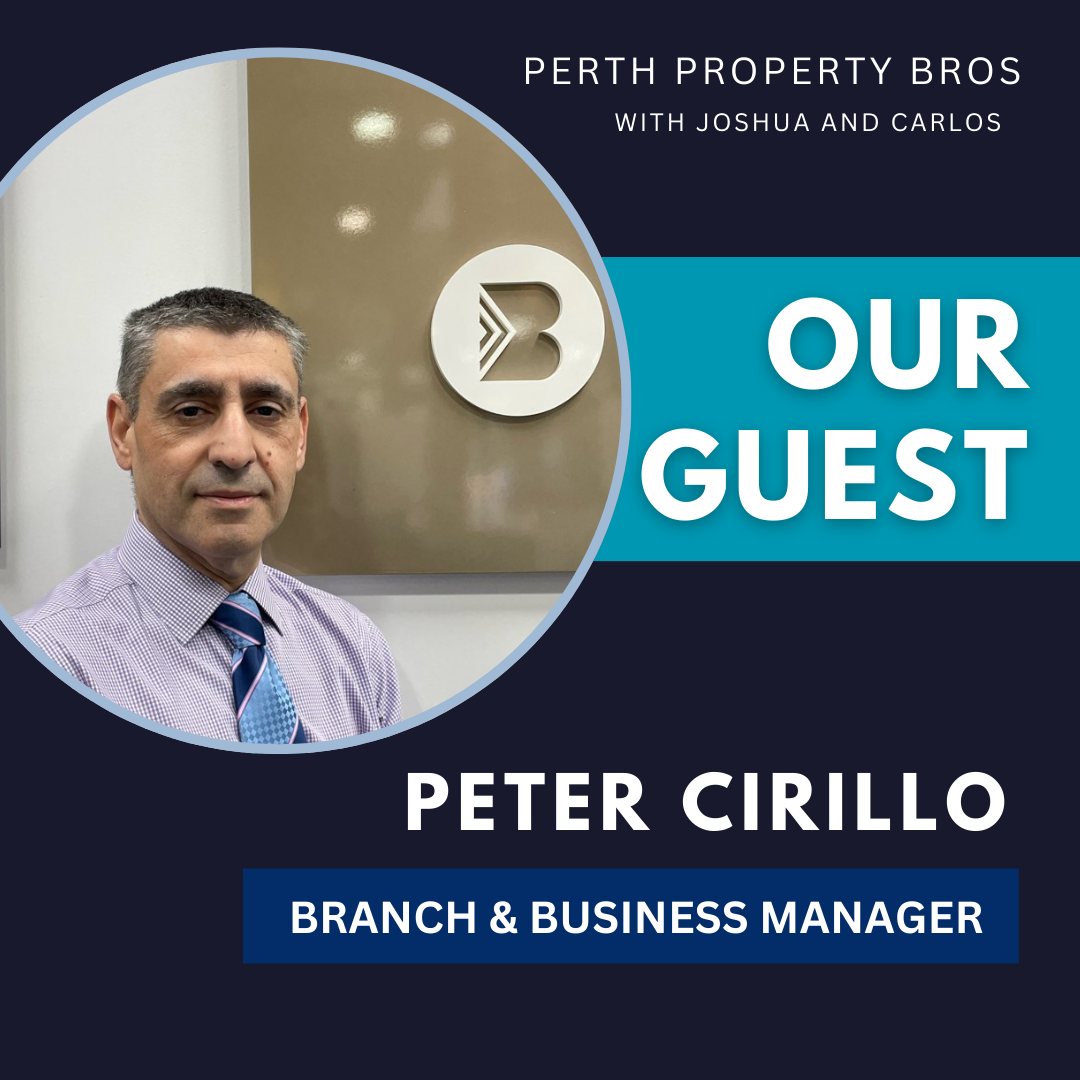
[00:34:58] Speaker D: I have a. An amazing intro for you here. Peter Cerillo, branch and business manager, Community Bank, Fremantle. So Bendigo bank.
With deep roots in local banking, Peter is passionate about delivering genuine service and financial solutions that support real people and real communities. At a time when banks are going digital only, Peter proudly leads a team that keeps the doors open, the tellers real and the service personal, all while making a lasting impact in the Fremantle community. Welcome, Peter. I'm so glad you're here.
[00:35:28] Speaker B: Thank you. Good to be here. Thanks for the invite.
[00:35:31] Speaker C: It's amazing. So, Peter, thanks for the drive from Fremantle all the way here. Would have been a really long one, wasn't it?
[00:35:37] Speaker B: No, no, it's all.
[00:35:38] Speaker C: Tell me about the traffic. Tell me about the traffic on the way.
[00:35:41] Speaker B: The traffic actually wasn't too bad. It was quite good. Not a problem at all.
[00:35:44] Speaker D: Yeah, I think about this time of day it's going to get a Bit crazy.
[00:35:48] Speaker B: Probably going home. Yeah. But yeah, that's all right. Stop off and grab some takeaway.
[00:35:56] Speaker D: I'll do exactly the same. Tell us Peter, what do you do? Bendigo bank business and branch manager. What does that mean?
[00:36:03] Speaker B: Well, my role is a little bit of a hybrid in that I'm ultimately the branch manager so I control the branch, the operations but I, I do have a good team and I also do a lot of business development with regards to trying to source, trying to seek opportunities, trying to help clients, trying to assist them in their day to day banking needs and overall try and better their banking experience and, and hopefully I'd like to think that we can make a little bit of a difference with all their banking requirements, especially in today where a lot of the banks are heading down digitally and I'm not going to be a hypocrite and say that Bendigo doesn't. But we still like to have a shout out the fact that we do have a branch in Fremantle where people can come in, they can actually talk to real people, real staff and they can get things done at the branch.
Again look, there's some things that are outside our control obviously head office in Melbourne, based in Melbourne, but there are a lot of things that we can do at the branch and we can help people at the branch and like I said, you are dealing with a real person, not someone over the phone.
[00:37:11] Speaker D: And you have cash.
[00:37:13] Speaker B: We do, we do have cash available.
We do have cash available.
Unfortunately we don't have a loss.
[00:37:22] Speaker D: So if you're doing what I'm thinking.
[00:37:24] Speaker B: You'Re thinking, don't even bother. But yeah, we do have, we do have cash and people can come in and, and we don't unfortunately we don't have an atm but that's fine because we, we can help people come in.
[00:37:37] Speaker D: Come inside, have a chat to them, get the personal service. Because you guys are at the, the stadium, aren't you?
[00:37:43] Speaker B: We're at the Grandstand. Yes, the Fremantle Oval where South Romantle's main sponsor. Yeah and South Romantle we've have been, we're lucky enough to have a, a branch at, at where our, where we sponsor the club. So we're at the Grandstand which as you can appreciate it's heritage listed.
[00:38:02] Speaker D: Next to the prison.
[00:38:03] Speaker B: Yes, next to the prison, over the wall and we're going to be soon next to the new police station.
[00:38:09] Speaker D: Oh wow.
[00:38:10] Speaker B: They're just literally just a hop skipping away from us. So. But look, it's a cozy, it's a nice branch, it's A smaller branch. The dynamics of it are very cozy, very tight knit.
So we like to think that we provide good service to our local community. Yeah.
[00:38:26] Speaker D: So tell Peter. A bit confused.
[00:38:28] Speaker C: What does Community bank, how does that differ with the major banks?
[00:38:33] Speaker B: It's for the community.
So the difference, the. The difference with us is that essentially we're a non for profit organization. I'm actually not employed by Bendigo.
[00:38:47] Speaker C: Really.
[00:38:48] Speaker B: I'm actually employed by Fremantle Community Financial Services.
Trading is Bendigo Trading is Fremantle Community Bank. Bendigo Bank. We are a non for profit publicly listed company. So we have a board of directors. Yeah, that's our company.
We then have a.
A partnership with Bendigo Bank Corporate or Bendigo and Adelaide Bank.
[00:39:10] Speaker D: Yes.
[00:39:10] Speaker B: They are our afsl. They're our license hold. They're our banking license holders. So we are governed by APRA or they're governed by apra. We in turn. So when we do deposits, when we do loans, when we do all transactions, term deposits, for instance, we are guaranteed by the federal government up to $250,000 per applicant.
So we are governed by Bendigo. So we are a licensed bank. We can take transactions.
That is our Bendigo side. So they're our license holder because they're governed by apra. Then on the other hand you've got us, the Fremantle Community bank or Fremantle Community Financial Services Trading as that's who we're employed. So we're members, we're employed by the board.
But we ultimately are a banking institution.
What happens is that because we're a publicly listed company with our profits, 20% of our profits we give to shareholders.
80% we put back to the community. 80% by way of sponsorships.
[00:40:12] Speaker C: Wow. I was just going to ask that.
[00:40:14] Speaker B: We have a sponsorship hub where people can apply. It gets assessed on a monthly basis and then it's determined by a select committee whether these sponsorships go ahead or not. And primarily the sponsorships are for the community. So they're for community minded events, associations that brings the community together.
Festivals.
[00:40:36] Speaker D: Yes.
[00:40:36] Speaker B: The arts and crafts. Gets kids involved. Gets community involved as well.
[00:40:42] Speaker C: Nice.
[00:40:42] Speaker B: That's what our primary objectives are. Volunteers as well. That help.
[00:40:46] Speaker D: It's a very new model, isn't it?
Generally, primarily banks.
[00:40:50] Speaker B: Well, the thing is Carlos, it's actually been for a while, but it's not. I think the story of the Community bank is not out there. I mean when you look at. When you look at banks, you look at nab, they do a great sponsorship with the afl, the oscic, they do it great.
Commonwealth bank with the Australian cricket team, both the men's and women's team. But with the community model, I don't think it's talked about enough.
It's for the community.
[00:41:17] Speaker D: Yeah.
[00:41:17] Speaker B: And that's what a lot of people don't realise. I mean, yes, we've got other branches. There's a local one here in Rockingham. But primarily what I'm involved in is looking after my community in Fremantle. And by that I mean it goes to the outer lot, to about Adderdale, Uppercross, up to Melville and across to Cockburn.
So if you look at that as a horseshoe type of.
[00:41:39] Speaker D: If I didn't know you when I walked past the name Community Bank, I would just think it's just. Just a. Just a branding thing.
[00:41:45] Speaker B: A lot of people do have the misconcept. Bendigo bank, which we are, obviously, but technically we're Fremantle Community Bank. Bendigo Bank.
[00:41:55] Speaker C: And obviously you've got Bendigo bank in different. Different communities, isn't it? So your branch in Fremantle, obviously you just cater for the Fremantle public.
[00:42:05] Speaker D: They've all got different boards, don't they?
[00:42:06] Speaker C: How does that work?
[00:42:07] Speaker B: Yeah, we've all got different boards.
[00:42:08] Speaker D: Different boards.
[00:42:09] Speaker B: But we can. The thing is, Josh, we can do. We can do deals wherever.
[00:42:13] Speaker C: Yeah.
[00:42:13] Speaker B: We're not restricted by demographic any way, shape or form. I've got clients in Maroon. I've got clients in general. Up.
That's. That. That's. That's part and parcel. That doesn't change. But as far as the sponsorship. Yeah, we can't sponsor, really, someone who's in, like, say, Ellenbrook, to give an example. We sponsor within the Fremantle catchment area.
[00:42:35] Speaker C: Yeah.
[00:42:35] Speaker B: Because that's our house. They're our community. That's what we.
[00:42:39] Speaker D: That's the whole point.
[00:42:40] Speaker B: Correct.
[00:42:41] Speaker C: And how do they access your sponsorships? Like, what's the. What's their kind? How do they go and get.
[00:42:48] Speaker B: There is a hub.
So there is an application. Application is submitted through the hub. It goes to a select committee, they assess it if there's any questions or they have any other queries that they need to. To include, inquire. They get contacted. There's obviously a personal contact.
[00:43:05] Speaker D: Yeah.
[00:43:06] Speaker B: And it gets taken from there, it gets assessed and decision is made from there.
[00:43:09] Speaker D: I just love that there's a bank that's actually, you know, generating profits and distributing it back to the community.
[00:43:16] Speaker B: Well, that's what a lot of people don't understand, Carlos, or appreciate it. Yeah, they see the bank and it's. It's. But it's not. We're not.
[00:43:22] Speaker D: It's not.
[00:43:23] Speaker B: We're not. Yes, we are part. And we're considered, I suppose, the fifth largest bank. But as far as the community side of it, a lot of people don't realise it. And we have a lot of regional community banks as well, such as Kulin, Brookton, Pingely, Gemelli, Muck and Boudin. All these other places that are regions that have regional. We do have an office and they do cater for our regional customers, looking after wa. We're trying to.
We're trying to.
One branch at a time.
[00:43:54] Speaker D: One branch at a time.
[00:43:56] Speaker C: But it's funny though, like, obviously we talked to a lot of mortgage brokers but we don't hear Bendigo Bank a lot in their packages and stuff.
[00:44:04] Speaker B: Well, there's a reason for that.
[00:44:05] Speaker C: Why is that?
[00:44:08] Speaker B: Previously, you've got to remember, it was. It's always been Bendigo and Adelaide Bank.
So the model was that Bendigo bank was primarily the retail arm, didn't deal with brokers.
[00:44:21] Speaker C: Yeah.
[00:44:22] Speaker B: So didn't have a broker connection at all. The broker connection was left up to our Adelaide bank arm. So Adelaide bank would be our wholesaler and that would be our white label funder. Whereas a lot of brokers I'm sure would say, look, we can do. Yeah, we can do our own funding, we can do our own home loans and a lot of it would be wholesaled by Adelaide bank or Bendigo and Adelaide Bank. But within the last 12 to 18 months, that's now sort of turned and Bendigo has now had a broker connection or started dealing with brokers within the last probably six to eight months, possibly longer. We've got a banking platform now exclusively for brokers. So brokers now select few brokers, I believe, because it's still in a sort of a pilot phase. Brokers can put deal to Bendigo bank or Bendigo Adelaide bank, but it's primarily a Bendigo bank product and it's a.
[00:45:13] Speaker D: Good interest rate, isn't it?
[00:45:15] Speaker B: Look at interest rates are quite competitive. Yeah, they are competitive. But I will say this, look from a branch perspective and I'm going to say, look, I'm pretty competitive with interest rates and I'm very, very good with costs.
[00:45:29] Speaker D: Well, you have a lot of discretion as the bank.
[00:45:31] Speaker B: I do, yeah.
[00:45:32] Speaker D: The buck stops with you.
[00:45:33] Speaker B: Well, look, I'm all about getting writing business and looking after customers in particular. Good business is good business and I've always seen there is a lot of business to go around in Perth, in wa.
[00:45:45] Speaker D: The pie is enormous if you've got that inclusive mentality. Yeah, there's plenty.
[00:45:49] Speaker B: There's a lot. We're not there to undercut anyone, but we're there to just look after our client. And I like to feel that my prerogative has always been if a client comes through the door and if I can assist them in their whole banking transactions, then why not?
Why not?
[00:46:06] Speaker D: Yeah, because you've got the. So the lending arm is one thing, but you can also manage their accounts there. Business accounts.
[00:46:11] Speaker B: Correct.
[00:46:12] Speaker D: And you know, that's sort of starting to. You bringing their family and their businesses.
[00:46:17] Speaker B: Look, we do everything that the majors do. Credit cards, personal loans. We do have access to business banking facilities as well, which it is a little bit limited from the branch because we do have specialized teams that deal with that.
[00:46:30] Speaker D: How about trust accounts?
[00:46:31] Speaker B: Yeah, we. Look, we can open up trust accounts. Absolutely. We've got. And I personally have a number of law firms that have got trust accounts. Yes, yeah, we can do that.
[00:46:43] Speaker C: It's interesting.
[00:46:44] Speaker D: Full service bank here.
[00:46:45] Speaker C: Yeah. Wow.
[00:46:45] Speaker D: All working for the community.
[00:46:47] Speaker C: So look, Peter, you are in the front lines pretty much with borrowers. Tell us a little bit there. What are you seeing in terms of shifts with what's happening on the market? Like how. What are you seeing most come in? Like a lot of investors coming in or is it more of an owner occupied type?
[00:47:04] Speaker B: That's a mixture. It's a mixture.
[00:47:06] Speaker C: Still a mixture.
[00:47:07] Speaker B: If I can, I'll say this, I don't. In Fremantle, I don't see a lot of first home buyers, but I do see a lot of refinancers, a lot of people that want to access some equity, whether it's to buy an investment or whether it's to do some renos or improvements to the existing home.
[00:47:24] Speaker C: Yeah.
[00:47:25] Speaker B: What we found in the last two years is that obviously there's a lot of equity now, especially a lot of those places at east from annals, Spearwood, Hamilton Hill. Really around the Fremantle itself, the market's done very well. The market has done very well. So there is a lot of equity. And what we found is that people are looking and I must admit. Look, Freeman, I can't talk about others, but I'll say Fremantle, very astute, very professional business people, no nonsense.
They know what they're after and they know they can get it.
And that's where I come in because look, I know others will give them great rates and I've got to be competitive.
So when we're looking at a refinance or whether we're looking at a new purchase, we're obviously reviewing their Existing facilities, whether they're with us as well or whether they've got other home line facilities with other lenders, we look at. Can we review the whole package and see what we can do for you?
Correct. If we can save them a little bit. Bit of money. If we can look at some fees. So then again, they save money and at the same time opening for you a lot of accounts. Look, I'm going to be honest with you.
My biggest referrer in the last 12 months was bank West.
I mean, we were opening business accounts, trust accounts, superannuation accounts, company accounts, trading, you name it.
And we did get a lot of their business touchwood. We did get a lot of people that were disgruntled and wanted to refinance because they didn't want to move to Commonwealth Bank. Yeah, understandable. They just wanted to deal with someone locally. And look, I'm not. I'm not going to sit here and say we get it right 100% of the time. We don't. We're human. But I'd like to think most of the time we get it right.
[00:49:04] Speaker D: Amazing. Yeah. So that's an interesting component that you're talking about there. So you've got.
People have done very well in. In Freemance we've got refinances.
Depending on where I'm working, I'm seeing different, different people in the market. So for example, on the weekend I had a home open in Bass and nine out of ten were home first homeowner.
They've got their pre approvals in place and there was one investor in the lot of 10 that came through. Whereas if I'm dealing. So I've got a property for sale in Mandurah at the moment, the Palladio complex, which is more of an upgrader, sort of like a sell your home because it's too big and sort of start to retire.
These people have a lot of equity, they don't really need to borrow money. Most of them coming through are shopping and they're cash buyers. They've got all the time in the world. So it really depends on the area we're working in as to what sort of buyer I'm dealing with. And in Fremantle we're dealing with refinancing primarily, is that what you're saying?
[00:50:04] Speaker B: Predominantly, yeah.
[00:50:06] Speaker D: Refinancing. Another pocket in Rockingham. This area seems to be fueled by investors because they're the army base, the Navy base. Sorry. Seems to fuel the economy here.
So Josh and I are always keeping an eye on these pockets and what.
[00:50:20] Speaker B: They'Re doing now look, it is interesting and it's good that the RBA cut rates a month ago, a month and a half ago. And look, it is a crystal ball, let's be honest. It is a crystal ball because no one knows what's going to happen. But we are anticipating potentially to unhold me potentially another two.
My opinion is we'll definitely have another one, potentially another two. I heard that our treasurer tried to influence or had a discussion with the regulators about a week, week and a half ago to try and see if we can get four rate cuts. Being a little bit ambitious, but I'm not going to get into politics.
[00:51:00] Speaker D: Every time that happens, it clears up our stock.
If we've got properties coming on the market, there's a rate cut all of.
[00:51:06] Speaker C: A sudden, but they got, they're clearing up too fast.
[00:51:10] Speaker D: Where's the balance?
[00:51:11] Speaker B: Obviously every action has a reaction.
And look, I'm sure you've heard all the banks have got what's called a buffer rate.
Whereas if I'm, if I'm assessing your loan at 5%, we have a 2 and a half, 3% buffer that we add on to ensure that should rates were to rise, you still have the means to service the debt without putting you into financial hardship.
[00:51:33] Speaker D: This is for a fixed rate.
[00:51:34] Speaker B: It doesn't matter.
[00:51:35] Speaker D: Doesn't matter.
[00:51:36] Speaker B: So whether, when rates go down, of course it just means that people will have a little bit more borrowing capacity. And of course if they've got that more borrowing capacity, which is good, they borrow more money. It just means they're going to borrow more. But ultimately prices are going to, are going to increase. That's how I see it.
[00:51:51] Speaker D: That's right.
[00:51:52] Speaker B: Because if more people are out there, don't have to tell you Carlos, more people are in the market to buy, they're just going to ask for more.
[00:51:57] Speaker D: That's exactly what it is.
[00:51:58] Speaker B: The one thing I will say about, about us is that which is a good niche and a couple of us have them, but Bendigo is very good at it is with all our fixed rates. Not that fixed is the flavor at the moment. We even all our fixed rates have 100% offset account.
[00:52:12] Speaker D: Okay.
[00:52:12] Speaker C: Oh wow.
[00:52:13] Speaker D: That's fantastic.
[00:52:15] Speaker B: Usually they're only for variable. Yeah, but we have fixed rates. So you could have a five hundred thousand dollar mortgage for argument's sake.
[00:52:22] Speaker D: Yeah.
[00:52:22] Speaker B: And with us you can, you can make a, let's say you've got it fixed for three years.
So you can, you can put 20 of that 500, you can that, you can put that As a lump sum repayment.
[00:52:31] Speaker C: Yeah.
[00:52:31] Speaker B: That's all you can put. But then you can got your offset and you can park all your money in the offset.
[00:52:35] Speaker D: So.
[00:52:36] Speaker B: And it's still saving you interest.
[00:52:38] Speaker D: Is that working with. With business accounts as well? You can link them in? No. So this is your personal savings?
[00:52:43] Speaker B: Yeah.
[00:52:44] Speaker D: Okay.
[00:52:44] Speaker B: You can't.
[00:52:45] Speaker D: So you're operating capital. You can't do it. Wouldn't that be good?
[00:52:48] Speaker B: Would be good.
[00:52:49] Speaker D: You wouldn't be paying interest in your life.
[00:52:51] Speaker B: I don't think the ATO would be too impressed.
[00:52:55] Speaker C: Thank you very much. Let's go into a little bit of a break and then we'll come back and talk more about banking with Peter C. Yes.
[00:53:01] Speaker D: Let's do it.
[00:53:04] Speaker A: The best music from the 60s to.
[00:53:07] Speaker B: Today IPL radio.
[00:53:21] Speaker A: I used to the world seas had rise when I gave the word now in the morning I sleep alone Sweep the streets I used to.
I used to roam Roll the dice Feel the fear in my enemy's eyes Listen as the crowd would sing now the old king is dead Long live the king. One minute I held the key Next the walls were closed on me and I discovered that my castle stand upon pillars of salt and pillars of salt I hear terror the bells are ringing Roman cavalry choirs are singing Be my mirror, my sword and shield My missionaries in a foreign field for some reason I can't explain Once you go there was never Never an oldest word that was when I ruled the world.
[00:54:58] Speaker D: It.
[00:54:58] Speaker A: Was the wicked and wild Wind blew down the doors to let me in Shattered windows and the sound of drums People couldn't believe what I became From a revolutionary sway Form a head on a silver blade Just a puppet on a lonely string or who would ever want to be king I hear Jerusalem bells are ringing Roman cavalry choirs are singing Be my mirror, my sword and shield My missionaries in a foreign field for some reason I can't expl I know St Peter won't call my name Ever Uniswood but that was when I ruled the world Missionaries in a foreign field for some reason I can't explain I know St. Peter won't call my name Never a honest word but that was when I ruled the World 1, 2, 3. My baby don't mess around because she loves me so and this I know for sure but does she really wanna but can't stand to see me walk out the door don't try to fight the feeling Cuz the thought alone is killing me right now thank God for mom and dad but we can do together Cause we don't know how, Sam.
You think you've got it? You think you've got it, but got it just don't get it because there's nothing at all.
We get together, oh, we get together but separate's always better when there's feelings involved.
If what they say is nothing is forever? Then what makes? Then what makes? Then what makes? Then what makes? What makes? What's good? Love the exception so why, yo, why, yo, why, yo, why, yo, why, yo? Are we so when denial when we're. No, we're not happy here?
Y' all don't want to hear me? You just want to dance.
Don't want to meet your daddy, just want you and my caddy don't want to meet your mama, Just want to make you come.
I.
I'm.
I'm just being honest.
Hey, I'm right now.
All right, now, fellas. Yeah.
Now, what's cooler than being cool? I cool. I can't hear you. I say, what's cooler than being cool? I cool.
All right, all right, all right, all right, all right, all right, all right, all right, all right, all right, all right, all right, all right, all right. Okay, now, ladies, yeah, now we gonna break this thing down. And just a few seconds now. Don't have me break this thing down for nothing.
Now. I want to see y' all on y' all baddest behavior.
Lend me some sugar. I am your neighbor. Here we go. Shake it, shake, shake it, shake it, shake it, shake it, shake it, shake it, shake it, shake it, shake it, shake it like a Polaroid picture Shake it, shake it, shake it, shake it.
[00:59:56] Speaker B: Shake it, shake it, shake it, shake.
[00:59:58] Speaker A: It, sugar Shake it like a Polaroid. Now all Beyonce and lose the news.
Shake it, shake it, baby dog shake it on the.
I got this feeling inside my bones it goes electric wavy when I turn it on all through my city, all through my home we're flying up no ceiling when we in our zone I got that sunshine in my pocket Got that good soul in my feet Feel that hot blood in my body when it drops oh, I can't take my eyes off of it Moving so phenomenally you more like the way we rock it so don't stop it's under the lights when everything thing goes nowhere to hide When I'm getting you close when we move while you already know so just imagine Nothing I can see but you when you dance, dance, dance Feel a good, good creeping up on you so just dance, dance, dance, come on all those things I shouldn't do but you dance, dance, dance and ain't nobody leaping St.
O It's something magical it's in the air, it's in my blood it's rushing on I don't need no reason don't be control I've got so high no ceiling when I'm embarrassing my sound. Cause I got that sunshine in my pocket Got that good soul in my feet Feel that hot blood in my body when it drops O. I can't take my eyes off it Moving so phenomenally you more like the way we rock it so don't stop CL when we move where you already know so just imagine nothing I can see but you when you dance, dance, dance Feel a good, good creeping up on you. So just dance, dance, dance come on. All those things I shouldn't do but you dance, dance, dance Ain't nobody leaping so. So keep dancing. Can't stop the feeling so just dance, dance D the feeling so just dance, dance, dance so just dance, dance, dance I can't stop the I can't stop.
[01:03:44] Speaker D: The.
[01:03:47] Speaker A: I can't stop the I can't stop the. I can't stop nothing I can see but you when you dance, dance, dancing Good good creeping up on you so just dance, dance, dance all those things I shouldn't do but you dance, dance, dance Ain't nobody leaping so. So keep dancing I guess everybody say my body break it down. Got this feeling in my body.
More music, better Mental health.
[01:04:39] Speaker B: Only on IPL Radio.
[01:04:42] Speaker D: And we're back with Perth, Probably Bros, Josh and Carlos, and our special guest, Peter Cirello from Fremantle Community Bank. Bendigo Bank, Is that correct?
[01:04:49] Speaker B: That's it.
[01:04:50] Speaker D: We got it in one.
[01:04:53] Speaker B: So.
[01:04:53] Speaker C: No, it was really amazing having that chat earlier. I think it was, you know, we didn't know that. Bendigo bank does so much for the community.
[01:05:00] Speaker D: I know. I'm just. I'm just so impressed.
[01:05:02] Speaker C: Yeah.
[01:05:03] Speaker D: And. And the man to. To head it all, Peter Cirillo. What a wonderful man.
Passion for the community, of course.
[01:05:11] Speaker C: So we were talking a little bit in the break and we were talking about, you know, the different sort of banks. You know, obviously you've got those on the bank, the branch itself. Then you've got the business, mobile bankers and mortgage brokers and all that. You tell us all a little bit about this, the difference between them and how they kind of relate.
[01:05:30] Speaker B: Well, I'll talk about the. My Fremantle branch. Firstly, Josh, I'm obviously the branch manager, as I said, but look, my job does also incorporate getting out there and being like a broker or a mortgage manager or a mobile Lender, basically. So I. I'm actually not at the branch. I don't have any offices at the branch, so I work remotely. So my job, as I said previously, doesn't encounter a couple of roles and one of those is getting out there and sourcing business. I also have a business development manager by the name of Tom Watkins and Tom is very, very good and his role is, again, as a business development, is to get out there, be like a broker in many ways or a mobile lender, get out there, source business, get in touch with the community, have coffees, go and meet people, introduce yourself and try and look at ways that we can help customers.
[01:06:27] Speaker C: You don't really see a lot of branch managers doing that though, do you?
[01:06:31] Speaker B: Not particularly, no.
We're unique in the way that we operate and we like to. We like to.
We. We what? So we, we pride ourselves on being unique at Fremantle because we are different and we like to do our own thing. We don't like to. To really be told what to do. So to go out and do our own thing and help customers our own particular way. And like I said, look, we don't get it right. We don't get it right all the time, but. But I like to think that when we do get it right, we do good things.
[01:07:02] Speaker D: But you work hard to make sure you do.
[01:07:03] Speaker B: Absolutely, absolutely. It's not just for loans.
There's also like business accounts as well. Depending. Sometimes it might mean that everyone can't come into the branch. So Tom or I will go out and see the customers, take whatever forms need to be done and we'll get them filled in at their place of business, whether it be for a trading account, whether it be for. For a company account or accounts along those lines. It's not. Ultimately it's not just for lending, but Bendigo Corporate themselves, as do a lot of the branches, have their own. Whether it be a mobile lender or whether it be a business development manager. We're a little bit unique that way. But a lot of banks have mobile lenders too. But as far as the branch manager getting out. Yeah, Freemane is a little bit very unique with that.
[01:07:45] Speaker C: And you travel all. Sorry, you travel all throughout Perth?
[01:07:51] Speaker B: Yeah, absolutely.
I've got clients in Maroona as well. No, we'll go. I'll go and see them at their home after hours on weekends.
[01:07:58] Speaker D: How about the weight belt?
[01:08:00] Speaker B: I don't have any. I do have clients in Bunbury. Well, I'm from the south, of course, so I've still got family down at bailing up. Yeah, down Bridgetown. So, yeah, I'll get down there whenever I can. So, no, there's no demographics. Not an issue for me. And look, if it has to be Wheat Belt, we'll get it done. One way or the other, we'll get it done.
[01:08:19] Speaker C: It's nice having your branch manager coming and sitting in front of you and signing all the papers and stuff.
[01:08:23] Speaker D: Especially if you're running a very big business, you're very busy, you've got a lot on you can't go down to the bank and, you know, wait in line. This is the last time I went to one of the big banks. I waited for about 20, 30 minutes just for somebody to speak to me.
Peter can go to you.
[01:08:41] Speaker C: Yeah, no, I appreciate, like, you know, I like going to the bank regardless of what they say. Like, you know, everything is digital and stuff and people.
And there's not a lot of people going to the bank. And they always say, like, I remember talking to a staff member from Banquest and said, everything's going digital because there's not a lot of people going to the bank.
[01:08:59] Speaker D: Is that right? Is there any trends there, Peter, that you're aware of?
[01:09:04] Speaker B: Well, if. If we are going digital, the idea is that not. Not. There's not going to be too many foot traffic through the branch for that reason.
[01:09:12] Speaker D: Yes.
[01:09:12] Speaker B: But we still like to consider ourselves to be a bank for the people.
[01:09:18] Speaker D: Are we going digital because people aren't wanting to go into the branch, or is it the other way around because your digital people aren't coming in so much?
[01:09:26] Speaker B: That's a hard question to answer.
[01:09:27] Speaker D: Chicken before you eat. Easy.
[01:09:29] Speaker B: Yeah, I was just gonna. Yeah, that's really a hard question to answer.
No, I think we have a lot of people that do want to come into the branch and they want to deal with us, especially with their savings.
When you're talking about when people look, it doesn't matter whether it's $0.01 or $100 million. Not that I've got a client that's got $100 million. My point being is that your life savings. And yes, there are a lot of online lenders, a lot of banks that will give you a little bit more interest rate, but everything is online, it's all digital and there is an element of risk. You come into the branch, you see us, you know that we're real.
You went off fake. Yes, we've got these accounts. We can offer you this. We try and do our best to give you the best possible rate, but sometimes our hands are tight. We just don't have the authority to. But we always try and do pricing. And what I mean by pricing is we try and get you a better rate than we're advertising.
[01:10:27] Speaker D: Wow.
[01:10:27] Speaker B: We try to. It doesn't work every time, but we. Most of the time it does.
So we try and get you the better rate wherever we can because we want to look after you. Look, if I've got you as a. If you're my customer, if you're Fremantle's customer, I don't want to lose you because ultimately, if I'm writing, I'll revert back to home loans. If I'm writing 5 million a month, but I'm losing 4 million because people are not. I'm not looking. After all, what's the point?
[01:10:53] Speaker D: Irrespective of whether they've got a small community account or they've got millions of the bank.
[01:10:56] Speaker B: We'll try. We'll try.
[01:10:57] Speaker D: We're looking after these people.
[01:10:58] Speaker B: And there is.
Sorry, Carlos, I didn't mean to interrupt, but just if I may raise a point, because it has been raised. And look again, we're no different.
There is a $2.50 withdrawal fee on some accounts. A lot of the big banks are charging it. We don't have an atm, which means that our clients don't have an alternative. So in many cases we can refund that.
[01:11:26] Speaker C: Oh, nice.
[01:11:27] Speaker D: So they're not answering a question that's coming up here. So one of our listeners, Darren, listening in, saying he's learning a lot, he's asking, what sort of things should we be looking for in a bank?
What are the. The traits here that we're looking for. For in a good bank? That's. What sort of deposit are we looking for here?
[01:11:45] Speaker B: Well, the first thing I'd say is make sure they have a branch network.
Make sure that they. You can get in touch with them relatively quick, easy, and make sure that they're transparent.
And I would definitely say, if they promise you something, make sure they deliver it. They get back to you within a decent time. Look again, and I do harp on it, like I said, I'm not going to sit here and say I'm the best that's ever been. Absolutely not. But we try to do the best we can. But if I try and get back, if I say, look, I'll get back to you by 4:00. I'd like to get back to you by 3:30, really close to 4:00.
Even if I don't have a decision, I like to hear man say, carlos, I don't have a decision for you, mate, but can you give me tomorrow and I'll come back to you at least then? Look, I'm not, I'm not. It's not all, you know, Bells, it's. It. I'm coming back to you. I just need more time. Yeah, but to answer Darren's question, look, just a bank that you feel comfortable with, that are transparent, that are honest with you, don't try and sell you something, just try and give you a little bit of advice and you can make up your own mind.
[01:12:47] Speaker D: And you're ticking a lot of the boxes here. Basically in the conversation, even leading up to the question there, just out of interest, have you been dealing with any of the military housing market?
[01:12:57] Speaker B: No.
[01:12:58] Speaker D: Nothing at all?
[01:12:58] Speaker B: Nothing.
[01:12:59] Speaker D: That was one of the other follow up questions there about whether that's a good idea. Probably a better question for Josh. If you're representing your buyers looking at military housing, housing for, for the Navy as a long term investment proposition, is this something that you'd be putting to your buyers? Are we actively looking for properties like this?
[01:13:18] Speaker C: Yeah, sometimes it's good to give them the options. Right. That you can actually go to this bank and stuff. They represent this and this is what they do kind of thing. Recently I've actually. That was one of the questions I wanted to bring up. I spoke, speaking to one of the mortgage brokers. They're saying that some clients are also coming up to them to say what does this bank represent in terms of who are they servicing?
Are they military backed? Do they work? Do they have some connections to, is it the Middle east or, you know, something like that? Yeah, there's like. So they go into. In depth. Yeah. And they don't want to be associated with certain bank. It doesn't matter what the interest rate is or how, whether it may be higher or maybe lower. As long as it sits with their, their convictions, you know, then they would go with that bank.
[01:14:07] Speaker B: I have been asked that Josh, categorically say hand on art.
No, Bendigo. Bendigo and Adelaide Bank Limited are a standalone.
We're unique in the fact that we do have franchise agreements, which is what we are, which is that's what Fremantle Community bank is. We're a franchisee. Basically, as I said before, Bendigo is our corporate partner. We use their license to enable us to do banking, of course, and provide our clients what we do as a branch manager, have a little bit of discretion on the community side.
But no, I can categorically guarantee you we're not. I did Have a customer ask whether we do support anything overseas to do with Israel. No, we don't. We do not.
[01:14:51] Speaker D: Your infremental for Fremantle. You work hard for the community. You're based in the.
[01:14:56] Speaker B: By the people, for the people.
[01:15:00] Speaker D: And you have a board, an independent board.
[01:15:02] Speaker B: Correct.
[01:15:02] Speaker D: In Fremantle.
And so you're self governing effectively, aren't you?
[01:15:06] Speaker B: The board is run by the fabulous Deborah Rule.
[01:15:09] Speaker D: Aha.
[01:15:10] Speaker B: She's absolutely fabulous. John Bird is our treasurer. Bart Hawain is our. Is our board member. We have Ross Wyns is a board member. Celia Antonovsky.
Sharon Ruddaham who's our wonderful secretary. And David Stone who's also our other board member. And I've got Izzy Zyle who's my branch operations manager. She's wonderful.
Jo Styles, my personal banker. I've got Jess Tomato who's my teller number one treasurer. She's fantastic. Tom Watkins who's my bdm. And we've just employed Patricia who's going to be our new personal banker going forward.
[01:15:45] Speaker D: I think I met some of these people and we, I went into.
So Peter invited us to a Swans game, put us in the president's box.
[01:15:53] Speaker B: Because we got the president's box. Yeah.
[01:15:55] Speaker D: Wow. That was a good day.
Sponsored by Bendigo Bank, Fremantle Community Bank. And that was. I think I did meet some of them from memory. Yeah. How amazing.
[01:16:04] Speaker C: That's interesting. So we, we talked about this community sponsorship that you've done. Right. Tell us a little bit about what some of the major sponsors or like what have you done with the community? Pretty much like what are the. Some of the things you can share with us.
[01:16:18] Speaker B: We're doing the, the currently we've got the Easter arts and crafts or the arts festival heading into Easter.
[01:16:27] Speaker C: In Fremantle.
[01:16:27] Speaker B: In Fremantle we do the arts festival every Sunday.
[01:16:31] Speaker C: Okay.
[01:16:32] Speaker B: We're big supporter at St. Pat's what they do and what they work.
We through the Rotary. Fremantle Rotary we do fund breakfast for children through a couple of schools we provide them with.
[01:16:45] Speaker D: That's a fantastic initiative. Some of these kids, you know they.
[01:16:49] Speaker B: Don'T eat before they go to school. No. So we through the Rotary because we can't obviously do it ourselves. And so the Rotary do it on our. But on. We give them sponsorship and they do it. We look we do, we do do. Now we're, we're. We. We do the Fremantle Soccer City. Fremantle City Soccer Club.
We do the Dalmatnik Soccer Club with some sponsorships again trying to get the, the community involved.
We don't, we don't fund any one Thing we don't do is grants.
[01:17:17] Speaker C: Yeah.
[01:17:18] Speaker B: Whereas we don't fund, like, working capital or wages or any of that stuff. I was gonna ask sponsorship. No, we don't do the grants. We'll leave that up to the lotteries. We tend to do more of the sponsorship where we can have an association, the Melville ses, we've recently assisted them with some sponsorship that's a mutual benefit for both. And they're a great organiser, great cause, because it's all volunteers.
[01:17:40] Speaker D: So some of the events that we run at Rockingham Rotary, they're amazing events. They bring the community together, but they cost money. You know, bringing in the vendors, bringing in the activities for the kids, or sometimes hiring a location or all these bits and pieces that add up in expenses. Sometimes it's even bringing in rich party hire to bring in all the tables and chairs and marquees.
[01:18:00] Speaker B: And again, about four weeks ago, we. We were the major sponsor for the festival of soccer. Girls Festival of Soccer at the Fremantle Oval. About 800 girls there, ages between 5 to 17.
That was arranged. It was a really good day.
We provided some sunscreen as a. And that just. Just flew out the door, so to speak, because it was hot and a lot of people forgot their sunscreen.
So we did just give them a. Yeah. Last year we did some water bottles, but we didn't do water bottles this year.
[01:18:32] Speaker D: You generally have the volunteers, you have the people coming to these events, but they come with a cost, so this.
[01:18:36] Speaker B: Is what I recommend. Carlos, speak to our. Speak to our Rockingham branch. I can hook you up, have a chat.
[01:18:42] Speaker D: Absolutely.
[01:18:43] Speaker B: See if they're interested in doing something.
[01:18:44] Speaker D: Where we've got an in with a community bank here. That would be fantastic. I mean, Tristan here works very, very hard at the radio. There's a lot of volunteers here. As you can see. We're still remodeling, getting the painting that we just painted this room. This is a new premises. This radio is on the up and up. Listener base is growing every day. And so, yeah, I'm sure that they'd appreciate the connection. Even my Rotary Club of Rockingham, we've sponsored the station. My business has sponsored the station. We want to see this station do well.
[01:19:13] Speaker B: But just remember, any deals you got to get to Fremantle.
[01:19:18] Speaker D: We'Ll look after you. Another question from a listener here.
Now, your thoughts on how volatile the WA property market is. Any tips to look for when buying and selling houses?
[01:19:31] Speaker B: Two things I'll say.
We do valuations. So whenever we do lending, whenever we look at any Loans, whether it be for refinance purchase, we do valuations, don't charge the customers, but I do the valuation.
They can, they can. Sometimes in the valuation, they have what's called a market risk. And some of these risks can be a little bit to as. To coin your phrase volatile or your customers phrase, your listeners phrase volatile. Yeah, that can be. Because a lot of times valuers can put in there. Within the last 18 months, the growth has just been absolutely astronomical. And. And the flip side of that coin is it can go down at any time.
Astronomical too. Of course it can. So, yeah, it'll adjust.
But as lenders, as banks, we can only assess it on its current. We can only assess something currently.
[01:20:22] Speaker D: Right. So with high confidence, if the property down the street is showing up at a million bucks, with a high confidence, say on RP data, you can lend 80%, 90%, preferably.
[01:20:33] Speaker B: We like to go to 80%. We can go more than 80%, obviously, with lenders mortgage insurance, but preferably banks like to lend 80% because they consider safe lending margin.
[01:20:42] Speaker D: I'm only saying there's a new product on the market, 2.2% deposit, no lenders mortgage insurance. Are you aware of that?
[01:20:49] Speaker B: Is that the one that our Prime Minister. Yes, Bendigo, is involved with the home guarantee schemes? Yes, we are involved with home guarantee schemes, the first home buyer schemes, the family schemes or the single parent schemes. But a lot of people got to remember it's not just there are two parts because there's the government regulations you've got to go through, but then there's the bank's regulations you've got to go through, because ultimately with these schemes, the government will cover the lender's mortgage insurance, and that is for any borrowing that's over 80%. So the government will basically cover that, as our Prime Minister said two nights ago. But you've got to remember it's not the government's taking the risk, it's the bank that's taking the risk risk. Not all lenders across Australia are involved in these schemes.
[01:21:37] Speaker D: It's like a bond, isn't it? It's like.
[01:21:39] Speaker B: Yeah, it is, yeah.
[01:21:39] Speaker D: It's like a bond, yeah. And they're just promising to pay out on the insurance.
[01:21:43] Speaker B: Well, the problem. Well, the thing is, they're basically securing or they're guaranteeing that that portion of the 20, essentially, because, like I said to you, the banks would like to lend. 80, 20 is considered a safe lending margin. So the idea is that if we can, we. And I know, look, we're Talking risk. Risk. Because that's how it is. I'm not a hypocrite. We're risk based.
[01:22:03] Speaker C: So it's like the government playing guarantor, correct? Yeah, that's pretty much it.
[01:22:07] Speaker D: You know, that margin would affect a lot of people. It would make the difference between them getting a loan or not. Yeah, I mean, if they're only going to come up with 2.2% as opposed to, you know, 10 or 15, 20%.
But it's a lot of money to a lot of people.
[01:22:22] Speaker B: Of course it is, I'm sure.
[01:22:23] Speaker D: Well, traditionally it's making. Doing a lot of good.
[01:22:25] Speaker B: I'll give you an example. I'll just use an example. You buy a property for 500,000 banks. We would lend 80%. You've got to come up with $100,000.
[01:22:34] Speaker D: That's a lot of money.
[01:22:35] Speaker B: Plus if you're not, you've got to come up with possibly 25,000 stamp duty.
So there's, there's 125 off the bat. Who's got that?
[01:22:43] Speaker D: Yeah, that's right.
[01:22:44] Speaker B: I mean, I've got two boys trying to get into the property market and I'm the same as everyone else, you know, they're in the same boat. They're trying to. And I work in the bank, but I can't, I can't. I'm not David Copperfield. I can't perform magic tricks and miracles. Although I'd like to.
[01:23:01] Speaker D: Yeah, not David Copperfield. All right, we're gonna have a very quick break and then come back. Keep chatting to our very good friend Peter Cirillo from Fremantle Community Bank.
[01:23:10] Speaker A: More music, better mental health.
[01:23:15] Speaker B: Only on IPL radio.
[01:23:17] Speaker D: And we're back with the Perth Property Bros, Carlos and Josh, and our very special guest, Peter Cirillo. Questions keep coming in for you, Peter. I'll tell you what, you've been a very popular guest show far away. I've got another one for you here.
So does Bendigo bank own the Greek bank in Australia?
[01:23:37] Speaker B: Truly known. I've never heard of the Great Bank.
[01:23:40] Speaker D: The Great Bank.
[01:23:41] Speaker B: Okay, so I can't actually answer that, but I've never heard of. I didn't realize it was a Great Bank. My apologies.
[01:23:46] Speaker D: Oh, there we go. All right.
[01:23:47] Speaker B: A bit ignorant, but I do, I don't know.
[01:23:49] Speaker D: Another question for you, Pete.
The home guarantee fund that we were just talking about, is that only for first home buyers or can people, anybody get access to these loans? Say if you're divorced and starting out again, single mum, kids, that sort of thing, Restarting their lives is that you.
[01:24:09] Speaker B: Can do, but you know that they are. But it just means that if you've, if you're in a situation where you've had a home previously, you're obviously not eligible for any of the first home buyer grants. You've got to remember that the home guarantee scheme is a federal scheme.
[01:24:26] Speaker D: Yeah. So this accessing the market isn't accessing the property market.
[01:24:29] Speaker B: Correct. It's to enable people that haven't got a home at the moment that possibly have the means they can get into a home without. Because lenders mortgage insurance can be a major impact. It can be a big issue when you don't have the 20%.
And the reason I say that is because there are rules, there are stipulations, there are hurdles that you have to meet and go through to enable to be eligible for lenders mortgage insurance. And lenders mortgage insurance is not cheap. It's a once off premium, but it's not cheap.
[01:25:00] Speaker D: What sort of money are we talking about, say on the $500,000?
[01:25:03] Speaker B: Because it does depend on the rate, it does depend on the leverage that you're borrowing. And by that I mean the percentage. I mean you could be 82% or you could be up to 93%. There is a big difference. Look, I've seen them as little as two grand, but then I've seen premiums of up as 45,000 depending how much you're borrowing. Because it really does work on that. So there are a few variables.
I just don't want to give you an exact figure and that's not the case.
[01:25:30] Speaker D: But we're dealing with products that go over the hundred marks people used to be able to borrow. I'm thinking back in 2000 people used to be over 110%. You know, borrow the loan, borrow your deposit, borrow the renovation money.
[01:25:44] Speaker B: Not with Bendigo. No, not, not with Bendigo Adelaide Bank? No, I don't know about any others, but I'm pretty confident. No, but I can categorically tell you with Bendigo, with us, no, you can't go over really owner occupy, you can only go up to about 95%. But that's including lenders mortgage insurance. Of course that's without any schemes with the other schemes. Obviously you've got to be eligible for the first home owners grant if you're a first time home buyer. But if not, it just means that you don't, you might have to pay the stamp duty.
[01:26:16] Speaker D: Interestingly enough, the first home owners grant is what it is. It's a First homeowner. Because back in the day I actually didn't buy my first home. I bought a commercial property.
You know we've had the stamp duty. We went through the whole process. It was loaned through bank west and I thought that I might have been disqualified. But when it came time to buying my first home, I did qualify. So.
[01:26:36] Speaker B: You did, yeah.
[01:26:37] Speaker D: Which was.
[01:26:38] Speaker B: There's a. At the very bottom of the page, I think it's the first or second page there is a stipulation or a question that actually asks you have you ever owned property that has been your owner occupies been your permanent place of residence?
[01:26:51] Speaker D: That's right.
[01:26:51] Speaker B: A long time ago in banking I had a client that had eight investment properties and this is when I think it was two years when the government bought in the first home agent and he, he and his wife were eligible for the first home owners Grant.
[01:27:03] Speaker D: Still eligible after eight investment properties because.
[01:27:06] Speaker B: None of those properties they've ever lived in were never classed as their permanent place of residence.
[01:27:12] Speaker D: Isn't that amazing?
[01:27:13] Speaker B: Yeah.
[01:27:13] Speaker D: I bet a lot of people wouldn't know that.
[01:27:15] Speaker B: Yeah.
[01:27:15] Speaker D: How amazing.
[01:27:16] Speaker C: That's interesting.
[01:27:18] Speaker D: So tell us.
[01:27:19] Speaker C: Well, you've been in the game for a long time there Peter. You've seen everything. Tell us a little bit about your journey into the banking industry and how it's all. How did it all started?
[01:27:30] Speaker B: Well, it all started.
It all started in Bunbury. In 89 I joined NAB, then I went to the ANZ. Worked in the Asanda Division for about 8 years. Then I went broking with my ex state manager. We had a finance firm in South Perth. I was that for about 14, 15 years with Sam. And then from there I went out on my own and then personal things and decided to get out. And then Bendigo bank in Byford or Byford Districts Community bank were lucky enough to give me a loan writing position or a home lender, that's the word I'm looking for.
And from there on I Fremantle came up as branch manager and I applied and here I am.
[01:28:19] Speaker C: Wow.
[01:28:19] Speaker B: So I've been in it since 89. You've basically seen a lot of.
[01:28:24] Speaker D: Well, that's what I was gonna ask but hold on. Can you press the beep button quickly?
Any horror stories? Something that's.
[01:28:33] Speaker C: Yeah.
[01:28:33] Speaker B: Do you remember, do you remember when they had the no dock lanes? Oh yeah.
The old saying was if you can sell a bucket of. We'd finance it.
And that was the truth because there was a lot of flying around.
[01:28:45] Speaker D: This is why.
Late 90s, early 2000s. Yeah.
[01:28:48] Speaker B: The asset finance. It was basically asset lending. That's all it was. People would say if you can sign.
[01:28:54] Speaker D: An application, you basically approve because they.
[01:28:56] Speaker B: Turn around and say, well, you need to meet serviceability.
So well, how much do you need? Well, how much do you earn? Well, how much do you need?
So how much do you earn? Well, I earn 128 fits. Okay, done. Whether they, they just sign a piece of paper or their accountant, it was fraught with danger. It was absolutely fraught with danger everywhere.
[01:29:15] Speaker D: I know a lot of people that became very wealthy in that period because they were just buying, buying, buying. If the banks kept lending to them, they just kept buying. Some of them actually went under because eventually their interest rates went, went right up and lending tightened right up and they couldn't service them anymore. And they were just completely, you know, they just borrowed way too much. But others that were smart and did, didn't rent them and did pay them down and the market went up, they did very well in that period.
[01:29:42] Speaker B: They did, yeah. But you got to remember when people buy investment properties, the idea is that you're using your tax offsets essentially to pay down that loan.
That's why you have that investment scale. That's why you have that investment.
Because essentially you're getting the tax write off, you're getting the negative gearing. So whatever profits you make, it's to repay that debt.
But majority of people don't do it that way. They didn't go which, okay, fair enough.
I'm not an accountant, I'm not a financial advisor. But ultimately, if you're not paying down your debt, your equity is reducing. And if we have a obvious telling Josh, every coin, there's always two sides to a coin. So eventually when, when, when the prices start, start to go down, you're going to find that unfortunately people are going to be leveraged where they were probably 78%, 70%. They're going to be all of a sudden leveraged up to about 85, 86%.
And as a bank we don't want to touch that because if we do anything that then becomes lenders mortgage, we don't want to get into that.
But unfortunately, if people are under financial stress and we don't want to see people under financial stress, and I know sometimes that can sound a bit hypocritical because we're obviously trying to correct, we're obviously trying to help people get into, into the market. So we can't do that unless you give them a loan. But then on the flip side, you don't want them, see them under financial stress. But of course, sometimes there are variables which we can't control. Property prices is something we cannot control. But we do educate and try and tell them, look, you realize you're at 89, you know, you're at 90%, but if something does happen, we urge you to please, please pay as much as you can down. That's why we don't like to do interest only loans.
Definitely for owner occupiers. No, no, for investment.
Yes. We can see that there is a, there is a benefit because there is tax implications and you do have your tax effect planning. And I do strongly urge clients to always talk to their accountant, their financial advisor when doing that because we can structure it. But again, we prefer not to because every payment we like to see them paying down debt.
[01:31:46] Speaker D: Because you're actually, you're watching these loans, you're watching the risk factor from a distance, even if they're paying their minimum repayments every month. But the bank has full discretion over this loan. I think this is well covered in the mortgage documents.
Going back, I was dealing with a regional property. It was something like 100 acres or a couple hundred acres. And that was financed by bank of Queensland.
And for some reason bank of Queensland decided that they just didn't want to be in business in that area anymore. And they called in the loan.
So the seller had to sell. You know, there was no way for him to actually pay out that loan without selling that property.
So they came in and said, we just, we're getting out of this area. We don't want, we don't want your business anymore. You know, there was no hard feelings, but we don't want your business anymore. Is that something that you've been a part of or is that a good practice to say, hey, you're getting a bit tight there with this, with your leverage. I think we want our money back and to cancel this mortgage and it's time to get out, refinance or pay it out.
[01:32:49] Speaker B: Personally, Carlos, No, I've never, never been involved in anything like that. Never. I have heard stories.
[01:32:55] Speaker D: Oh, yes. Oh, it happens.
[01:32:56] Speaker B: I have heard stories. But no, personally, I've never, never been involved. Look, I do have some difficult conversations with clients if they were to come back and say, look, I'd like to extend, I want to do this, I want to do that. And it's like, it is a little bit tight. I don't want you to. And look, when we had the royal commission into banking, one of the recommendations was called Responsible Lending which we now have to abide by.
If we feel, if we know that we're putting someone into financial hardship, if we know that there are circumstances that we feel that they may not be able to pay this, we cannot go ahead with that loan.
[01:33:36] Speaker D: This is an ethical decision on the part of the bank manager. Putting the rubber stamp on this.
[01:33:43] Speaker B: Just us as a bank.
[01:33:44] Speaker D: Just as a bank. Okay.
[01:33:45] Speaker B: I mean, the thing is too is when someone does go, unfortunately, and it does happen, go into mortgage stress and they can't make their payments, I can tell you right now, we're not in the market of taking back properties.
We don't want to. I can only talk for. We don't want to take back properties.
We don't take them back and we rent them out and we sit there and we have a. That's not what. We're in business. We want to help people fund their. And a mortgage should always be to help them fund a lifestyle.
[01:34:14] Speaker D: It's a pretty scary position to be. And if a bank decides to foreclose, say on a loan.
[01:34:18] Speaker B: That's why I've said find that a little bit.
Yeah, I find that hard because unless you've breached something, I can't see how they can turn around and say we want to foreclose.
[01:34:29] Speaker D: Well, in this case, this property I was dealing with, in this case, the bank just didn't want to be in that area anymore. They just did not want to deal in that region anymore. And they.
So to me, it showed me, well, we know how much power the bank actually has behind their mortgage contract.
And when I've seen it happen in terms of foreclosure where there's a tenancy involved, my understanding is that the bank is a federal authority so they can come in and override any tenancy laws.
The tenants don't really have too much recourse here with being able to stay there. They can negotiate, but they don't have a leg in like they currently do with the court appeals process. This is well above any of those processes so that the bank can come in and actually take their property.
[01:35:14] Speaker B: What's the wearing that can't for that one.
Obviously, if there's a breach in the contract, they can't make their payments. And there's a certain period. It's not just like you can't make it on the Friday bang Monday, we're going to take over. There is a lengthy legal process that has to.
[01:35:29] Speaker D: Oh sure. But when it gets to the end of that, I mean, you're dealing with your borrower but if the borrower's got an investment property and there's a tenant in place, I mean the flow on effect is that the tenant does not have any rights whatsoever.
[01:35:42] Speaker B: No, they don't.
[01:35:43] Speaker D: They come because the bank has the federal authority to come in and just steamroll this whole process.
[01:35:48] Speaker B: But if, if you do have it, if, if you're in that position where you have an owner occupier. And, and that's why sometimes we don't like, we, we'd like to separate the two. Ideally, we don't want to take your owner occupier as security, we'd like to take the investment.
Because the idea, the exit strategy is if something happens, we don't want to put your owner occupier property at risk. Let's have a look at your investment property. But sometimes again, this goes to equity. You might not have the equity or you might not have the availability in your investment property. So the equity is in your owner occupier. So we, I say to customers, have a chat to your accountant to make sure that they're happy for you to offer your owner occupier. Because if something, yes, does go wrong, the idea is you sell the investment, you pay down the debt, you've still got a house, you're not on the street, so to speak. Sorry, but that's the reality.
[01:36:37] Speaker D: These are, these are the hard topics around this.
[01:36:39] Speaker B: I mean, we don't want to put, Look, I can, I'm sure I speak. Well, I can't say I speak for all the banks, but we don't want to put families, their own home at risk. No, we try to avoid it if we can, but sometimes we appreciate that there's some savvy investors, there's some savvy people that want to do a lot of.
And so. Yeah, and I urge to have a chat to your accountant about that.
[01:37:01] Speaker C: I guess end of the day is the risk, isn't it? What sort of risks you're willing to take to get into the property market?
[01:37:06] Speaker D: Well, the bank's in the, in the business of risk and so is the borrower, isn't it?
[01:37:09] Speaker C: Yeah, exactly. So you're kind of.
[01:37:11] Speaker B: We basically have to answer two things.
What's our risk and how do we mitigate it?
[01:37:16] Speaker C: Exactly.
[01:37:16] Speaker B: I'm sorry, I'm not a hypocrite.
[01:37:17] Speaker C: Yeah, yeah.
[01:37:18] Speaker B: You can call us whatever names you like. That's the truth of it.
[01:37:21] Speaker D: What is our risk and how do we mitigate? Mitigated.
[01:37:23] Speaker B: Yeah, what's our risk?
[01:37:27] Speaker D: We're mitigating it because it's, it's not 90 and.
[01:37:30] Speaker B: Well, that's why we do a credit assessment. That's why we assess, that's why we ask questions, that's why we get supporting documents. And yes, I know, same. Some clients, it is a bit of a pain, but we, yeah, we are governed by APRA as to what we can do. We do have processes, policies in place that we have to abide by and we have to do that. It's part of our lending criteria.
[01:37:51] Speaker D: So here's a scenario for you, Pete. If somebody came across your desk, an application came across your desk and the person had once gone into a Part 9 debt agreement.
Now, my understanding is that that is still an act of bankruptcy, even though you weren't bankrupt, and that clears after a period, it falls off your credit rating. But that person's name still appears on the National Personal Insolvency Index. If that comes across your desk, what sort of. How are we looking? What light are we looking at this application? This happened years ago, but the name is still on the Insolvency Index. Are we likely to lend to them or is this going to be a red flag to say in terms of mitigating risk? This is not going to happen when.
[01:38:34] Speaker B: We complete an application or when a customer completes an application. There is a question there.
Have you ever been bankrupt? Parts in arrangement, had any writs or summons or anything issued against you?
If they answer no, and when we do our credit checks, nothing appears.
We don't know. But if they answer yes.
If they answer yes, then we are obliged to ask other questions and get a bit of an understanding and outline as to what happened, what were the circumstances, how was it resolved and obviously what you're doing now, depending on the time frame, that it hasn't happened again, and we do take those into account.
[01:39:12] Speaker D: So it's not an automatic no.
[01:39:13] Speaker B: No, it's not.
[01:39:14] Speaker D: It's if, if you tell the truth, we're going to work with you to work out whether we can help you.
[01:39:19] Speaker B: Correct. We're trying to. I can't sit here and guarantee it, but again, when I was broking, many, many moons ago, there used to be some non traditional lenders, and these non traditional lenders would specialize in helping customers that just got out of bankruptcy or just got out of. Because everyone's got a story.
[01:39:39] Speaker D: Sure there is.
[01:39:40] Speaker B: Everyone's got a story.
Correct. And unfortunately, every bank's got a nation. They do things. We're a traditional bank, which means that we're very down the line. We Assess things on its merit. And if we're not comfortable, we will ask questions and sometimes yet we will make decisions customers are not happy with and they will go elsewhere and they'll get the loan and they'll tell us all about it. And that's just part of.
[01:40:04] Speaker D: But you've mitigated the risk, correct?
[01:40:06] Speaker B: Correct. And we've taken, look, we've taken risks. Sometimes we've got it right, sometimes we've got it wrong. It's a risk you take.
[01:40:12] Speaker D: It is.
[01:40:13] Speaker B: We've had deals where the customers borrowed a hundred thousand properties worth $2 million, but they've had issues paying every month.
But you think it's a safe risk because you've got. No, you don't. Technically if they sell the house, you'll know, you'll get, you know, you get your money. That's, that's not what we want the customer to do. We want them to pay the loan, obviously look, they pay it quicker. That's great, good for them. But my point being is that we'll look at these, we'll look at all the mitigants, we'll take into consideration all clients position and we'll make a decision based on that. But it has to be a decision based on our policies and principles under the responsible lending.
[01:40:51] Speaker D: You know, just last week I had a contract fall over that subject to a finance clause. Of course it came back within about five or six days that.
So it was a partner, she was in a Part 9 debt agreement because of some sort of a marriage situation that happened years ago.
But it was current, it was still a current debt that was still paying down and it caused finance to fall over. Apparently nobody would touch them, not even a private lender, not even a low dock. It just, it wasn't, wasn't happening at all. So I had to scramble and find another buyer, which I did. Luckily within about six hours I had another contract in front of the seller.
[01:41:31] Speaker B: See, that comes down to character. And again it goes back to what I was saying. And look, we can appreciate because we're all human, everyone's got a story. And look, what I found in my trials is this, is that people, the intention of people to pay mortgages, loans, whatever the arrangement is, is there. The intention is there. It's just that unfortunately there's one certain event that happens in people's life and that can, you know, you could be going for 20 odd years, you know, on this, on this track and it's fine. Then all of a sudden an example, a marriage breakup, that's Right, exactly what happened. And all of a sudden payments are not made.
[01:42:07] Speaker D: Exactly.
[01:42:08] Speaker B: It doesn't go against their character. There's always an event in people's life that happens that unfortunately derails them. You could have great credit history for 20 odd years, but on the 21st year you hit a marriage issue and it just derails that line. And unfortunately that's where the story comes in. Tell us about your story, what happened. Because there's your character, there's the serviceability and obviously there's the collateral, which is the equity. You might have very good equity, you might be earning very good money and can easily afford it.
But if you characters that question that you didn't make the repayments, you had some issues with another lender, what were the circumstances surrounding it? And I think sometimes banks are quick to say, nah, nah, look, your credit history is shit, mate, I'm not going to do it. I know, but it's not that.
Tell me a little bit, dig a bit deeper, give me your circumstances and look again, I'm not considering guarantee that everything gets, gets done. But if you can, if you can really put the time and effort and you know, dwell deep into what the circumstance was, I'd like to say more times that we're able to understand the client's needs and their circumstances and perhaps we can work with them to, to get a deal done.
[01:43:22] Speaker C: That's great because that's what I want to kind of ask. Obviously everyone's got different circumstances, as you've mentioned. What, what do you do to kind of educate or prepare clients as they come in, you know, to get kind of finance. So do you, are these sort of questions that you ask straight up or is this only when you start doing the loan documents and all that you find out.
[01:43:45] Speaker B: No, no, no, it's, it's, it's. Even prior to the interview, Josh, Look, I'm a firm believer and you know, I take my sons as an example, you know, that they should be teaching how to read, how to read past slips at school, you know, understanding how the taxation system works, why we pay tax.
They don't understand that because that's essential. You get a pay slip, you pay tax, then you, what's it? What's a bank account, what's a savings account? What's a savings plan? You know, you earn a thousand dollars a week net.
Try and put two, $300 aside, start up a savings plan, try and put money aside that you can't touch it, make sure that you don't have access to that or very limited to it, so you don't have, you're not compelled to touch it, try and curb your spending, don't spend more than you earn. And, and look, a long time ago there used to be this conception that I needed to get a credit card to get a, some sort of credit history. You don't need that anymore. If you don't, don't need credit card, don't, don't take it. Credit cards can be the biggest. Credit cards are the devil because they can put you, set you back so much. They're 21%. Cash advances are 21%. And a lot of people don't understand the difference between a retail purchase and a cash advance.
[01:45:00] Speaker D: And it affects your loan. Even if you go to the bank to say, hey, I've got a $20,000 credit card, I don't know anything on it, the bank still assesses it and says the limit. Well, at any time tomorrow you can go and blow 20 grand, then all of a sudden you're in $20,000 worth of debt at 2031. Or, you know, if you're dealing with one of the, like the GE cards, I think they're called, you're looking at almost 30% on cash.
[01:45:23] Speaker B: Whatever you do. Very expensive rates to your listeners. Don't ever take out those, those quick cash schemes.
[01:45:32] Speaker D: Which one?
[01:45:33] Speaker B: Like, like a cash converters wizard. Those things are. Those things. Look, I shouldn't say it, but because.
[01:45:42] Speaker D: They'Re signing a loan agreement and they're going to come after you.
[01:45:44] Speaker B: Correct.
[01:45:45] Speaker D: Hard. But they're fees, fees, fees.
[01:45:47] Speaker B: You borrow $500, you end up paying $2,000 back.
[01:45:49] Speaker D: Carlos, you remember the home fund scheme? Years ago, a lot of Australians fell victim to the home fund scheme. It was my parents actually fell victim. They purchased a home for 110,000. They put everything to it. They worked three jobs, they put every single cent they had towards this loan for years. And after about seven years, they owe 220,000.
It just kept compounding on top of itself.
[01:46:17] Speaker B: Compounding, right. And they don't have those anymore.
[01:46:20] Speaker D: Yes, it was a scam. It was an absolute scam, I think.
Yeah.
[01:46:24] Speaker B: Anyway, now all interest rates are reducible.
So ultimately, for your loan, again using example, your loan is 300,000, but you only owe, say 150.
You're only being charged on 150,000.
And that's like the offset account. You got a loan of 300, but you've got 100,000 sitting in your 100% offset. That 100 is like being put onto your line, you're only being charged interest on the 300. So whatever repayments you make, it just means that it's, it's, it's. You're paying your principal off sooner. And I'm sure you've seen it and your listeners have seen it on Current Affair programs where they've said, I've paid off my mortgage and 14 years rather than 30 years or 7 years rather than. It's because they're making their payments weekly.
[01:47:04] Speaker C: Yep.
[01:47:05] Speaker B: I have one customer that pays it daily.
[01:47:07] Speaker C: Really?
[01:47:08] Speaker D: Daily.
[01:47:08] Speaker B: Makes his payments daily.
[01:47:09] Speaker D: Is that because interest is calculated daily?
[01:47:11] Speaker B: Correct. Yeah.
[01:47:12] Speaker D: So he knocks.
[01:47:12] Speaker B: Interest is calculated daily, is charged monthly. The sooner you make your payments, the sooner it's being applied off principal. And that's the whole idea. That's why it's, that's why it's a reducible balance.
[01:47:22] Speaker C: Wow.
[01:47:23] Speaker B: But if you've got redraw, you can redraw it.
[01:47:25] Speaker C: Yeah, yeah.
[01:47:27] Speaker B: Try not to take credit cards.
[01:47:29] Speaker D: Absolutely insisted to have Peter still on the show because he's a wealth of knowledge.
[01:47:32] Speaker C: It's a lot of information. Yeah.
[01:47:34] Speaker D: And yeah, we've had a lot of questions come in.
[01:47:36] Speaker C: Already has it.
[01:47:37] Speaker D: So there you go. Now, shall we have a quick break? This, this song is so. The song, the vibe of the music about to change because this is a request from Peter himself. So we're going to put Sweet Child of Mine by Guns N Roses. Here we go. You're on IPL Radio. We're the Property Bros.
[01:47:55] Speaker B: Your voice, your community station. You are listening to IPL Radio.